Fan-Cooled UV LED Curing Lamp
- Model: UVSS-400A5
- 365nm
- 385nm
- 395nm
- 405nm
UVET Fan-Cooled UV LED Curing Lamp is the ideal solution for industrial UV curing application, which requires the irradiation area of 500×100mm rectangular. The 400A5 series is available in four different wavelength configurations 365 nm, 385 nm, 395 nm and 405 nm for use with various UV-curable adhesives, coatings, ink and resin.
The system, with a specified UV intensity of 1500 mW/cm² at 365 nm and 1800 mW/cm² at 385, 395 and 405 nm, is available in multiple wavelengths for production with longer workpieces, flat surfaces or multiple components arranged in a fixture. It is fan-cooled for when it is in operation.
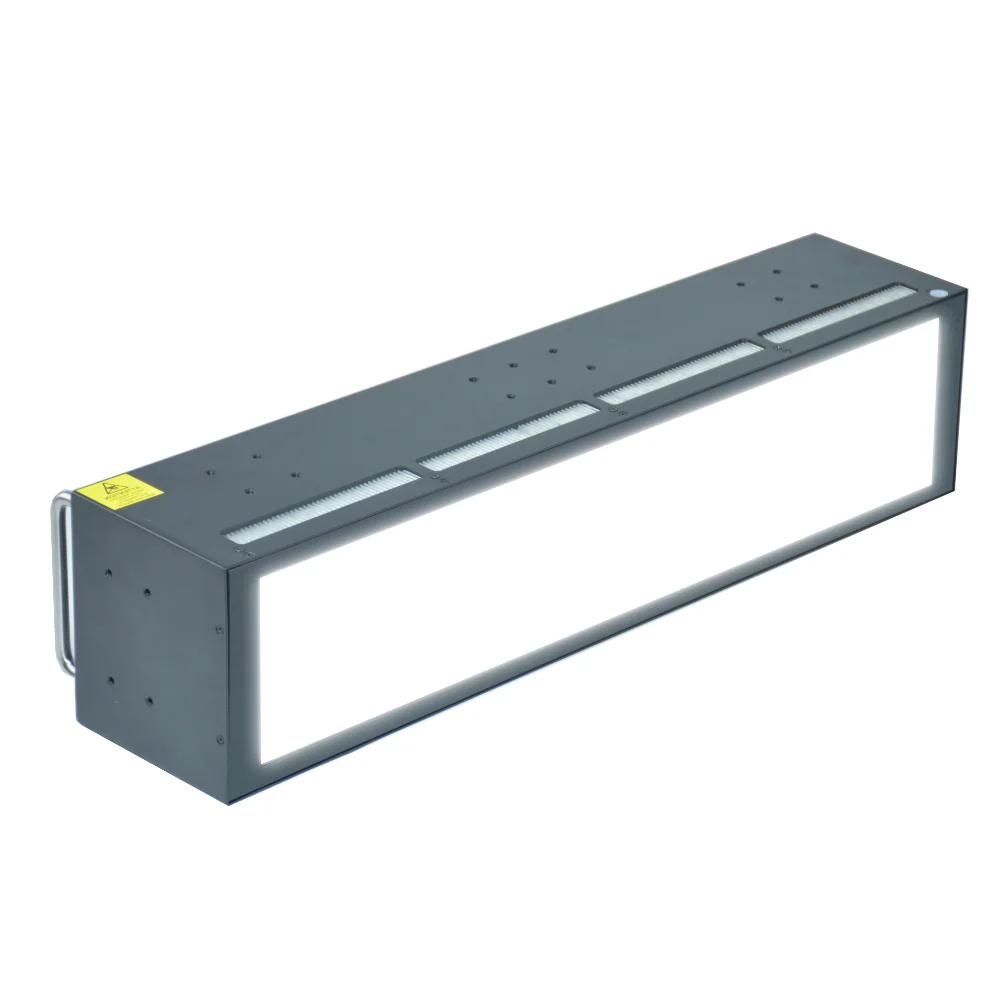


500 × 100 mm Irradiation Area

1500 / 1800 mW/cm² UV Intensity

Four-Wavelength Fan-Cooled Design
Specifications
| Part No. UVSS-400A5 | Wavelength 365nm, Intensity 1500mW/cm² |
| Part No. UVSE-400A5 | Wavelength 385nm, Intensity 1800mW/cm² |
| Part No. UVSN-400A5 | Wavelength 395nm, Intensity 1800mW/cm² |
| Part No. UVSZ-400A5 | Wavelength 405nm, Intensity 1800mW/cm² |
| Irradiation area | 500x100 mm |
| Heat dissipation | Fan cooling |
-
Descriptions

The 400A5 series features a 500 × 100 mm rectangular irradiation area, making it suitable for applications where the curing region extends along a longer workpiece or fixture.
This format can support UV exposure of flat components, coated surfaces, and multiple smaller parts positioned within the irradiation field. Compared with a compact spot-curing lamp, the elongated exposure area provides more flexibility when arranging parts for a wider curing process.
The actual usable curing area should be verified at the intended working distance. Irradiance distribution, workpiece spacing, and potential shadowing should also be evaluated before establishing production parameters.
Four Wavelength Configurations
The 400A5 series is available in four separate models: UVSS-400A5 at 365 nm, UVSE-400A5 at 385 nm, UVSN-400A5 at 395 nm, and UVSZ-400A5 at 405 nm.
The 365 nm model has a specified intensity of 1500 mW/cm², while the 385 nm, 395 nm, and 405 nm models are specified at 1800 mW/cm².
The appropriate model depends on the spectral response of the UV-curable material and its photoinitiator system. A higher specified intensity does not automatically guarantee faster curing when the wavelength differs. Material data sheets and application testing should guide the final selection.
Fan Cooling and Equipment Integration
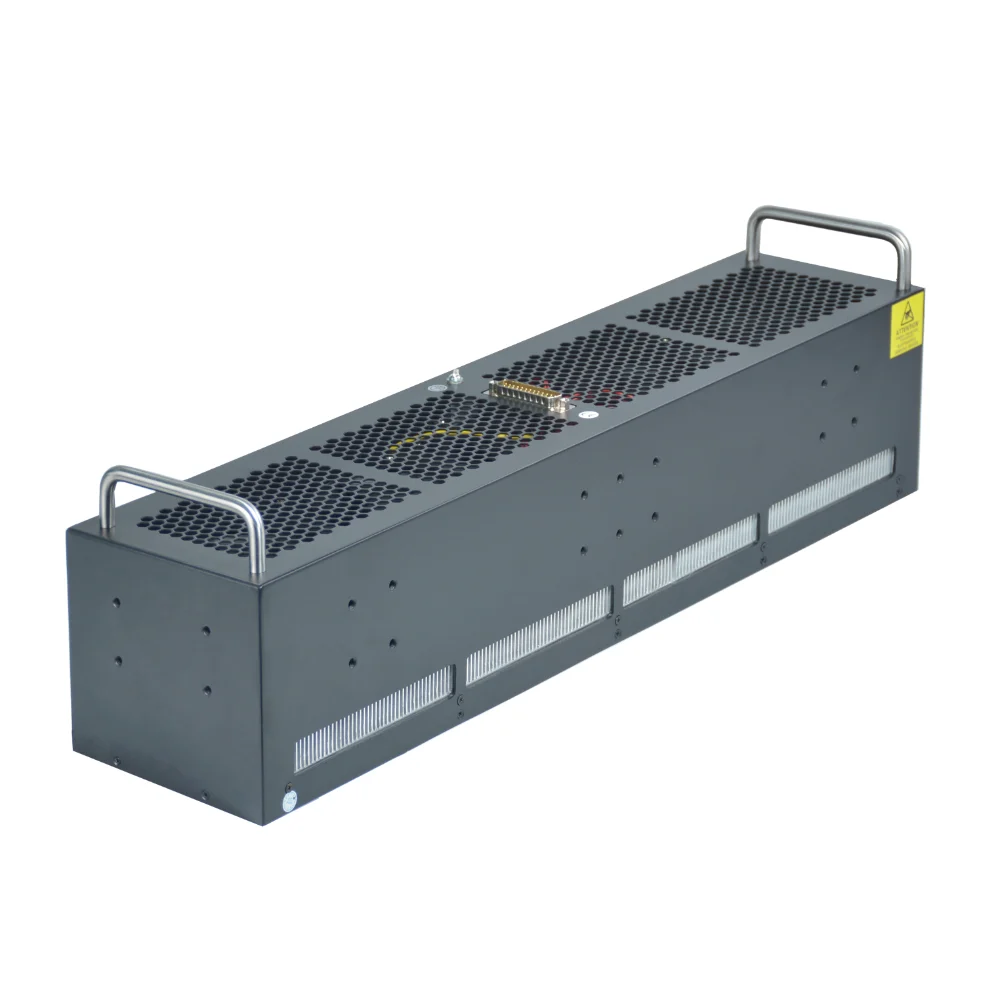
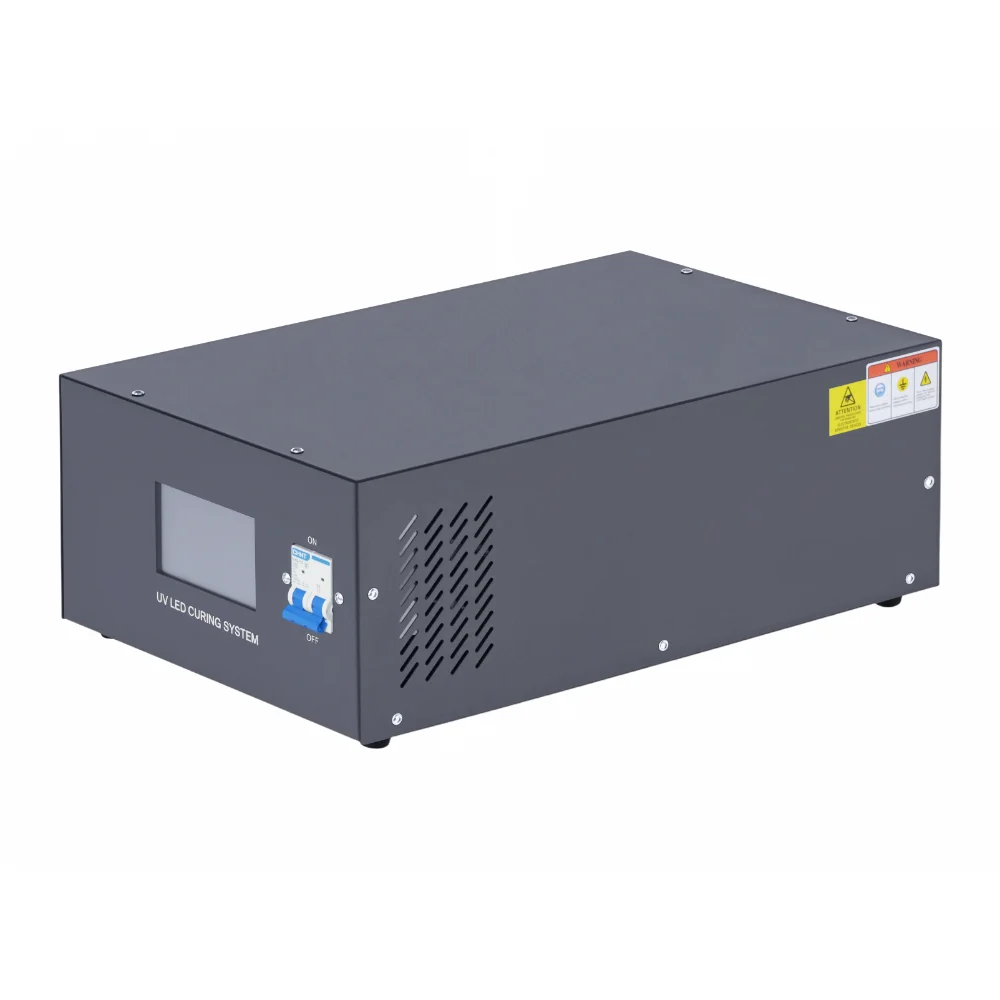
The 400A5 UV LED lamp uses fan cooling for heat dissipation. Its housing incorporates ventilation openings, and the system is shown with a separate controller enclosure.
During installation, ensure that airflow paths remain unobstructed and that sufficient clearance is provided around the equipment. Mounting arrangements, electrical connections, and controller functions should be checked against the approved system documentation.
For production integration, engineers should also consider the workpiece position, required exposure time, and the method used to verify UV intensity at the curing surface.
Key Features
- 500 × 100 mm Rectangular Irradiation Area: Supports UV exposure across longer workpieces and wider curing fixtures.
- Four Wavelength Configurations: Available at 365, 385, 395, and 405 nm.
- Model-Specific UV Intensity: 1500 mW/cm² at 365 nm and 1800 mW/cm² at 385, 395, and 405 nm.
- Fan-Cooled Construction: Uses forced-air cooling for heat dissipation.
- Controller-Based System Configuration: Designed for installation according to the specified electrical and control requirements.
-
Applications
1. UV Adhesive Bonding
The 500 × 100 mm irradiation area can be evaluated for UV adhesive curing on elongated components, flat assemblies, and multi-part fixtures. The selected wavelength must match the adhesive formulation and required curing dose.
2. UV Coating and Resin Processing
The system is suitable for evaluating compatible UV-curable coatings and resins applied to wider surfaces. Coating thickness, material absorption, exposure distance, and irradiance distribution should be considered when establishing curing conditions.
3. Electronics Assembly
The 400A5 series can be considered for electronics assembly processes involving compatible UV-curable adhesives, encapsulants, and protective coatings. Component positioning and material sensitivity should be checked during process validation.
4. Industrial Printing and Surface Finishing
The rectangular irradiation field may be suitable for selected UV-curable inks and coatings on elongated surfaces. Wavelength compatibility, exposure time, and the required production speed should be assessed before equipment integration.
5. Batch Curing and Production Fixtures
Multiple smaller components can be arranged within the irradiation field for batch processing. The number of parts per cycle and the consistency of curing depend on fixture layout, exposure conditions, and measured UV intensity across the work area.
-
FAQs
Q1. What is the irradiation area of the Fan-Cooled UV LED Curing Lamp?
The 400A5 series has a specified irradiation area of 500 × 100 mm. Actual curing coverage should be verified at the intended working distance and under the required process conditions.
Q2. Which wavelength options are available?
Four models are available: UVSS-400A5 at 365 nm, UVSE-400A5 at 385 nm, UVSN-400A5 at 395 nm, and UVSZ-400A5 at 405 nm.
Q3. What UV intensity does the 400A5 series provide?
The 365 nm model is specified at 1500 mW/cm². The 385 nm, 395 nm, and 405 nm models are each specified at 1800 mW/cm². Measurement distance and test conditions should be confirmed from the technical documentation.
Q4. How does the lamp dissipate heat?
The 400A5 series uses fan cooling. During installation, the ventilation openings should remain unobstructed to allow adequate airflow.
Q5. Can this UV LED curing lamp be used for multiple components?
Yes, multiple components can be arranged within the 500 × 100 mm irradiation field when their dimensions and fixture layout permit. Irradiance distribution and curing results should be validated for the actual arrangement.
Q6. How do I select the correct wavelength?
Choose the wavelength based on the adhesive, resin, ink, or coating formulation and its photoinitiator response. The required irradiation area, working distance, target UV dose, and exposure time should also be considered.
Related Products