
365 nm UV LED Curing Light: Best Uses and Compatibility
Selecting the optimal wavelength for ultraviolet curing is a critical step in ensuring the structural integrity and surface quality of manufactured parts. You will find that the 365 nm UV LED curing light is a cornerstone of high-precision industrial processes, particularly when working with clear adhesives and specialty coatings.
This guide examines why this specific frequency is chosen for demanding applications, how it interacts with material chemistry, and what technical factors determine its compatibility with your production line. By aligning the 365 nm output with your specific process needs, you can achieve a more reliable, high-energy cure that meets rigorous quality standards.
What Is a 365 nm UV LED Curing Light?
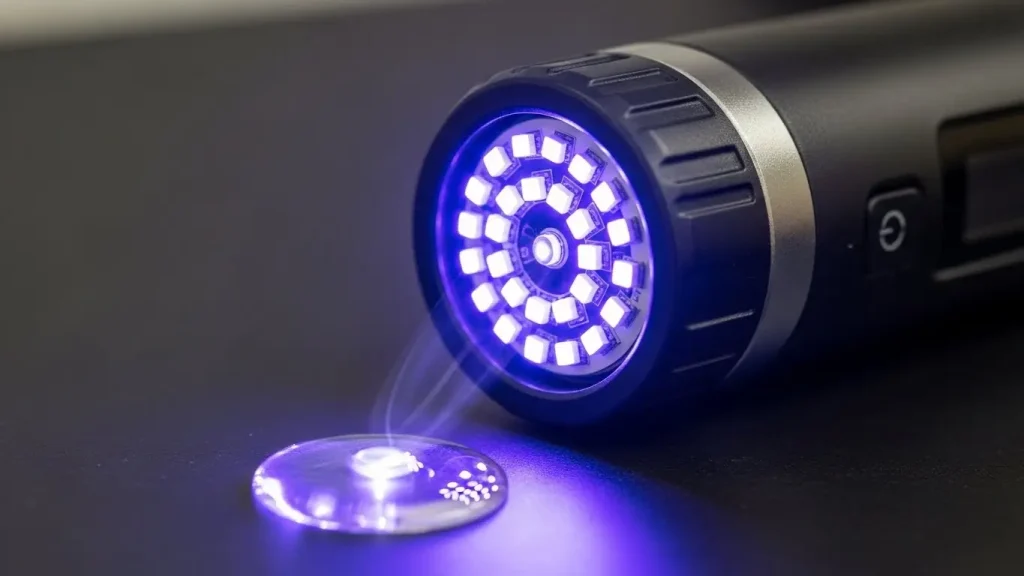
A 365 nm UV LED curing light emits near-UV energy at about 365 nm and is often chosen for materials and photoinitiators that absorb strongly in the shorter UV range. You will notice that this wavelength carries higher photon energy than longer UVA alternatives like 395 nm or 405 nm. This higher energy allows it to trigger chemical reactions in resins that are less responsive to longer wavelengths, making it a powerful tool for rapid polymerization. Because it is a solid-state LED source, it provides a narrow-band emission that is much cooler than traditional mercury lamps, allowing you to deliver intense UV energy without the excessive infrared heat that can damage sensitive substrates.
What Materials and Photoinitiators Are Compatible With 365 nm Curing?
365 nm UV LED lights are typically effective with photoinitiators whose absorption peaks lie in the shorter UV range and with materials designed for deeper penetration. You should look for material formulations that utilize initiators like Alpha-hydroxyketones, which are highly efficient at capturing the energy produced at the 365 nm peak. These chemicals are designed to "spark" the polymerization process immediately upon exposure to this specific frequency.
- Clear Adhesives: Many optical-grade glues are specifically tuned for 365 nm to ensure maximum clarity and bond strength.
- Legacy Formulations: Resins originally designed for mercury lamps often retain compatibility with 365 nm LED sources.
- Medical Grade Plastics: Adhesives used in medical device assembly frequently require the high-energy hit of 365 nm to ensure a sterile, secure bond.
- Electronic Encapsulants: Potting compounds that must stay transparent over time often use 365 nm to avoid the yellowing associated with longer wavelengths.
Where Does 365 nm UV LED Curing Light Perform Best?
365 nm UV LED curing lights often perform best in applications requiring deeper penetration, high reactivity, or materials with photoinitiators tuned to shorter wavelengths. You will find them widely utilized in the medical device industry for bonding catheters and syringes, where the bond must be absolute and the material clear. They also excel in the optics industry for joining lenses and prisms where thermal distortion from heat-producing lamps must be strictly avoided. In electronics manufacturing, you use 365 nm lights to cure "glob tops" and underfill materials that protect sensitive circuits, ensuring the protective material is solid all the way to the circuit board.
How Does 365 nm Compare With Other UV LED Wavelengths?
Compared with longer wavelengths, 365 nm UV LED curing lights deliver higher photon energy and typically deeper penetration into materials, but may require careful photoinitiator matching. While 395 nm is excellent for traveling through dense pigments, 365 nm provides a more aggressive surface cure for clear or translucent coatings. You will find that 365 nm is often the "high-performance" option that enables faster line speeds in processes where the chemistry allows for its use. It provides a more concentrated energy hit that can overcome certain chemical inhibitions that longer wavelengths cannot.
How Do Cure Depth and Uniformity Behave at 365 nm?
365 nm UV LED lights tend to provide deeper penetration and good uniformity for compatible materials, making them suitable for parts where depth of cure is important. You will observe that for many clear resins, the 365 nm light can travel through several millimeters of material to reach the base layer effectively. This prevents the common issue of "skinning," where the surface is hard but the material underneath remains liquid, leading to potential bond failure. Consistent light distribution from modern LED arrays further ensures that the cure is uniform across the entire exposure area.
What Factors Should You Consider When Choosing a 365 nm UV LED Light?
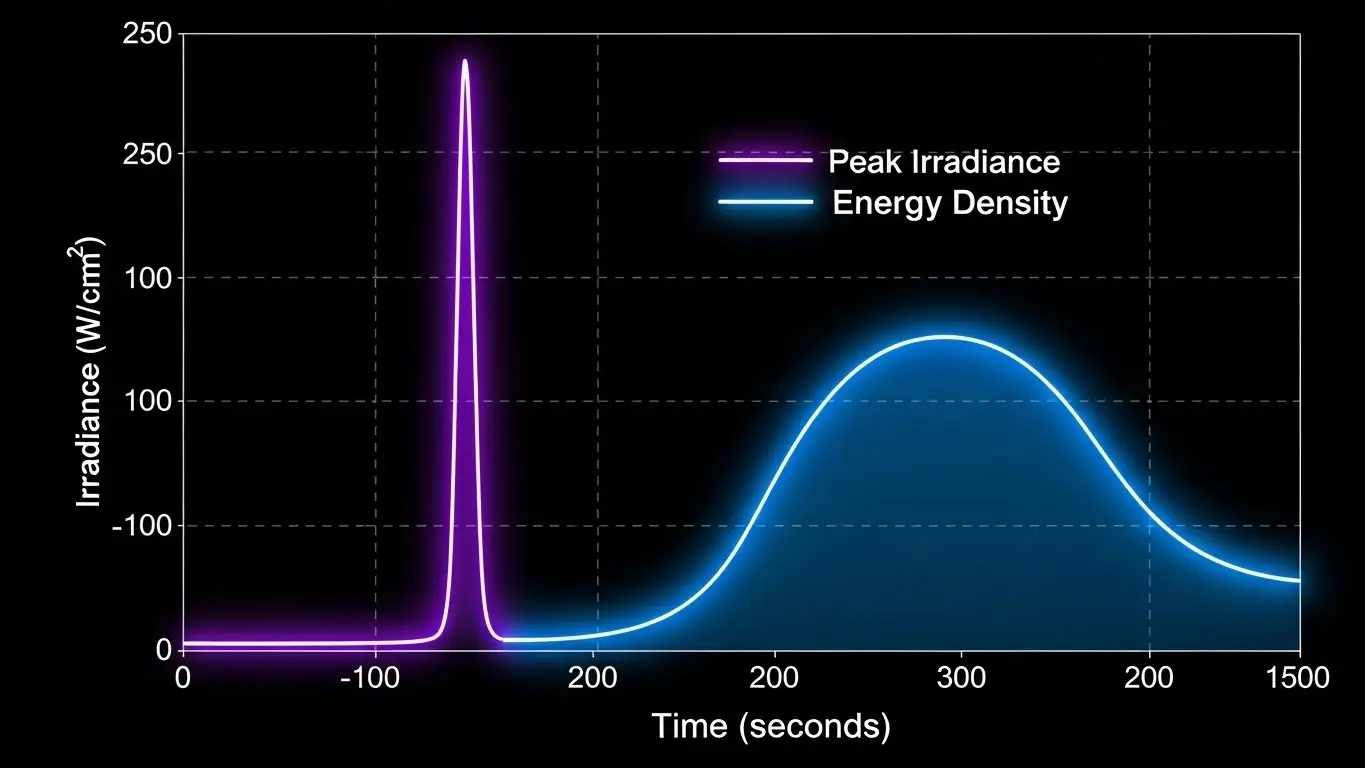
Selecting a 365 nm UV LED light involves considering photoinitiator compatibility, material thickness, power density, and production throughput. You must ensure that the irradiance ($W/cm^2$) provided by the lamp head is sufficient to reach the required dosage ($J/cm^2$) at your specific conveyor speed.
- Spectral Overlap: Verify that your material's photoinitiator has a high absorption rate at 365 nm.
- Substrate Sensitivity: Confirm that your material can handle the high photon energy without degrading.
- Working Distance: Account for the gap between the lamp and the part, as intensity decreases with distance.
- Cooling Requirements: Determine if your facility can support the air or water cooling necessary for high-intensity LED units.
What Trade-Offs Exist With 365 nm Curing?
Trade-offs with 365 nm curing include a need for precise photoinitiator matching and managing deeper penetration while balancing surface performance. You may find that while 365 nm is highly effective, the equipment can sometimes be more specialized or carry a higher initial cost than longer-wavelength systems. Furthermore, 365 nm light is not as effective as 395 nm for curing through very dark pigments or highly opaque materials, as the shorter waves are more easily absorbed or blocked by dense fillers. Success depends on knowing when your material chemistry specifically demands this high-energy peak.
What Are the Key Takeaways on 365 nm UV LED Curing Light?
The 365 nm wavelength is a premium choice for clear, high-precision industrial bonding and coating. You get the best results when you prioritize the technical alignment between this high-energy output and your material's specific chemical absorption.
- Ideal for medical devices, optics, and clear electronics encapsulation.
- Delivers higher photon energy than 385 nm or 395 nm alternatives.
- Ensures a deep, uniform cure in clear materials and many legacy resins.
- Requires a specific match with short-wave photoinitiators for maximum efficiency.
How Do UV LED Wavelengths Differ Across the Curing Spectrum?
Understanding the broader spectrum helps you place 365 nm in its technical context. You can read our guide on UV LED curing wavelengths to see how energy levels shift from 365 nm to 405 nm.
How Do 365 nm and 395 nm UV LEDs Compare?
For many manufacturers, the decision is between these two common standards. Check our direct comparison of 365 nm vs 395 nm UV LED curing to understand which offers the right balance for your application.
What Should You Know About 385 nm UV LED Curing?
The 385 nm range is often used as a versatile alternative for various industrial resins. Explore the features of 385 nm UV LED curing to see if this mid-range frequency fits your material profile.
What Should You Know About 405 nm UV LED Curing?
For near-visible light applications or extremely sensitive substrates, 405 nm is a specialized solution. Explore 405 nm UV LED curing to learn how it behaves with long-wavelength initiators.
How Does Photoinitiator Matching Affect UV LED Performance?
The chemistry of your material is the most important variable in your curing process. You can learn more about photoinitiator matching for UV LED to ensure your 365 nm lamp is working at its peak technical efficiency.
How Does Wavelength Affect Cure Depth and Uniformity?
To prevent adhesion failures, you must understand how light travels through your coating. Review our technical guide on UV LED wavelength and cure depth for a deeper look at penetration mechanics.
What Should You Know About Choosing the Right UV LED Wavelength?
Selecting the right frequency requires a structured approach to evaluation. Use our checklist to help you choose a UV LED wavelength based on your materials and production environment.
What Should You Know About 395 nm UV LED Curing Lamps?
As a widely used industrial alternative, 395 nm offers different penetration characteristics. Look at the details of the 395 nm UV LED curing lamp to see if it might be a better fit for your thicker, pigmented coatings.
Final Thoughts
Finalizing your decision on a 365 nm UV LED curing light requires you to look at your manufacturing process as a specialized system where light and chemistry must be perfectly aligned. While this wavelength offers the highest energy and best clarity for many modern industrial coatings, its effectiveness is defined by the absorption profile of your specific photoinitiators.
By focusing on these technical variables and utilizing the high-energy strengths of 365 nm, you can build a production line that is both highly efficient and remarkably stable. The best choice is the one that achieves a perfect cure without adding unnecessary heat or complexity to your daily operations.
Share on Social:


