
What Is 385 nm UV LED Curing Used For?
Evaluating the right ultraviolet wavelength for your production line often leads to the 385 nm range. This specific frequency is a cornerstone of modern industrial processes, offering a versatile solution for a wide variety of chemical formulations.
This guide examines what makes 385 nm UV LED curing a preferred choice for many manufacturers and how it influences the final quality of your products. By understanding the technical strengths of this wavelength, you can better align your equipment with your material requirements and production goals.
What Is 385 nm UV LED Curing and Why Is It Used?
385 nm UV LED curing is an industrial UV curing wavelength commonly used where a balance of cure depth, surface energy, and material compatibility is needed. You will find that this wavelength sits in a "sweet spot" within the UVA spectrum, providing enough energy to trigger surface hardening while still penetrating through slightly thicker layers. It is widely used because it bridges the gap between the high-energy surface focus of 365 nm and the deep-penetrating characteristics of 395 nm systems.
Using this wavelength allows you to handle a broad range of resins without needing to constantly change your lamp heads. It provides a stable and repeatable energy output that works well with modern, LED-optimized chemistries. For many engineers, it represents a reliable baseline for general-purpose assembly and finishing tasks where consistent bond strength is the primary objective.
What Materials and Photoinitiators Respond Well to 385 nm Curing?
Materials with photoinitiators that absorb in the 380–400 nm range generally respond well to 385 nm UV LED curing. You should check your material data sheets for photoinitiators like TPO or BAPO, which are specifically designed to react to these longer UV wavelengths. These chemicals are highly efficient at capturing 385 nm energy and converting it into the chemical bonds needed to solidify your inks or glues.
- UV Inks: Many formulations for screen and inkjet printing are tuned for this range to ensure color stability.
- Industrial Adhesives: High-viscosity glues used in automotive or electronics assembly often favor this wavelength.
- Clear Coatings: Acrylics and urethanes designed for wood or plastic finishing respond effectively without yellowing.
- Dual-Cure Resins: Materials that use multiple photoinitiators often find 385 nm to be a compatible trigger for at least one stage of the cure.
What Practical Production Uses Does 385 nm UV LED Curing Support?
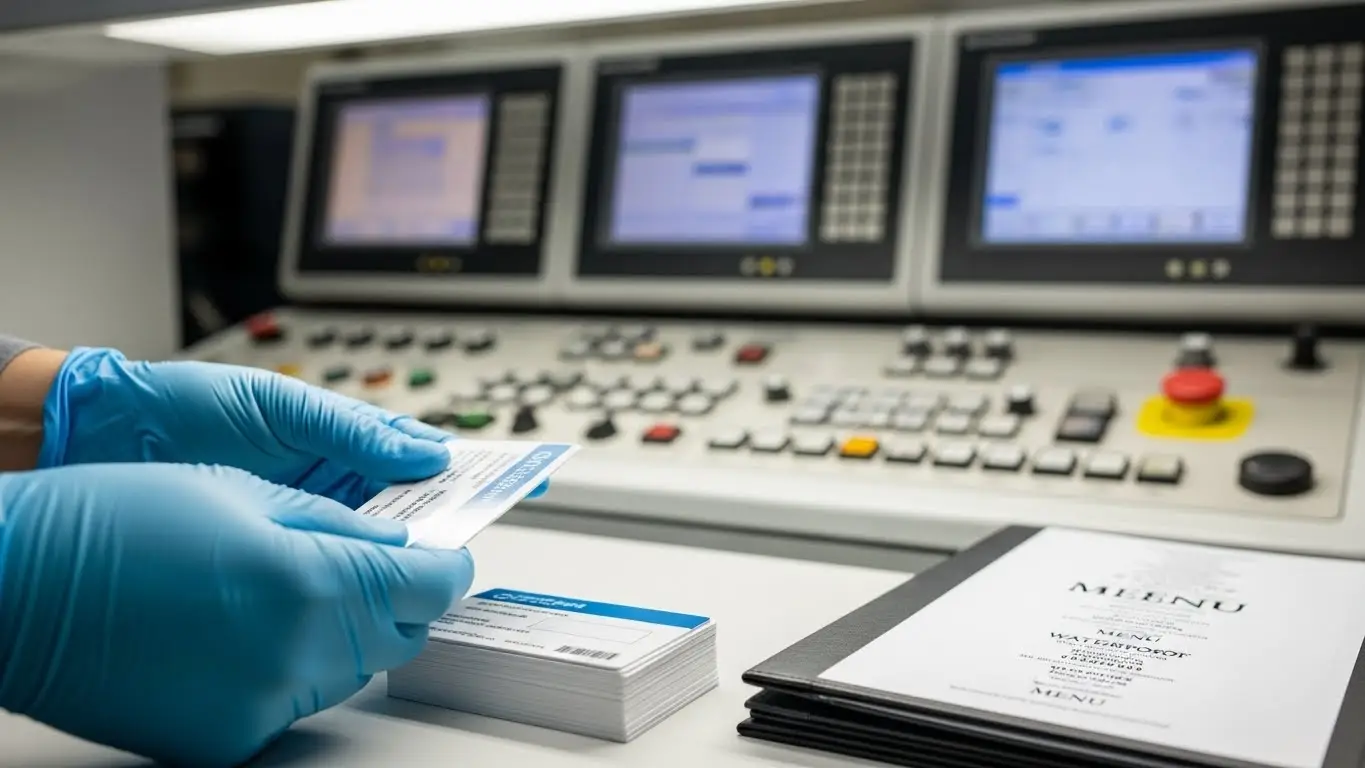
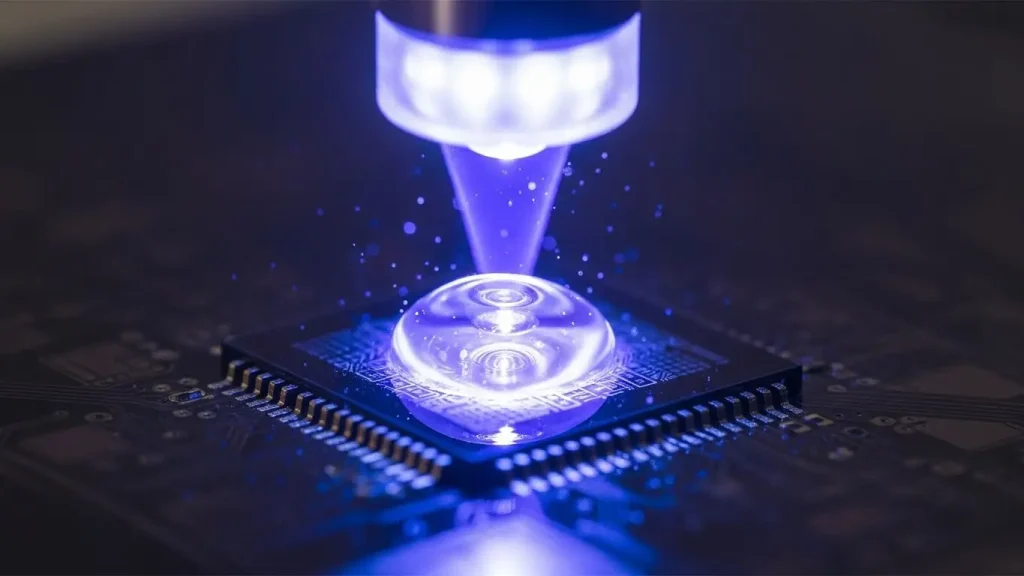
In production environments, 385 nm UV LED curing is often used for coatings, inks, adhesives, and surface finishes that match its energy profile. You will see it frequently in the assembly of medical devices, where it provides the precision needed to bond plastic components without damaging sensitive internal parts. It is also a staple in the electronics industry for potting and encapsulating components to protect them from moisture and vibration.
In the printing sector, you use 385 nm to achieve high-speed drying on labels and flexible packaging. The wavelength's ability to balance surface dryness with deep adhesion ensures that your prints do not smudge or peel, even during high-velocity processing. This versatility makes it an excellent choice for shops that need a single, reliable system to handle a rotating list of different manufacturing jobs.
How Does 385 nm Compare with Other UV LED Wavelengths in Use?
Compared with shorter and longer wavelengths, 385 nm provides a middle ground between penetration and surface cure for a broad set of materials. While a 365 nm source provides higher energy photons for extreme surface hardness, it may struggle to reach the bottom of a thick coating. Conversely, 395 nm travels deeper into pigmented materials but can sometimes leave the surface feeling slightly tacky if the intensity is not perfectly managed.
Choosing 385 nm gives you a "dual-purpose" capability that adjacent wavelengths sometimes lack. It is often less sensitive to slight variations in material thickness than 365 nm, yet it provides a harder surface finish than 405 nm. This balance is particularly helpful when you are working with parts that have varied geometries or when your coating thickness is not perfectly uniform across the entire surface.
How Should You Decide if 385 nm UV LED Curing Fits Your Application?
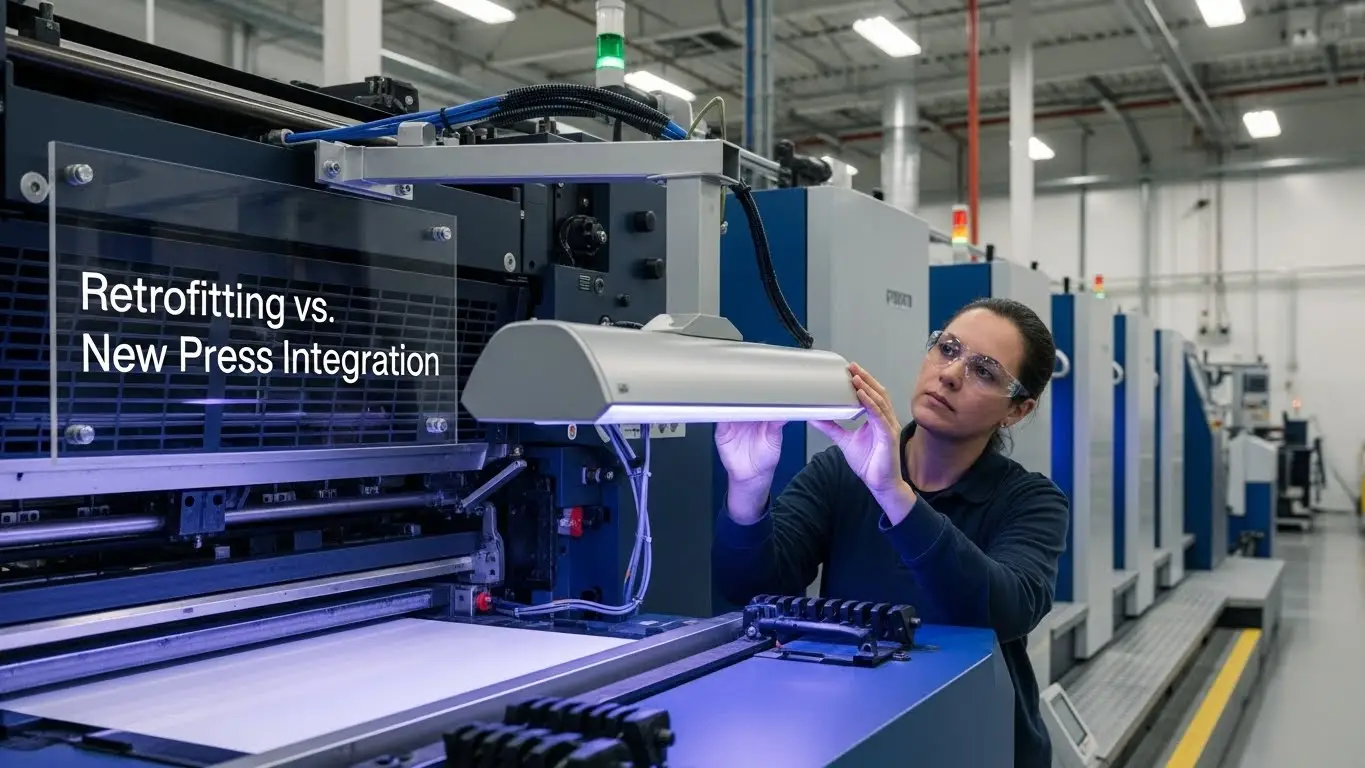
Deciding whether 385 nm UV LED curing fits your application involves evaluating material photoinitiators, desired cure depth, and production conditions. You should start by consulting your material supplier to confirm that your specific ink or adhesive has a peak absorption near this wavelength. Once compatibility is confirmed, you must verify that the lamp can deliver enough energy at your required line speed.
- Verify Chemistry: Ensure your photoinitiators are tuned to the 385 nm spectral peak.
- Assess Thickness: Confirm that 385 nm can penetrate to the substrate of your thickest coating.
- Test Surface Hardness: Check for tack-free results at your maximum production speed.
- Evaluate Substrate: Ensure the low-heat nature of the 385 nm LED protects your heat-sensitive parts.
- Run Pilot Tests: Always validate the cure with a lab-scale lamp before committing to a full production line.
What Are the Key Takeaways on 385 nm UV LED Curing Uses?
Success with 385 nm curing depends on the technical alignment between your light source and your material's chemical absorption. It is a versatile tool that offers a balanced approach to most modern industrial curing challenges.
- 385 nm is a "middle ground" wavelength for balanced surface and depth curing.
- It is ideal for TPO-based photoinitiators commonly found in modern LED resins.
- Applications range from medical device bonding to high-speed label printing.
- Selection should always be driven by material testing and spectral matching.
What Is the Broader UV LED Wavelength Spectrum and How Does 385 nm Fit?
To see the full technical landscape, you can explore our guide on the UV LED curing wavelength spectrum. This explains where 385 nm sits relative to the entire UVA band and how it differs from other common industrial options.
How Does 405 nm UV LED Curing Compare to 385 nm for Materials?
If you are working with very specific resins or near-visible light applications, you might consider longer waves. Compare the results with 405 nm UV LED curing to see if a more specialized surface focus is needed for your job.
Why Does Photoinitiator Matching Matter for 385 nm Curing?
Your cure is only as good as the chemical reaction it triggers. You can learn more about the importance of photoinitiator matching for UV LED to ensure your 385 nm lamp is working at peak efficiency with your adhesives.
How Does Wavelength Influence Cure Depth and Uniformity?
Understanding how light travels through your coating can prevent adhesion failures. Check our technical breakdown of UV LED wavelength and cure depth to see how 385 nm provides its balanced energy profile.
What Criteria Should You Use to Choose a UV LED Wavelength?
Selecting the right frequency requires a structured approach. Use our checklist to choose a UV LED wavelength based on your materials, conveyor speed, and quality standards.
What Should You Know About 395 nm UV LED Curing Lamps?
As one of the most common industrial alternatives, 395 nm offers different penetration characteristics. Look at the details of the 395 nm UV LED curing lamp to see if it might fit your thicker pigmented coatings better.
What Should You Know About 385 nm UV LED Curing Lights?
If you have decided that 385 nm is the right fit, you need to understand the hardware. Explore our specific 385 nm UV LED curing light options to see how they integrate into automated production lines.
What Should You Know About 365 nm UV LED Curing Lights?
For high-energy surface applications or legacy chemistry, 365 nm remains a powerful tool. You can find out more about the 365 nm UV LED curing light and how it provides a more intense surface cure than 385 nm.
Final Thoughts
Selecting 385 nm is a strategic decision that prioritizes flexibility and balanced performance across your manufacturing workflow. As industrial coatings continue to evolve, the ability of this wavelength to handle diverse photoinitiators makes it a future-proof choice for many expanding shops. By focusing on the technical alignment between your light source and your material chemistry, you can build a curing process that is both highly efficient and remarkably reliable. Your goal is to eliminate the guesswork and rely on the specific spectral properties of 385 nm to drive your production quality.
Share on Social:


