nav_logo
  • Home
  • Products
    LED UV Curing
    UV LED Spot Curing
    UV LED Area Curing
    UV LED Curing Chambers
    UV Tape Curing Systems
    Handheld LED UV Curing
    UV LED Curing Systems for Printing
    LED UV Inspection
    UV LED Flashlights
    UV LED Headlamps
    Handheld UV LED Lamps
    Stationary UV LED Lamp
    UV LED Modules
    COB UV Modules
    Array LED UV Modules

    Built with high-quality LED sources

    Our UV curing systems offer 20,000+ hours of lifespan, instant on/off functionality, and stable performance in industrial environments.

    Explore Our Services
  • Solutions
  • OEM/ODM Services
  • Support
    • FAQs
    • Download
    • UVLED Gallery
  • Blog
  • About
  • Home
  • Products
    • LED UV Curing
    • LED UV Inspection
    • UV LED Modules
  • Solutions
    • UV Printing - A Detailed Guide
    • UV LED for Automotive: Advanced & Efficient Solutions
    • UV LED for Medical Devices: The Ultimate Guide 2025
    • UV LED for Electronics Application: Why it’s Critical
  • OEM/ODM Services
  • Support
    • FAQs
    • Download
    • UVLED Gallery
  • Blog
  • About
  • Contact
  • English
  • 中文

Blog

Home / Blog / Page 2
    ALL Guides Case Study Industry Insights Product Innovations
All Articles
Hot Tags
Inkjet Printing
UV Curing Technology
UV LED Curing
UV Intensity Measurement
Inkjet Printing
UV Curing Technology
UV LED Curing
UV Intensity Measurement
ALL Guides Case Study Industry Insights Product Innovations
2025-12-28
By UVET
What Coatings Can Be Cured with UV LED? A Definitive Industry Guide

Determining exactly what coatings can be cured with UV LED technology is the first step toward modernizing your production line. We are witnessing a massive shift in manufacturing. It is no longer just about graphic arts or simple inks. Industries from automotive to aerospace are realizing that Light Emitting Diodes (LEDs) offer a precision that traditional mercury arc lamps simply cannot match. If you are a production manager or a formulation chemist, you know that heat is the enemy of many substrates. I remember visiting a flooring plant a few years ago where they were struggling with warping pine boards under hot mercury lamps. The switch to cool-temperature LED curing didn't just save energy; it saved their product yield. This guide covers every angle of UV LED coating compatibility. We will explore specific chemistries, industrial applications, and the formulation tweaks required to make the switch successful. Which Core Chemistries Are Compatible with UV LED Curing? Most modern coating formulations compatible with UV LED technology rely on free-radical or cationic chemistries. Specifically, acrylate-based resins (urethane, epoxy, polyester) and cationic epoxies are the industry standards. These coatings must be formulated with specific photoinitiators designed to absorb energy within the narrow UV LED ...

2026-01-02
By UVET
UV LED Curing for Printing: Best Practices for Consistent Results

UV LED curing for printing has revolutionized the pressroom, offering instant drying, energy efficiency, and the ability to run heat-sensitive substrates without distortion. However, achieving consistent results requires more than just installing a lamp; it demands a strategic approach to integration, parameter management, and daily operation. Whether you are running narrow-web flexo labels or high-speed digital lines, stability is the ultimate goal. In my years on the production floor, I’ve learned that "it looks dry" is the most dangerous phrase in printing. True consistency comes from mastering the variables—irradiance, dose, and wavelength—and locking them down with rigorous process control. This guide covers the essential best practices to ensure your UV LED system delivers a perfect cure, shift after shift. What Is UV LED Curing for Printing and Why Is It Replacing Mercury? UV LED curing for printing is a photopolymerization process that uses narrow-spectrum ultraviolet light from Light Emitting Diodes (LEDs) to instantly crosslink inks, coatings, and adhesives. Unlike mercury arc lamps that emit broad-spectrum heat and ozone, LED systems provide a focused, "cold" cure that improves energy efficiency, reduces maintenance, and enables printing on thin, heat-sensitive films. The Shift from Mercury to LED: Precision Over Power The transition to ...

2026-01-11
By UVET
Printing UV LED Curing System: How to Size for Web Width

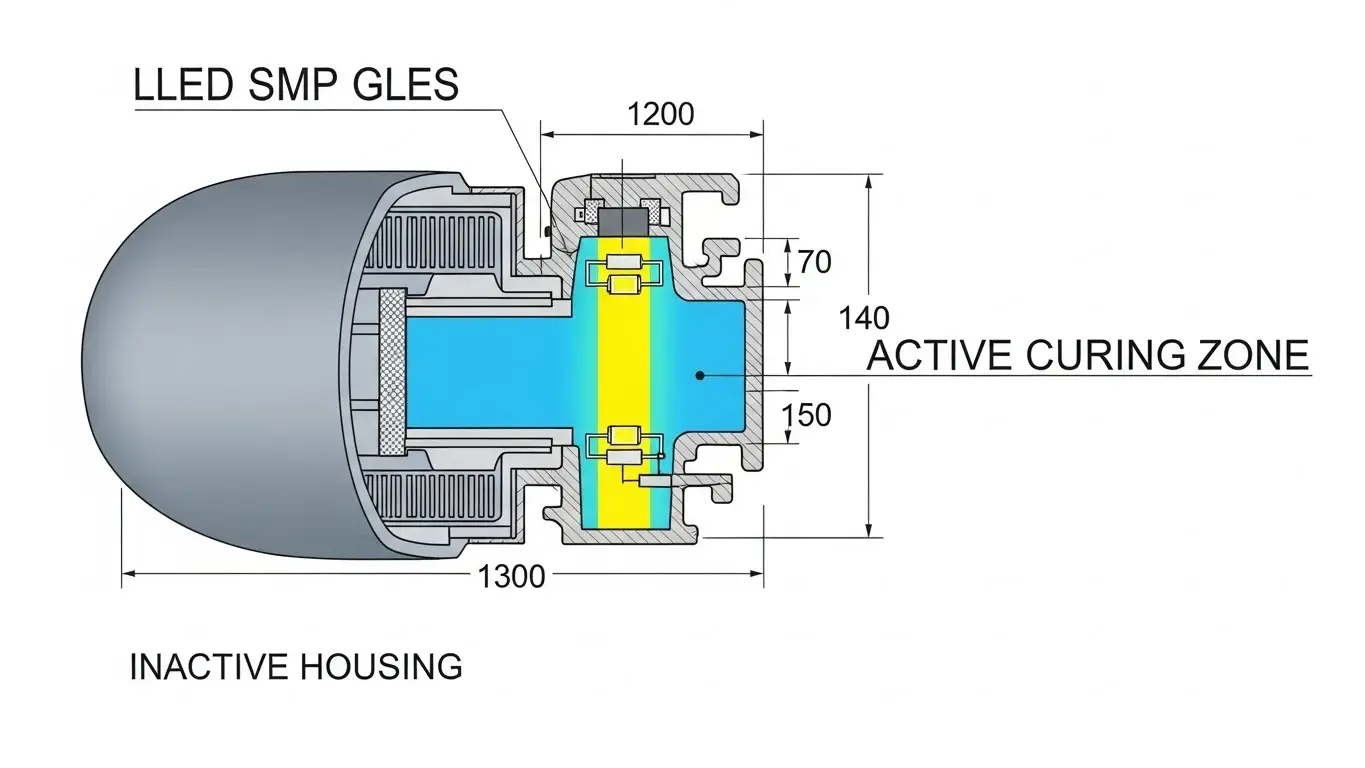
To correctly size a printing UV LED curing system for your web width, you must match the lamp's emission window—not the physical housing size—to your maximum print width, adding a safety margin for web wander. A general rule of thumb is to select an emission window that is 5mm to 10mm (0.2 to 0.4 inches) wider than your widest substrate. This ensures that even if the web shifts laterally during high-speed production, the ink at the extreme edges receives the full UV dose required for polymerization. Failing to account for this buffer often results in tacky edges and uncured ink. Understanding the "Emission Window" vs. Physical Size When integrating a curing system, the most critical specification is the emission window. This is the active area of the LED array that emits UV energy. Many operators make the mistake of measuring the external casing of the lamp. However, the casing includes cooling manifolds, electronics, and mounting brackets, meaning the actual curing area is significantly smaller. If you size your system based on the physical dimensions, you will likely end up with an emission window that is narrower than your web, leading to immediate quality issues. For a deeper dive into how ...

2026-01-09
By UVET
Common LED UV Curing Problems in Flexo (And Fixes)

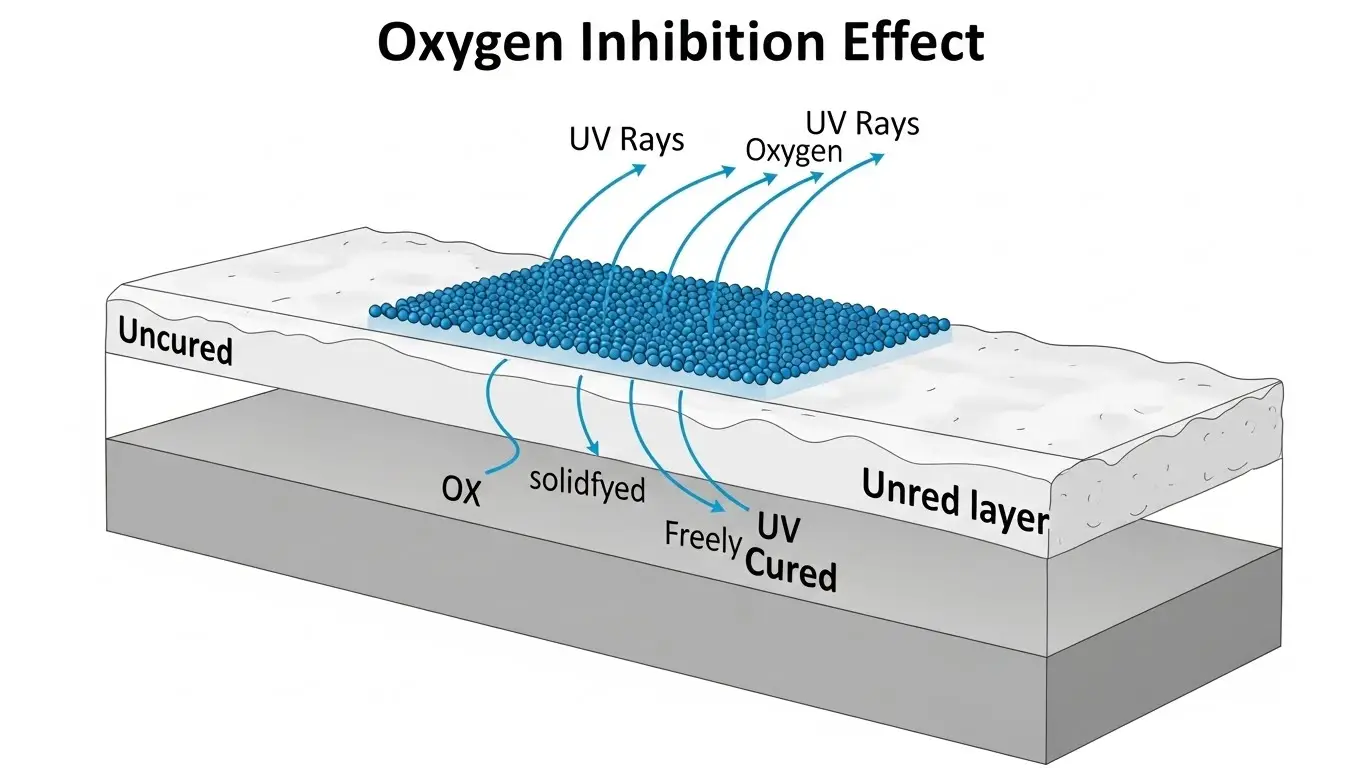
Switching to or optimizing common LED UV curing problems in flexo isn’t just about swapping lamps; it’s about mastering a new chemistry and energy balance. While LED curing offers game-changing consistency and energy savings, it brings unique challenges like oxygen inhibition and spectral mismatches that can stall your press. If you are battling tacky surfaces, poor adhesion, or mystery odors, you are not alone. This guide dives into the most frequent hurdles flexo printers face with LED UV systems and provides actionable, floor-tested fixes to get your production back to speed. Why Is My Ink Surface Still Tacky (Oxygen Inhibition)? The Answer: Surface tackiness occurs when atmospheric oxygen blocks the curing reaction at the very top of the ink film, a phenomenon known as oxygen inhibition. To fix this, increase the LED peak irradiance to punch through the oxygen barrier, use nitrogen inerting systems, or switch to inks specifically formulated with "LED boosters" or amine synergists to consume surface oxygen. The Deep Dive: Overcoming the "Air Trap" One of the most frustrating common led uv curing problems in flexo is pulling a web off the press that looks cured but feels sticky to the touch. In traditional mercury curing, the ...

2026-01-10
By UVET
Flexo LED UV Curing: Benefits and Setup Considerations

In the fast-paced world of label and package printing, flexo LED UV curing has emerged as the definitive standard for efficiency, quality, and sustainability. If you are still relying on conventional mercury arc lamps, you are likely battling excessive heat, high energy bills, and frequent downtime. Switching to LED technology isn’t just an upgrade; it is a fundamental shift that empowers converters to print faster on a wider range of substrates with superior consistency. This guide explores why top-tier flexo operations are transitioning to LED UV curing and details exactly what you need to know to implement it successfully. What Is Flexo LED UV Curing and How Does It Work? Flexo LED UV curing is a photopolymerization process that uses high-intensity Light Emitting Diodes (LEDs) to instantly dry inks, coatings, and adhesives on a flexible web. Unlike broad-spectrum mercury lamps that emit heat and ozone, LED systems output narrow-band UV energy (typically 385nm or 395nm). This targeted energy penetrates deep into the ink layers, triggering an immediate reaction with photoinitiators. The result is a fully cured, durable print ready for immediate finishing, without the thermal stress that distorts sensitive materials. The Core Mechanism Why Should You Switch to LED UV ...

2026-01-08
By UVET
UV LED Curing for Shrink Sleeve Labels: What to Know

UV LED curing for shrink sleeve labels is a process that uses light-emitting diodes (LEDs) to instantly dry inks and coatings without generating the intense infrared heat associated with traditional mercury arc lamps. This "cold cure" technology is critical for shrink sleeves because the substrate materials—such as PETG, PVC, or OPS—are highly heat-sensitive and prone to shrinking or distorting prematurely if exposed to high temperatures during printing. By switching to UV LED, converters can run presses at higher speeds, reduce energy consumption by up to 50-70%, and eliminate the risk of heat-damaged film, ensuring a consistent, high-quality finish for packaging. Why Heat Management is Critical for Shrink Sleeves Shrink sleeves are designed to do exactly what their name implies: shrink when exposed to heat. This characteristic makes printing on them a delicate balancing act. If the curing system on a flexographic press emits too much heat, the film can begin to shrink before it is applied to the bottle or container. Traditional mercury vapor lamps emit a broad spectrum of light, including a significant amount of infrared (IR) energy, which translates directly to heat. This often forces printers to run chill rolls at maximum capacity or slow down the press ...

2026-01-06
By UVET
How to Improve Cure on High-Speed Web Printing

High-speed web printing is a delicate balancing act. Push the press speed too high, and you risk under-cured ink, sticky rolls, and rejected batches. Keep it too slow, and your profitability vanishes. The "sweet spot" isn't just about mechanical speed—it is about the physics of polymerization. If you are struggling to maintain a solid cure at 1,000+ fpm (feet per minute), the bottleneck is likely not your press, but your curing system’s ability to deliver energy effectively in that split-second window. Optimizing cure on high-speed lines requires a shift in strategy—moving from "blasting heat" to precision energy management. Whether you are running narrow web flexo for labels or high-volume offset, improving your cure rating means mastering three variables: irradiance, dwell time, and spectral matching. This guide details exactly how to stabilize your curing process, reduce waste, and confidently ramp up your press speeds using modern UV LED technology. Why Is Curing So Difficult at High Web Speeds? The Challenge: As press speed increases, the dwell time (the duration ink is exposed to UV light) decreases drastically. If the "dose" (total energy delivered) drops below the threshold required for polymerization, the ink remains liquid or tacky. The Physics of the Problem: ...

2026-01-05
By UVET
What Wavelength Is Best for Flexo UV Inks?

For most flexographic printing applications, 395 nm (nanometers) is the best and most widely used wavelength for UV LED inks. This wavelength offers the optimal balance between cure speed, depth of cure (penetration), and energy efficiency. While traditional mercury vapor lamps emit a broad spectrum of light, modern UV LED systems focus on specific narrow peaks. The 395 nm wavelength is the industry standard because it effectively penetrates thicker ink layers—including difficult-to-cure opaque whites, blacks, and metallics—ensuring the ink adheres firmly to the substrate rather than just drying on the surface. Understanding UV Wavelengths in Flexo Printing In the shift from conventional mercury arc lamps to UV LED technology, understanding wavelength is critical for print quality and press speed. Unlike mercury lamps that blast a chaotic mix of UV-A, UV-B, and UV-C, UV LED curing systems emit precise, monochromatic bands of energy. Why 395 nm Dominates the Industry The 395 nm wavelength has become the "sweet spot" for flexo label and packaging printers for several reasons: To learn more about how this technology integrates with your press, read about UV LED Curing for Flexo & Labels. 395 nm vs. 385 nm vs. 365 nm: What’s the Difference? While 395 nm ...

2026-01-03
By UVET
How to Reduce Odor in UV Flexo Inks with LED Curing

Learning how to avoid odor in UV flexo inks with LED curing is critical for converters targeting sensitive markets like food and pharmaceutical packaging. In the competitive world of flexographic printing, brand owners are increasingly intolerant of "off-gassing" or chemical smells on their labels. I’ve been on press floors where a fresh roll of labels smelled like a chemistry set—a guaranteed rejection from any food safety auditor. The shift to LED technology isn't just about energy savings; it is the most effective strategy for mitigating these sensory risks. By controlling polymerization and eliminating ozone, you can achieve a neutral-smelling, high-compliance product. Below is a comprehensive guide to mastering odorless production using LED UV technology. What Causes Odor in UV Flexo Inks? The primary causes of odor in UV flexo inks are unreacted monomers trapped in the ink film, photolytic byproducts from photoinitiators, and ozone generation from conventional mercury lamps. Additionally, excessive heat can cause substrates to release their own plasticizers, contributing to the overall "taint" or smell of the final printed product. The Chemistry of the Smell To solve the problem, we first have to understand the enemy. In my experience troubleshooting quality issues, the "smell" rarely comes from just ...

2026-01-02
By UVET
Best UV LED Curing System for Flexo Label Printing

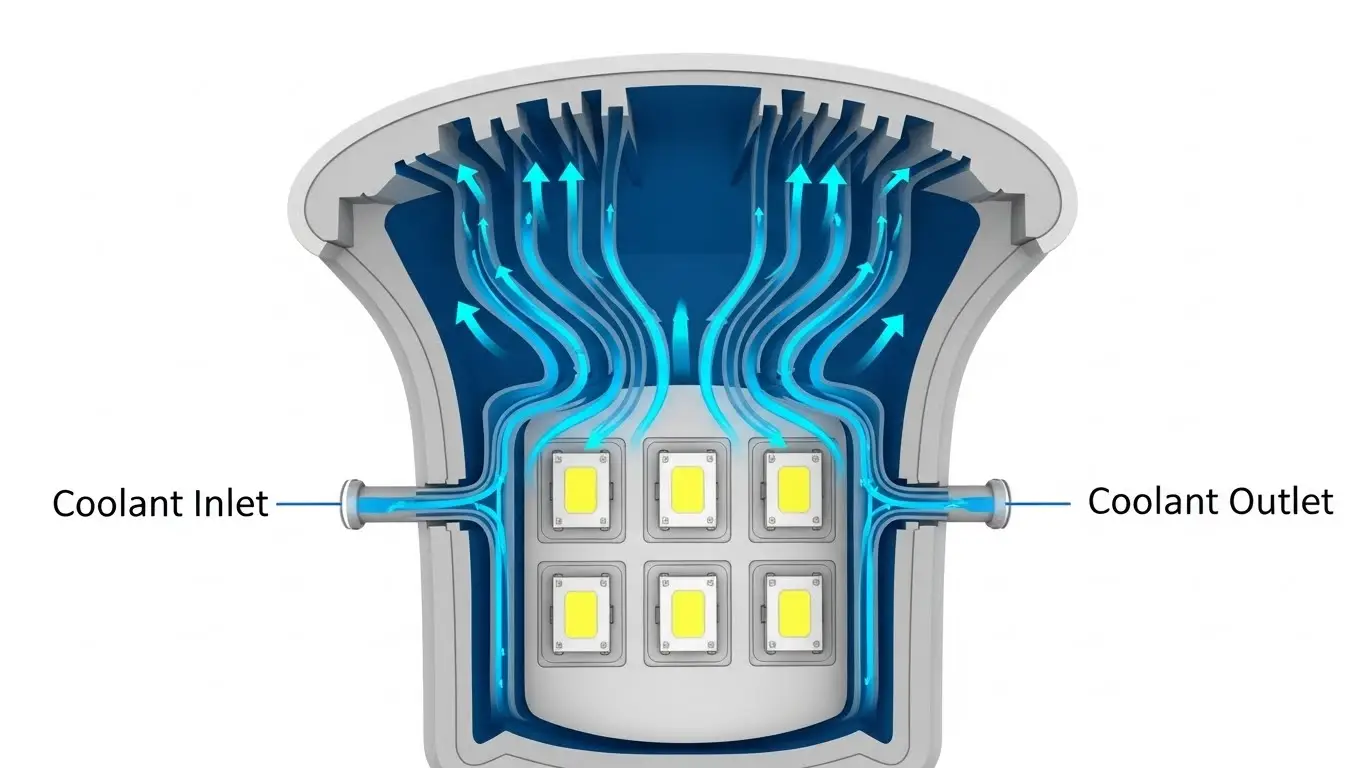
The best UV LED curing system for flexo label printing is one that combines high peak irradiance (typically 12–20 W/cm²) with efficient thermal management to handle heat-sensitive substrates without distortion. Unlike traditional mercury lamps, the ideal LED system offers instant on/off capabilities, uniform UV output across the entire web width, and a lifespan exceeding 20,000 hours. For label converters, the "best" choice is specifically a system that allows for modular retrofitting, ensuring compatibility with existing presses while reducing energy consumption by up to 70%. What Defines the Best UV LED System for Flexo? Choosing the right curing technology is critical for label quality. While there are many options on the market, the top-tier systems share specific characteristics that directly impact your bottom line and print quality. High Peak Irradiance and Dose For flexographic printing, especially when running at high speeds, you need a system that delivers consistent energy density. The best systems provide high peak irradiance to ensure the ink penetrates and cures all the way through to the substrate—critical for achieving good adhesion on non-porous materials like films and foils. Thermal Management Efficiency One of the primary reasons converters switch to UV LED curing for flexo & labels is ...

2026-01-01
By UVET
What Is LED UV Curing in Flexo Printing?

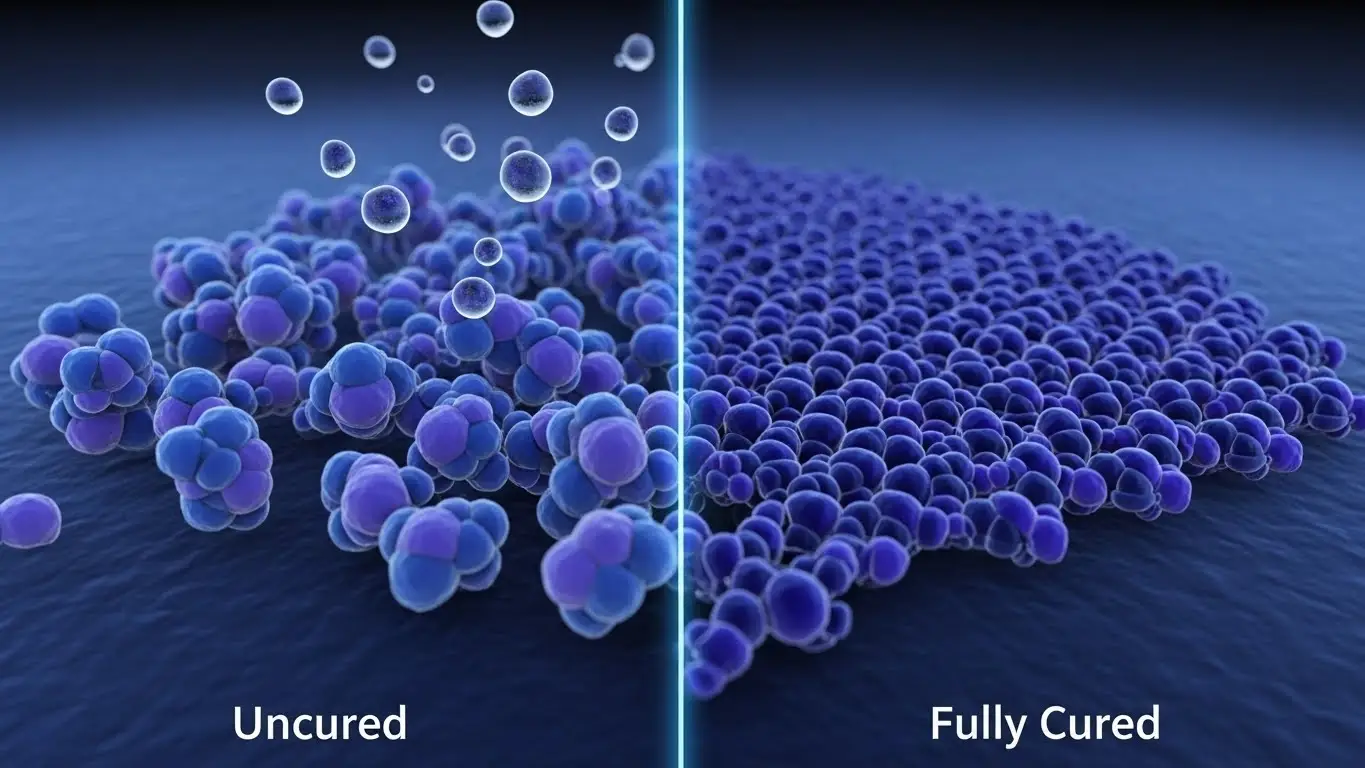
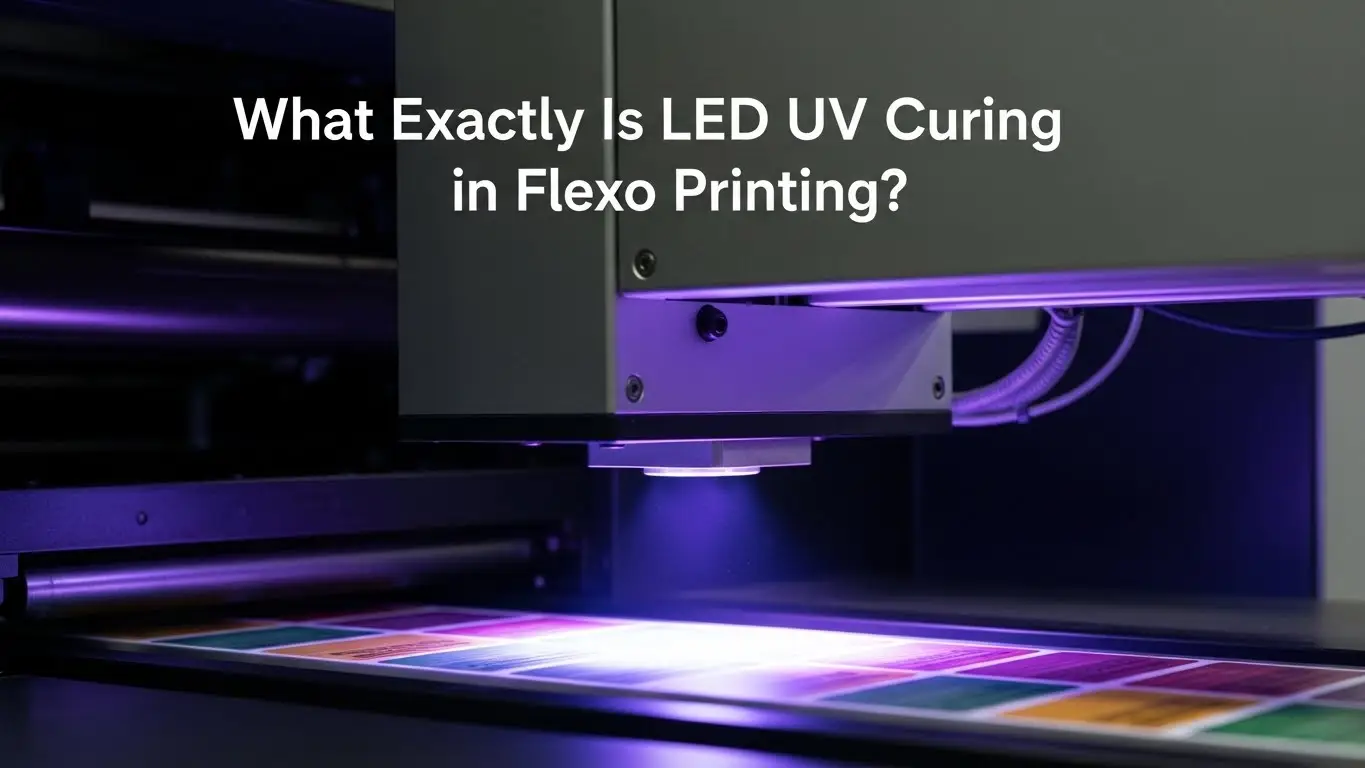
What is LED UV curing in flexo printing? It is a photochemical process using light-emitting diodes to instantly dry inks. This technology is revolutionizing the flexographic industry by replacing traditional mercury lamps with cooler, energy-efficient alternatives. For decades, flexo printing relied on hot, energy-hungry mercury arc lamps. While effective, they came with significant downsides: excessive heat, short bulb life, and hazardous ozone emissions. Today, the shift toward UV LED curing represents a massive leap forward. It’s not just a different light bulb; it’s a fundamental change in how we manage production speed, substrate compatibility, and environmental responsibility. If you are a converter looking to optimize your press or a brand owner demanding higher quality labels, understanding this technology is no longer optional—it is essential. What Exactly Is LED UV Curing in Flexo Printing? LED UV curing in flexo printing is a "cold curing" technique that uses narrow-spectrum ultraviolet light to polymerize inks instantly. Unlike broad-spectrum mercury lamps, LED systems emit specific wavelengths (typically 385nm or 395nm) to trigger photoinitiators, turning liquid ink into a solid, durable film in milliseconds. The Science Behind the Cure At its core, flexographic printing is about transferring fluid ink onto a material. The challenge has ...

2026-01-04
By UVET
UV LED Curing for Flexo & Labels: Web Printing Curing Solutions (Systems, Setup, Costs, and Troubleshooting)

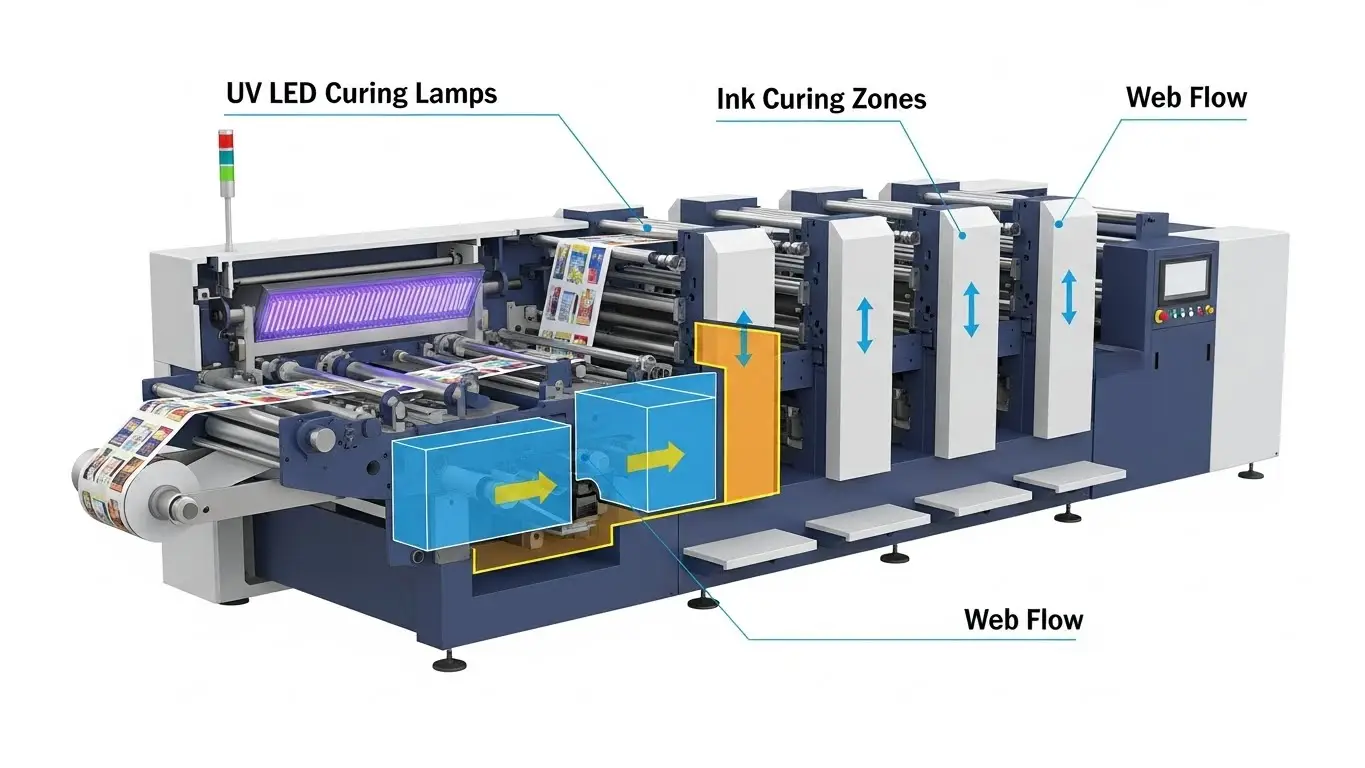
UV LED curing for flexo and labels is a web printing curing method that instantly cures energy-curable inks on a narrow-web printing line so converters can hit production speed targets without sacrificing cure quality. This guide is written for label converting teams, flexo operators, and engineers who need a stable curing window on a flexographic press—whether you’re planning a retrofit conversion, validating a new UV LED curing system, or troubleshooting tack/adhesion issues. You’ll learn what a curing solution includes (lamp, control, cooling, quality validation), how dose and irradiance interact with web speed, and where pinning vs full cure fits on real press layouts. We’ll also cover system types, setup decisions, cost drivers, and the most common failure modes so you can choose, commission, and run web printing curing reliably. What is UV LED curing for flexo & labels in web printing? UV LED curing in flexo label printing is a photopolymerization process where UV-curable ink, UV varnish, or UV adhesive crosslinks when exposed to a UVA wavelength from an LED source, creating an instant cure as the web moves through inline converting. In practical terms, a curing solution is more than a lamp head: it’s the UV LED curing system ...


  • PrevPrev
  • 1
  • 2
  • 3
  • …
  • 18
  • NextNext
UV LED MANUFACTURER
Focus on UV LEDs since 2009
Follow Us:
  • address
    +86 13923758020
  • address
    info@uvndt.com
  • address
    1802, Bldg A, Baian Center, Nancheng District, Dongguan 523073, China.
Products
LED UV Curing
LED UV Inspection
UV LED Modules
Solutions
Electronics Manufacturing
Medical Devices
Automotive Industry
Printing Applications
Support
FAQs
Download
Case Studies
About
About Us
Blog
Contact
UV LED Spot Curing | UV LED Area Curing | UV LED Curing Chambers | UV Tape Curing Systems | Handheld LED UV Curing | UV LED Curing Systems for Printing | UV LED Flashlights | UV LED Headlamps | Pistol Grip UV LED Lamp | Stationary UV LED Lamp | COB UV Modules | Array LED UV Modules |
Copyright © 2018~2025 Dongguan UVET Co., Ltd. Privacy Policy
United States / English
Get In Touch

    icon-close
    Inquiry
    Email