nav_logo
  • Home
  • Products
    LED UV Curing
    UV LED Spot Curing
    UV LED Area Curing
    UV LED Curing Chambers
    UV Tape Curing Systems
    Handheld LED UV Curing
    UV LED Curing Systems for Printing
    LED UV Inspection
    UV LED Flashlights
    UV LED Headlamps
    Handheld UV LED Lamps
    Stationary UV LED Lamp
    UV LED Modules
    COB UV Modules
    Array LED UV Modules

    Built with high-quality LED sources

    Our UV curing systems offer 20,000+ hours of lifespan, instant on/off functionality, and stable performance in industrial environments.

    Explore Our Services
  • Solutions
  • OEM/ODM Services
  • Support
    • FAQs
    • Download
    • UVLED Gallery
  • Blog
  • About
  • Home
  • Products
    • LED UV Curing
    • LED UV Inspection
    • UV LED Modules
  • Solutions
    • UV Printing - A Detailed Guide
    • UV LED for Automotive: Advanced & Efficient Solutions
    • UV LED for Medical Devices: The Ultimate Guide 2025
    • UV LED for Electronics Application: Why it’s Critical
  • OEM/ODM Services
  • Support
    • FAQs
    • Download
    • UVLED Gallery
  • Blog
  • About
  • Contact
  • English
  • 中文

Blog

Home / Blog / Page 7
    ALL Guides Case Study Industry Insights Product Innovations
All Articles
Hot Tags
Inkjet Printing
UV Curing Technology
UV LED Curing
UV Intensity Measurement
Inkjet Printing
UV Curing Technology
UV LED Curing
UV Intensity Measurement
ALL Guides Case Study Industry Insights Product Innovations
2026-01-06
By Arafat
365 nm UV LED Curing Light: Best Uses and Compatibility

Selecting the optimal wavelength for ultraviolet curing is a critical step in ensuring the structural integrity and surface quality of manufactured parts. You will find that the 365 nm UV LED curing light is a cornerstone of high-precision industrial processes, particularly when working with clear adhesives and specialty coatings. This guide examines why this specific frequency is chosen for demanding applications, how it interacts with material chemistry, and what technical factors determine its compatibility with your production line. By aligning the 365 nm output with your specific process needs, you can achieve a more reliable, high-energy cure that meets rigorous quality standards. What Is a 365 nm UV LED Curing Light? A 365 nm UV LED curing light emits near-UV energy at about 365 nm and is often chosen for materials and photoinitiators that absorb strongly in the shorter UV range. You will notice that this wavelength carries higher photon energy than longer UVA alternatives like 395 nm or 405 nm. This higher energy allows it to trigger chemical reactions in resins that are less responsive to longer wavelengths, making it a powerful tool for rapid polymerization. Because it is a solid-state LED source, it provides a narrow-band emission that ...

2025-12-26
By Arafat
385 nm UV LED Curing Light: Where It Performs Best

Selecting the appropriate frequency for your curing process is essential for achieving long-term bond stability and surface quality. You will find that the 385 nm UV LED curing light serves as a vital middle ground in industrial manufacturing, offering a versatile spectral output that addresses various material needs. This guide examines the specific scenarios where this wavelength excels, how it interacts with different chemistries, and the technical factors that make it a reliable choice for your production line. By matching the 385 nm output to your process requirements, you can optimize your energy use and ensure consistent results across your manufacturing workflow. What Is a 385 nm UV LED Curing Light? A 385 nm UV LED curing light is a near-UV light source centered around 385 nm that often provides balanced cure depth and surface activation for many common materials. You will notice that this wavelength sits within the UVA band, providing a solid-state alternative to traditional bulb-based lamps without the risks of mercury or ozone production. Because it is an LED source, it allows you to utilize instant-on functionality and precise intensity control, which significantly reduces downtime on your shop floor compared to legacy systems. What Materials and Photoinitiators ...

395 nm UV LED curing lamp
2026-01-06
By Arafat
395 nm UV LED Curing Lamp: Typical Uses and Selection Tips

Selecting the right ultraviolet light source is a pivotal decision for any manufacturing process involving inks, coatings, or adhesives. You will find that the 395 nm UV LED curing lamp has become a dominant standard in modern industrial environments due to its specific energy profile and compatibility with a wide range of materials. This guide explains how this wavelength behaves, where it is most effectively applied, and what technical criteria you should use to select the right equipment for your facility. By matching the lamp’s output to your material chemistry and production speeds, you can achieve a more reliable and efficient curing cycle. What Is a 395 nm UV LED Curing Lamp? A 395 nm UV LED curing lamp is a UV LED light source emitting near-UV energy centered around 395 nm commonly used for materials responsive to that bandwidth. You will notice that this wavelength sits at the upper end of the UVA spectrum, providing a lower-energy photon compared to shorter UV waves but with a high level of stability. This solid-state technology replaces traditional mercury bulbs, offering you instant-on capability and a much longer operational lifespan. Because it is a narrow-band emitter, the energy is concentrated specifically where ...

photoinitiators to UV LED wavelengths
2025-12-25
By Arafat
How to Match Photoinitiators to UV LED Wavelengths

Achieving a high-performance industrial cure depends on the precise alignment between your light source and your material's chemistry. You will find that simply having a powerful lamp is not enough; the light must be "tuned" to the specific chemicals designed to harden your inks or adhesives. This guide explains how to match photoinitiators to UV LED wavelengths by evaluating absorption spectra and energy profiles. By mastering this technical pairing, you can ensure faster production speeds, stronger bonds, and a more reliable manufacturing process. What Does It Mean to Match Photoinitiators to UV LED Wavelengths? Matching photoinitiators to UV LED wavelengths means choosing initiators whose absorption peaks overlap the LED’s emission range. You must ensure that the specific "color" of ultraviolet light emitted by your diodes is the same frequency that your photoinitiator is designed to capture. Because LEDs emit a very narrow band of light—unlike the broad spectrum of traditional lamps—this overlap is critical. If the LED output falls outside the initiator's absorption window, the energy will pass through the material without triggering the hardening process, regardless of the lamp's intensity. How Do Photoinitiators Interact With UV Light? Photoinitiators work by absorbing specific UV wavelengths and converting that energy into ...

405 nm UV LED curing
2025-12-25
By Arafat
When Should You Use 405 nm UV LED Curing?

Deciding on the correct ultraviolet frequency for your manufacturing line requires a precise understanding of how light energy interacts with your specific resins. While many industrial applications favor shorter wavelengths, there are distinct scenarios where a longer frequency is necessary to achieve the desired result. This guide explores the technical applications of 405 nm UV LED curing and how it influences surface quality and material health. By evaluating these factors, you can determine if this near-visible wavelength is the right fit for your specialized assembly or coating process. What Is 405 nm UV LED Curing and Why Is It Used? 405 nm UV LED curing refers to a specific UV LED wavelength with relatively lower energy and good surface-cure behavior for many common materials. You will find that this wavelength sits at the very edge of the ultraviolet spectrum, bordering on visible violet light. It is used primarily because it offers a gentler curing process that reduces the risk of yellowing or degrading sensitive substrates. For many manufacturers, it provides a stable way to cure specialized coatings that do not require the intense, high-energy "hit" of shorter wavelengths. What Materials and Photoinitiators Are Best Suited to 405 nm Curing? 405 ...

385 nm UV LED curing
2025-12-24
By Arafat
What Is 385 nm UV LED Curing Used For?

Evaluating the right ultraviolet wavelength for your production line often leads to the 385 nm range. This specific frequency is a cornerstone of modern industrial processes, offering a versatile solution for a wide variety of chemical formulations. This guide examines what makes 385 nm UV LED curing a preferred choice for many manufacturers and how it influences the final quality of your products. By understanding the technical strengths of this wavelength, you can better align your equipment with your material requirements and production goals. What Is 385 nm UV LED Curing and Why Is It Used? 385 nm UV LED curing is an industrial UV curing wavelength commonly used where a balance of cure depth, surface energy, and material compatibility is needed. You will find that this wavelength sits in a "sweet spot" within the UVA spectrum, providing enough energy to trigger surface hardening while still penetrating through slightly thicker layers. It is widely used because it bridges the gap between the high-energy surface focus of 365 nm and the deep-penetrating characteristics of 395 nm systems. Using this wavelength allows you to handle a broad range of resins without needing to constantly change your lamp heads. It provides a stable ...

365 nm vs 395 nm UV LED curing
2025-12-23
By Arafat
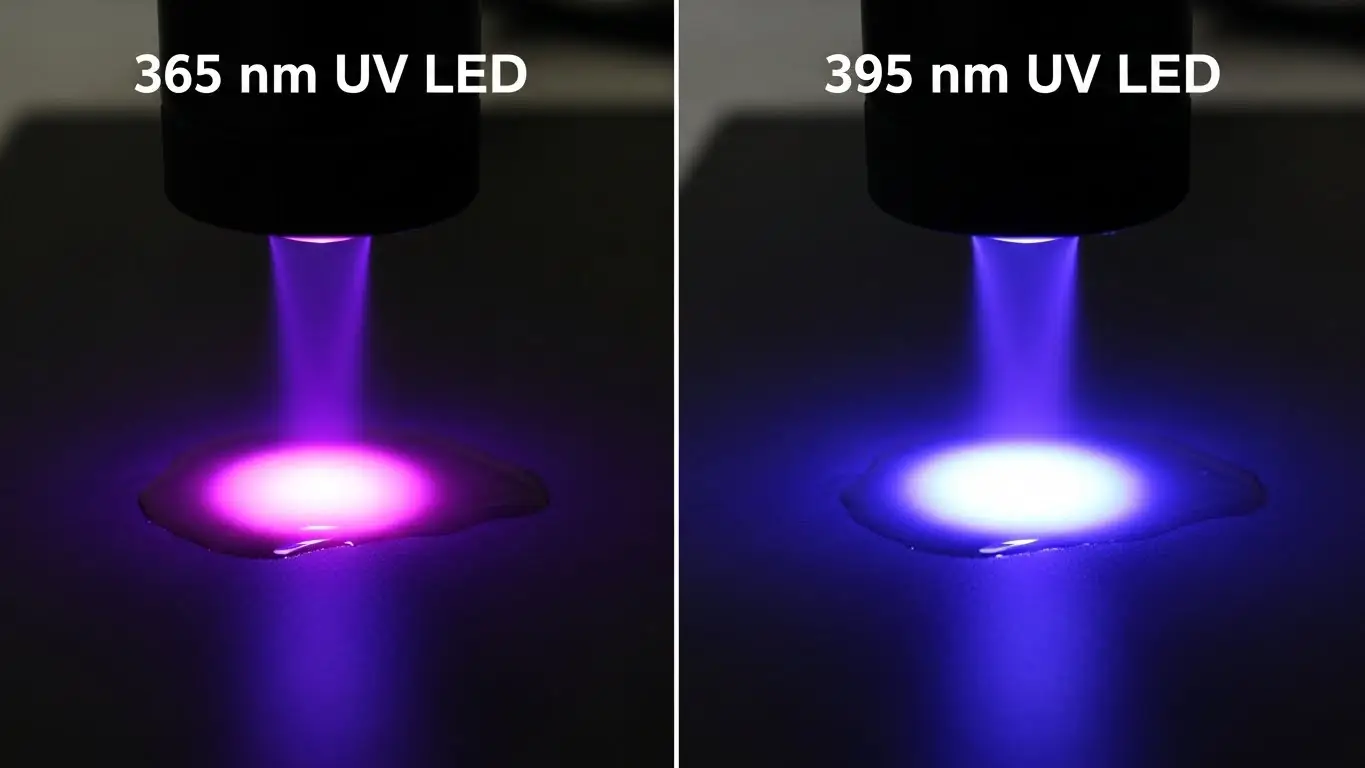
365 nm vs 395 nm UV LED Curing: Which Is Better and Why?

Choosing between 365 nm and 395 nm for your production line requires you to look closely at how ultraviolet energy interacts with your specific coatings. While both wavelengths fall within the UVA spectrum, they offer different results in terms of surface hardness and through-cure. This guide breaks down the technical differences and practical trade-offs of 365 nm vs 395 nm UV LED curing to help you select the light source that matches your material chemistry. By understanding these variables, you can optimize your manufacturing speed and ensure your final products meet your quality standards. What Are the Fundamental Differences Between 365 nm and 395 nm UV LED Curing? 365 nm and 395 nm refer to distinct UV LED wavelengths with different energy profiles and material interactions. You will find that 365 nm light has a shorter wavelength and higher photon energy, making it very effective for surface-level chemical reactions. In contrast, 395 nm light has a longer wavelength and lower energy, which allows it to pass more easily through pigments and thicker layers. Your choice between them dictates how efficiently your lamp converts electricity into the specific energy your adhesives or inks need to harden. How Does 365 nm UV ...

UV LED curing wavelength
2025-12-15
By Arafat
UV LED Curing Wavelength Guide: 365 nm vs 385 nm vs 395 nm vs 405 nm

You need a reliable UV LED curing wavelength guide to understand how specific light frequencies impact your manufacturing results. Selecting the right wavelength is a technical decision that determines if your adhesives and coatings reach their full structural strength. This guide covers the essential differences between 365 nm, 385 nm, 395 nm, and 405 nm to help you align your light source with your material chemistry. By matching these frequencies to your photoinitiators, you can improve your production speed and ensure a consistent finish on every part. Why Wavelength Matters in UV LED Curing Wavelength matters because it determines how curing energy interacts with materials and photoinitiators. You must match the light output of your lamp to the absorption profile of your chemistry to start the polymerization process. If your wavelength is off, the energy will pass through the material or reflect off the surface without causing the liquid to harden. Your choice of frequency also dictates how deep the light can travel through your coating. Shorter wavelengths and longer wavelengths interact with pigments and resins in different ways, affecting the final bond strength. What Are the Characteristics of 365 nm UV LED Curing? The 365 nm wavelength provides deeper ...

LED Curing Light vs UV Lamp
2025-12-23
By Arafat
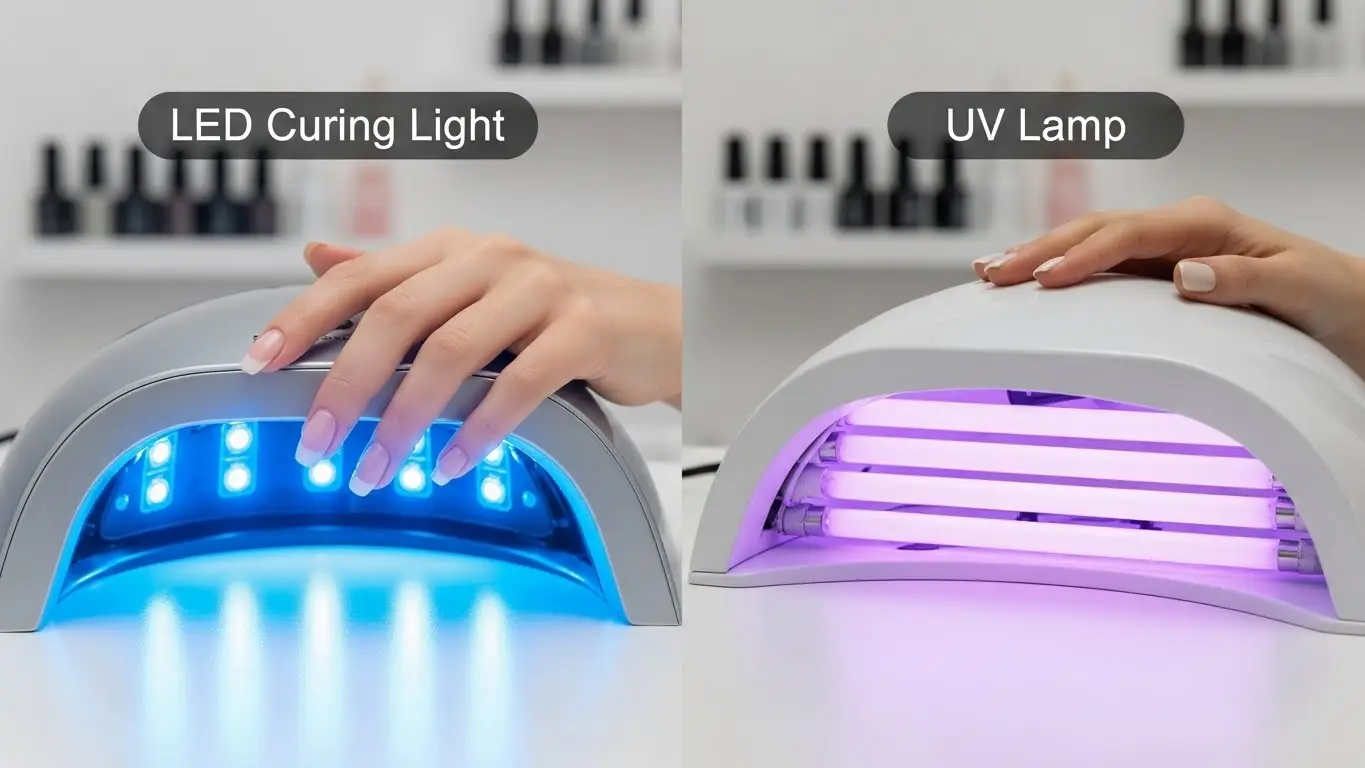
LED Curing Light vs UV Lamp: Practical Differences in Production

Selecting the right ultraviolet source for your shop floor requires you to look past technical specs and focus on how the equipment behaves during an active shift. You will find that moving from a bulb-based system to a diode-based system changes how you handle parts, manage your time, and organize your workflow. This guide examines the daily operational realities of using an LED curing light vs UV lamp in a high-volume production environment. By understanding these practical differences, you can better plan your facility upgrades and ensure your production outcomes meet your quality and speed requirements. What Are the Practical Production Differences Between LED Curing Lights and UV Lamps? LED curing lights and traditional UV lamps behave differently in production due to distinct energy delivery, temperature, and control characteristics. You will notice that LED systems allow for instant-start operation, meaning you do not have to wait for the equipment to warm up before starting your line. Traditional UV lamps, however, offer a broader spectral output that can handle a wider variety of standard inks without needing specialized chemical formulations. These differences dictate how often your team stops the line and how much energy your facility consumes during idle periods. How ...

UV or LED curing lamp
2025-12-22
By Arafat
UV or LED Curing Lamp: How to Decide Based on Materials

Selecting a UV or LED curing lamp for your production line depends on how your specific coatings and substrates react to ultraviolet light. You must consider your material's chemical makeup and physical traits to ensure a reliable bond and a hard finish. This guide explains how to evaluate your inks, adhesives, and coatings to determine the best light source for your job. By focusing on your material needs first, you can avoid curing failures and improve your final product quality. How Do Material Characteristics Drive the Choice Between UV and LED Curing Lamps? Material characteristics determine how well a curing lamp will work, and therefore should drive lamp selection. You must look at how your chemistry reacts to specific light bands before you buy any equipment. This approach ensures your coatings bond correctly to your substrates without staying tacky. When you put your material needs first, you reduce the risk of wasting money on a system that cannot harden your specific resins. Which Material Properties Affect Cure Quality With UV or LED Lamps? Material properties such as thickness, opacity, and photoinitiator type directly influence cure quality with different lamps. You need to know if your ink is heavily pigmented or ...

UV LED curing limitations
2025-12-21
By Arafat
What Are the Limitations of UV LED Curing?

Evaluating the constraints of any industrial technology is essential for ensuring process reliability. While UV LED curing limitations have decreased as the technology matures, certain spectral and operational boundaries remain. This guide examines where UV LED systems may face challenges, specifically regarding material chemistry, layer thickness, and environmental factors. By identifying these limitations, you can make more informed decisions about equipment selection and process design for your production facility. What Are the Common Limitations of UV LED Curing Technology? UV LED curing technology, like any technology, has limitations that can affect material compatibility, depth of cure, spectral breadth, and process fit in some situations. You will find that these systems operate within a narrow wavelength band, which can restrict their ability to cure coatings designed for broad-spectrum mercury lamps. Additionally, while LED arrays are highly efficient, the absence of short-wave UVC radiation can sometimes result in surface tackiness or incomplete bonding in specific chemical formulations. Recognizing these constraints is not a reason to avoid the technology but rather a requirement for proper implementation. You must evaluate how your specific inks and adhesives respond to a single-peak light source. In cases where materials require multiple wavelengths to cure through different depths, ...


UV LED curing temperature
2025-12-20
By Arafat
Does UV LED Curing Run Cooler Than Mercury UV?

Understanding the thermal profile of your production line is essential for maintaining part quality and worker safety. You will find that heat generation varies significantly between different ultraviolet light sources. This guide examines the temperature behavior of UV LED curing temperature compared to traditional mercury systems and how these differences impact your substrates and facility environment. By evaluating these technical factors, you can better determine which technology aligns with your specific material constraints and goals. Does UV LED Curing Generally Run Cooler Than Mercury UV Curing? UV LED curing typically runs at lower operating temperatures compared with mercury UV curing under similar process conditions. You will notice that while both systems generate energy to cure coatings, the heat felt by your parts is much lower with LED technology. This is because LED systems do not emit infrared radiation, which is the primary cause of rising surface temperatures on your shop floor. In a mercury system, a large portion of the electricity is converted into heat rather than usable UV light. When you switch to LED, the energy is concentrated into a narrow ultraviolet band. This results in a cold cure process where your substrates remain much closer to room temperature ...

  • PrevPrev
  • 1
  • …
  • 6
  • 7
  • 8
  • …
  • 18
  • NextNext
UV LED MANUFACTURER
Focus on UV LEDs since 2009
Follow Us:
  • address
    +86 13923758020
  • address
    info@uvndt.com
  • address
    1802, Bldg A, Baian Center, Nancheng District, Dongguan 523073, China.
Products
LED UV Curing
LED UV Inspection
UV LED Modules
Solutions
Electronics Manufacturing
Medical Devices
Automotive Industry
Printing Applications
Support
FAQs
Download
Case Studies
About
About Us
Blog
Contact
UV LED Spot Curing | UV LED Area Curing | UV LED Curing Chambers | UV Tape Curing Systems | Handheld LED UV Curing | UV LED Curing Systems for Printing | UV LED Flashlights | UV LED Headlamps | Pistol Grip UV LED Lamp | Stationary UV LED Lamp | COB UV Modules | Array LED UV Modules |
Copyright © 2018~2025 Dongguan UVET Co., Ltd. Privacy Policy
United States / English
Get In Touch

    icon-close
    Inquiry
    Email