
Can UV LED Curing Be Used for Offset Printing?
Can UV LED curing be used for offset printing in today’s competitive market? The short answer is an emphatic yes. This technology is not just an alternative; it is rapidly becoming the industry standard for efficiency. For decades, offset printers relied on hot, energy-hungry mercury lamps or powder sprays to dry ink. Those days are fading fast. UV LED curing offers a cool, instant, and energy-efficient way to lock ink to paper. It transforms how print shops operate, offering faster turnaround times and higher quality on difficult substrates.
In this guide, we dive deep into the mechanics, economics, and practical applications of UV LED technology in the offset world.
Can UV LED Curing Be Used for Offset Printing Effectively?
Yes, UV LED curing is highly effective for offset printing and is successfully replacing traditional drying methods. It works by using Light Emitting Diodes (LEDs) to emit a specific narrow band of UV light. This light instantly triggers a photochemical reaction in specially formulated inks, turning them from liquid to solid in milliseconds. This process creates a dry sheet immediately, allowing for instant finishing without the need for anti-set-off powder or waiting periods.
The Shift From Heat to Cool Curing
I have walked through countless pressrooms where the heat from conventional UV or heatset dryers made the environment unbearable. UV LED changes that dynamic entirely. Because LEDs emit UV energy without the infrared (IR) heat associated with mercury lamps, the process is known as "cool curing."
This is crucial for offset printers. Traditional heat can dehydrate paper, causing registration issues or "web growth" in roll-to-roll applications. By removing the heat, you stabilize the substrate. Whether you are running a sheetfed Heidelberg or a web offset Manroland, the principle remains the same: precise energy application results in instant curing.
Industry adoption data suggests that a growing percentage of new offset press installations now come equipped with or prepared for LED curing.
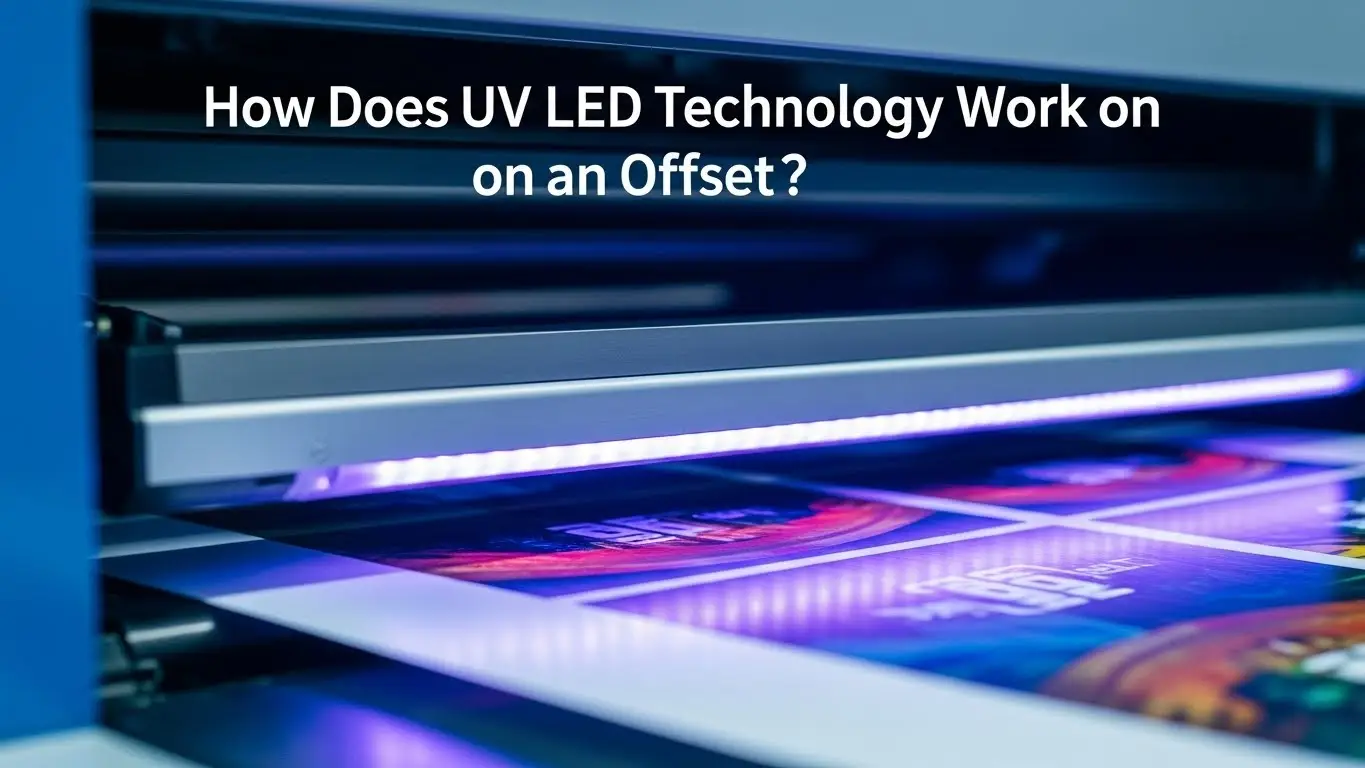
How Does UV LED Technology Work on an Offset Press?
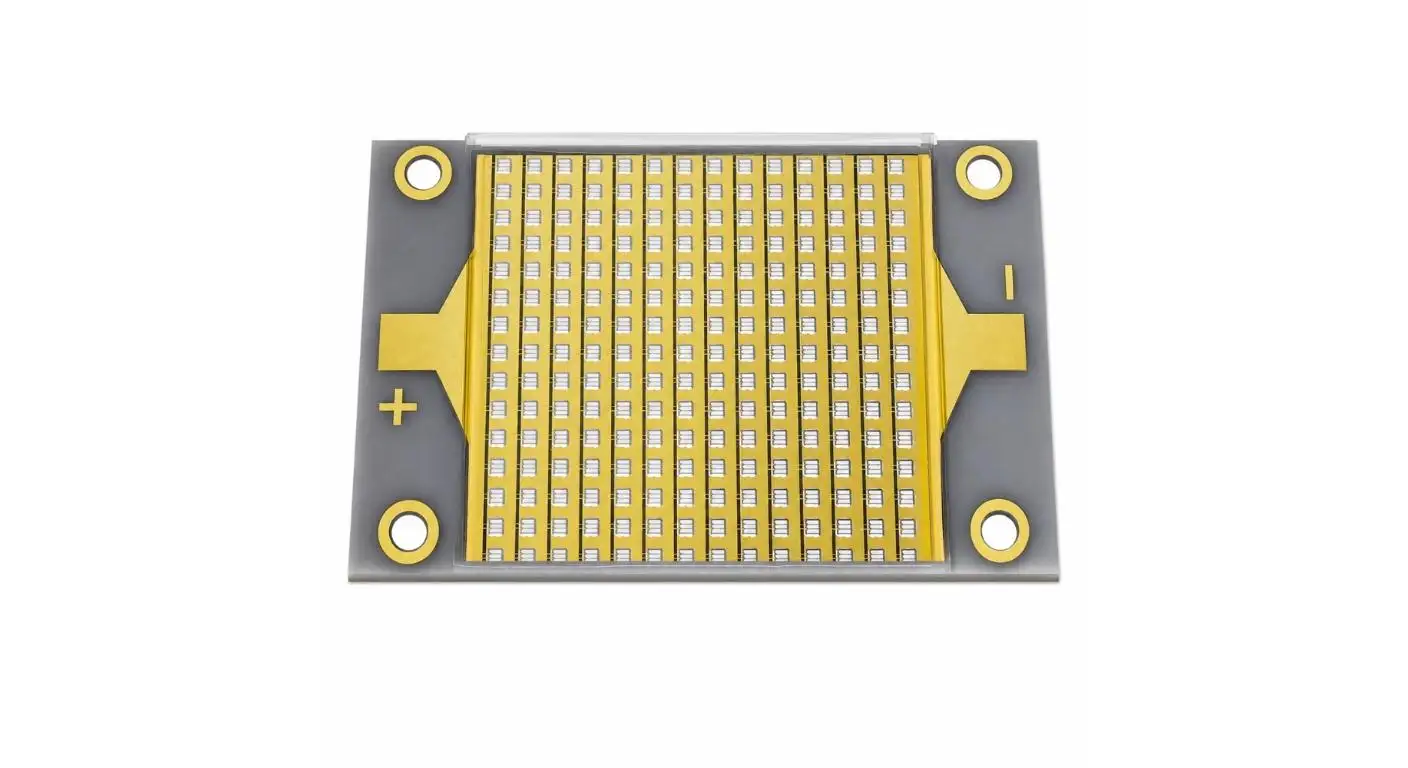
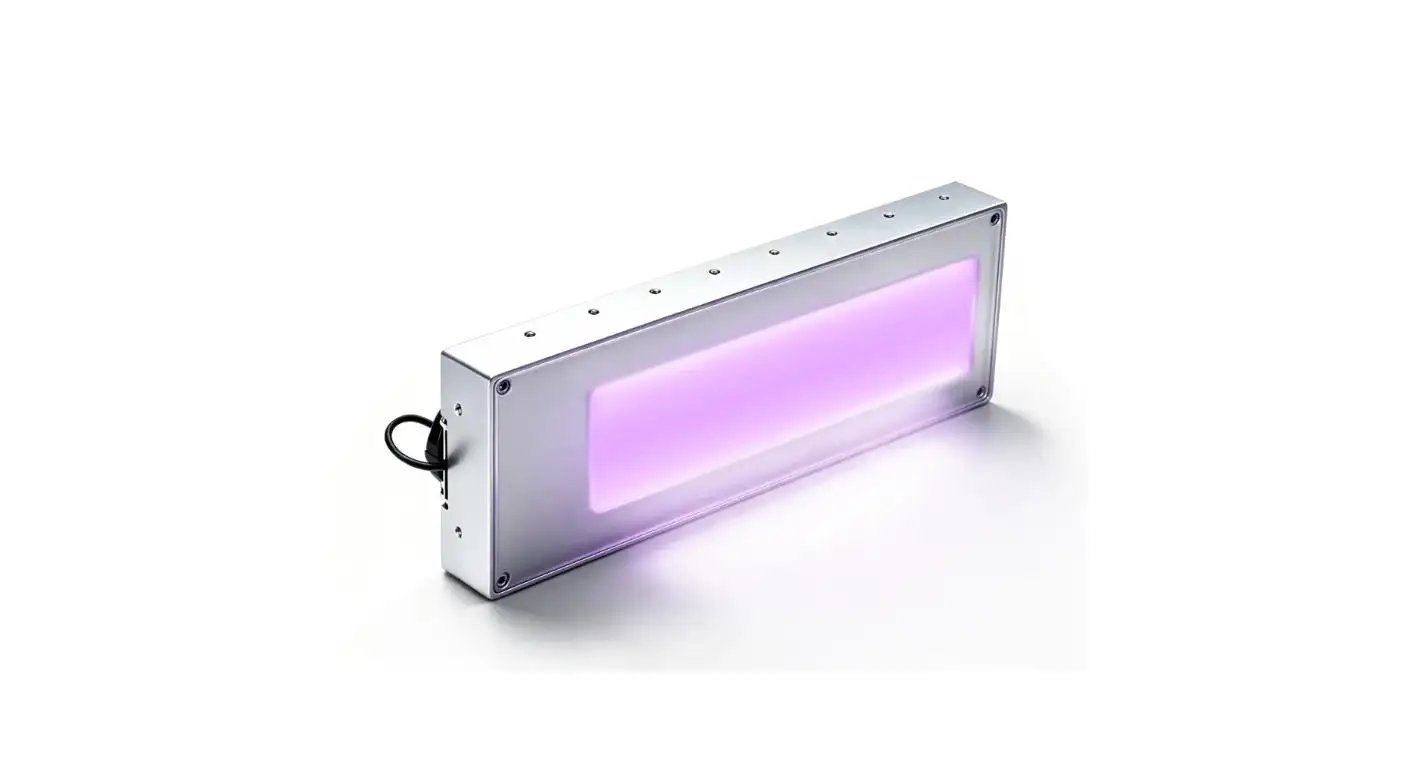
UV LED technology works by integrating LED arrays into the delivery end or inter-deck of the offset press. These arrays emit high-intensity UV light, typically at the 385nm or 395nm wavelength. When this light hits the UV LED-specific ink, photoinitiators within the ink absorb the energy and instantly polymerize (harden) the ink film.
The Technical Mechanism
Let's get technical for a moment. In a standard offset setup, you have water and ink. Achieving the right balance is an art form. With traditional oil-based inks, you rely on absorption and oxidation—a slow process.
With UV LED, the chemistry is different.
- The Ink: Contains monomers, oligomers, and pigments, plus specific photoinitiators sensitive to LED wavelengths.
- The Light Source: The LED lamp sits just inches from the substrate.
- The Reaction: As the sheet passes under the lamp at press speeds (often exceeding 15,000 sheets per hour), the photoinitiators trigger a cross-linking chain reaction.
Experience: When we first retrofitted a legacy press with UV LED, the operators were skeptical. They were used to checking "pile temperature" to ensure sheets wouldn't brick (stick together). With LED, the pile was cool to the touch immediately. The realization that they could send the job straight to the cutter was a "lightbulb moment" for the production manager.
If you are looking to upgrade your current setup, understanding the specific requirements for UV LED Curing for Offset Printing is the first step toward modernization.
What Are the Differences Between UV LED and Conventional Mercury UV?
The main differences are heat generation, energy consumption, startup time, and ozone production. UV LED runs cool, uses up to 80% less energy, turns on instantly without warm-up, and produces no ozone. Conventional mercury lamps run hot, consume massive power, require warm-up time, and generate hazardous ozone that must be extracted.
Comparison: The Tale of Two Technologies
To make an informed decision, you need to look at the hard data. Here is a breakdown of how these technologies compare in a live production environment.
| Feature | Conventional Mercury UV | UV LED Curing |
| Heat Output | High (Requires chillers/shutters) | Low (Cool cure) |
| Energy Usage | High (Continuous burn) | Low (Instant On/Off) |
| Bulb Lifespan | 1,000 - 2,000 hours | 20,000+ hours |
| Startup Time | Slow (Needs warm-up) | Instant (0 seconds) |
| Ozone | Yes (Requires extraction) | None |
| Wavelength | Broad Spectrum | Narrow Spectrum (e.g., 395nm) |
The "Shutter" Factor:
Conventional lamps cannot be turned off between sheets or during short stops; they have mechanical shutters that close to block light while the bulb stays hot. This wastes energy. UV LED lamps turn off completely in the gap between sheets or whenever the press stops. This "instant-on/off" capability is where the massive energy ROI comes from.
What Are the Economic Benefits for Print Shop Owners?
UV LED curing dramatically reduces operating costs through energy savings, lower maintenance, and increased press uptime. By eliminating the need for extraction blowers and reducing electricity draw by roughly 50-70%, shops see a direct impact on the bottom line. Additionally, the longevity of LED diodes eliminates the frequent cost of buying mercury bulbs.
Breaking Down the ROI
When calculating ROI for a retrofit, consider these hidden savings:
- No Spray Powder: You eliminate the cost of the powder and the time spent cleaning it off the press (and the sensors).
- Floor Space: UV LED systems are compact. You often reclaim floor space previously occupied by massive transformer cabinets and exhaust ductwork.
- Substrate Waste: Because the lamps are instant, you don't waste sheets waiting for lamps to come up to power. You are curing the first pull.
According to recent energy audits in commercial print shops, switching to LED can save thousands of dollars annually in electricity alone.
Does UV LED Curing Improve Print Quality on Uncoated Paper?
Yes, UV LED curing significantly improves print quality, especially on uncoated stocks, by preventing ink absorption. Because the ink cures instantly upon exposure to light, it sits on top of the paper fibers rather than soaking in. This results in sharper dots, higher color density, and the elimination of "dry-back" (where colors fade as they dry).
The "Pop" Factor
We often hear designers complain that their vibrant images look dull on uncoated offset paper. This is due to dot gain and absorption.
With UV LED:
- Ink Holdout: The polymer forms before the vehicle can penetrate the paper.
- Gloss Levels: You can achieve higher contrast between the ink and the paper.
- Sharpness: Fine text and reverse type remain crisp because the ink doesn't spread.
I recall a project involving a high-end art book on porous, recycled stock. Conventional offset made the images look muddy. Running it on a UV LED press kept the blacks deep and the colors vibrant, almost mimicking the look of a coated sheet but with the tactile feel of uncoated paper.
What Substrates Can You Print with UV LED Offset?
UV LED offset printing allows you to print on heat-sensitive substrates like thin films, plastics, foils, and synthetic papers. The lack of infrared heat means these materials will not warp, shrink, or distort during the printing process. This opens up new revenue streams in packaging and specialty commercial printing.
Expanding Your Product Offering
If you are limited to paper, you are limiting your margins. UV LED enables you to run:
- Static Cling Vinyl: Used for window signage.
- In-Mold Labels (IML): Thin polypropylene films used in packaging.
- Metallized Polyester: For high-end cosmetic boxes.
- Lenticular Lenses: Which require absolute precision and no heat distortion.
This versatility is why packaging printers were among the early adopters. The ability to run a 40-micron film without it turning into a potato chip inside the delivery is a game-changer.
Is There a Downside or Learning Curve to UV LED?
The primary challenges are the initial investment cost and the higher price per pound of UV LED specific inks. Additionally, press operators must learn new water/ink balance techniques, as UV inks behave differently than oil-based inks. There is also a requirement for specific roller compounds that are compatible with UV chemistry.
It is important to be realistic. This is not a "plug and play" solution that ignores chemistry.
- Ink Cost: Yes, UV LED ink costs more than conventional oil-based ink. However, because the ink sits on the surface (better mileage) and you eliminate protective coatings often needed for oil inks to dry, the total job cost is often comparable.
- The Learning Curve: Operators need to manage the "ink-water window" more tightly. UV inks can be more sensitive to emulsification. However, modern dosing systems help manage this.
How Does UV LED Impact Sustainability and Safety?
UV LED is the most sustainable curing option available, eliminating ozone, mercury, and Volatile Organic Compounds (VOCs). It creates a safer workplace by removing the risk of mercury bulb explosions and reducing noise pollution from exhaust blowers. It aligns print shops with strict environmental regulations.
The Green Advantage
Sustainability is no longer just a buzzword; it is a requirement for many print buyers.
- Mercury-Free: Standard UV lamps contain mercury, a hazardous waste. LEDs do not.
- No Ozone: Ozone is a lung irritant. Eliminating it improves the air quality for your press crews.
- Carbon Footprint: Lower energy consumption means a lower carbon footprint for every sheet printed.
Many government grants and local utility rebates are available for companies upgrading to energy-efficient technologies like LED. It is worth checking with your local provider.
Conclusion: Is UV LED the Future of Offset?
Can UV LED curing be used for offset printing? Absolutely. It is the bridge between the high-volume capabilities of offset and the instant-dry requirements of the modern world. While the upfront investment requires consideration, the long-term benefits—energy savings, substrate versatility, and production speed—make it the logical choice for the future of print.
The days of waiting for pallets to dry are over. The era of instant curing is here.
Are you ready to retrofit your press or learn more about the specifications? Explore our solutions for UV LED Curing for Offset Printing to see how we can optimize your production line.
Share on Social:


