
What Is Handheld UV Curing?
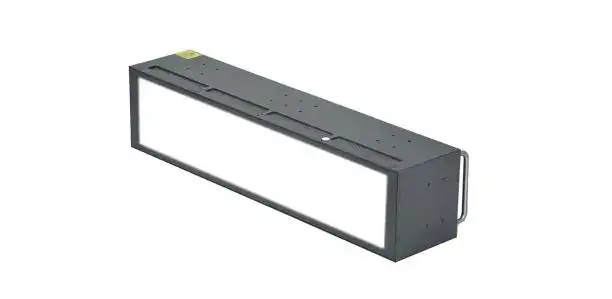
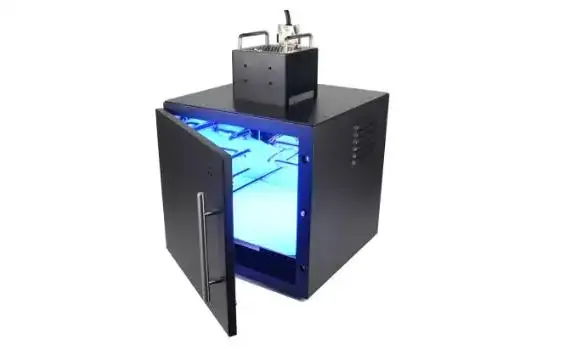
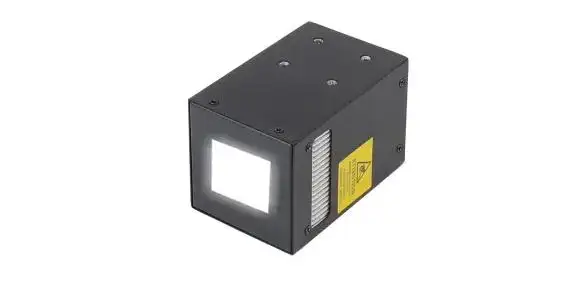
- Handheld UV curing is a process that involves the use of mobile and manually operated ultraviolet radiation equipment to cure adhesives, coatings, and resins. With accuracy, handheld devices can be used to make spot bonding applications, repair, or in-field curing, unlike oven-based or conveyorized industrial UV curing systems that cannot achieve such applications.
- The mechanism behind the photo-initiated cross-linking reaction is the use of UV energy to cause the monomers and oligomers in adhesives or coatings to cross-link to create a tough polymer network structure. This reaction is fast, with the ability to activate curing instantly as well as improve the adhesion of substrates, scratch resistance, and improvement in chemical resistance.
The principle of operation of Handheld UV LED Curing.
Ultraviolet curing devices are handheld devices based on LED-based ultraviolet curing, which produce UV light in narrow bands (usually 365nm, 385nm, 395nm, and 405nm) to trigger a process of light-activated adhesive curing. These are the wavelengths with which photo initiators in adhesives and coatings are most active to provide efficient polymerization.
This procedure contains several essential technical parameters:
- Curing depth penetration - Guarantees full vs surface cure.
- Beam angle adjustment - Also enables focused curing or wide-area curing.
- Dwell time control -Set to line speed or manual.
- Thermal load control - safeguards substrates, which are heat-sensitive.
With a well-controlled set of these variables, even highly sensitive or complex applications can be handled with predictable and repeatable performance by handheld UV curing devices.
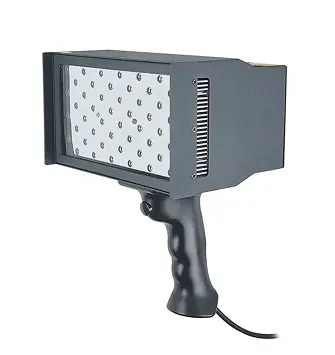
Classifications of Portable UV Curing Gadgets
UV LED Curing Pens
UV LED curing pens are small battery-operated tools that are used in spot UV curing, in which small components are bonded or delicate surfaces repaired. They provide instant-on LED curing and find application particularly in electronics assembly, UV curing, and medical device UV bonding.
Key features:
- Narrowband UV wavelength emission (365-405 nm).
- UV beam precision curing.
- Designed to be used over a long period of time.
- Mobility Rechargeable Lithium-ion battery.
Portable UV LED Curing Lamps
These are portable LED UV curing systems that are intended to serve a bigger curing space and are still portable. They are applicable in field repair curing solutions or processes that demand quick and uniform healing across the surface to a limit of 150 x 80 mm, like the UVET portable UV LED curing light.
Portable Ultraviolet Curing Flashlights
UV curing flashlights are flexible for spot curing in narrow areas. They are portable, ergonomic, and many of them have interchangeable optical lens systems to change the curing beam to fit differing surface sizes.
Benefits of the Handheld UV Curing
The development of handheld UV curing devices is motivated by many benefits in comparison with conventional curing mechanisms:
- Portability and Flexibility - Light and cordless, can be used during repairs and work in the field.
- Quick Curing - have fast cure on the surface within seconds, increasing the rate of production.
- Energy-Efficient LED Curing - Low power usage saves energy costs and gets rid of infrared and ozone emissions.
- Precision and Control- Spot bonding can be done at high precision as light is precisely outputted.
- Protection of Substrates - Minimal heat generation helps to protect heat-sensitive materials, including wood, veneer, composite, and plastics.
- Consistency and Reliability - Consistency of irradiance provides consistency of curing performance across applications.
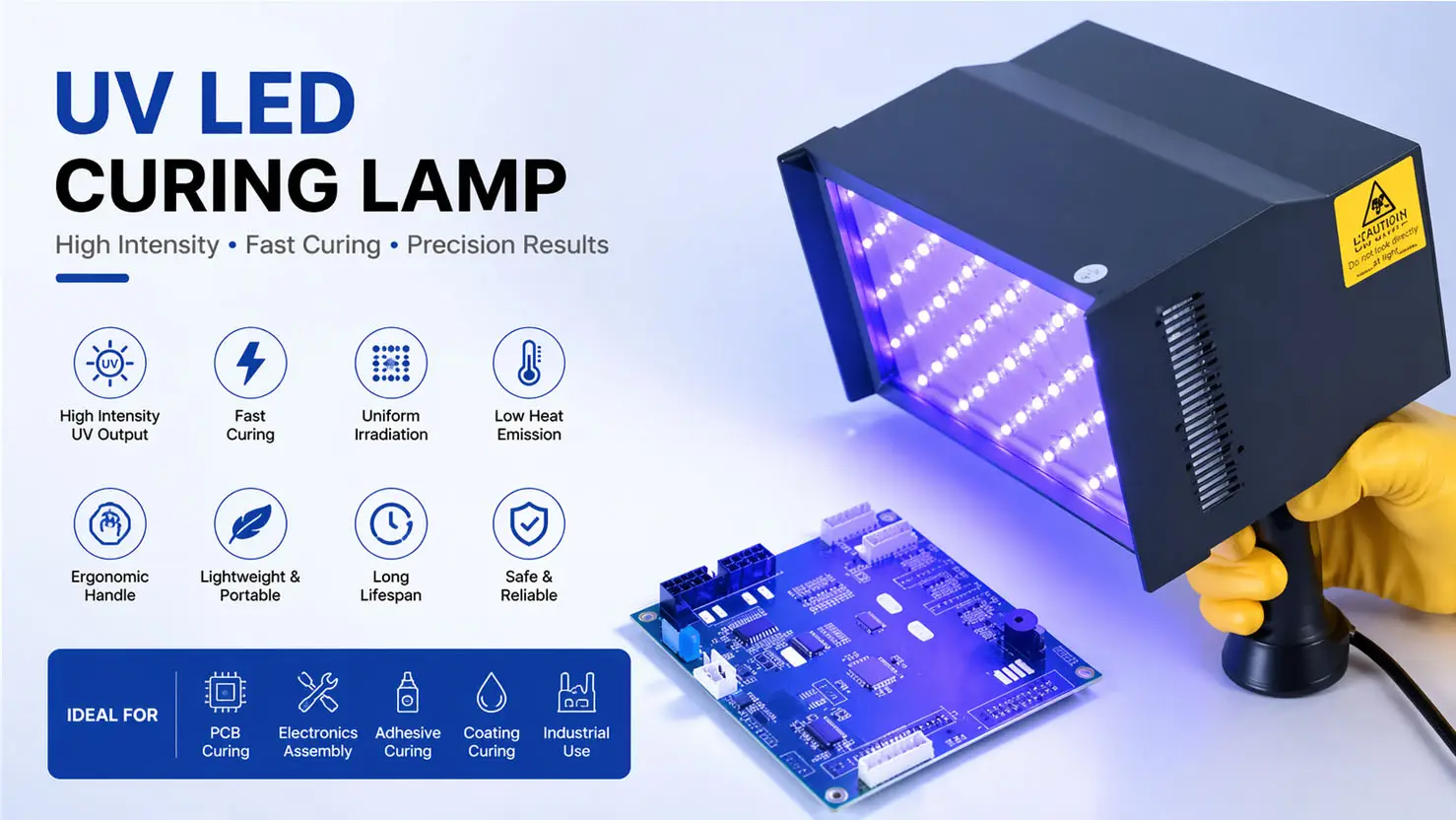
Technical Specifications to be taken into account
In the selection of a handheld UV curing device, technical performance is of critical interest. Key specifications include:
- UV Wavelength Spectrum: 365nm, 385nm, 395nm, 405nm.
- Levels of irradiance: 300 mW/cm2 or less in the event of fast curing.
- Curing Area: 150 x 80 mm in order to cover widely.
- Continuous Operation Time: Lithium-ion batteries can be recharged to be used continuously.
- Beam Focus & Lens Options: Changeable lenses to be more specific or broad.
- Ergonomic Design: Can be used in the long term in the workshops, labs, or the field.
The features ensure that devices such as the UVET are very convenient in the process of electronics assembly, optical component curing, automotive repair, and even dental UV curing light use.
Applications
Handheld curing tools are used to apply precision when bonding tiny electronic components, encasing circuits, or coating the customary devices with a protective layer. Quick drying on surfaces is a guarantee of short downtimes and stable bonding power.
- Medical Device Bonding
Handheld UV LED curing in the medical industry is necessary in the construction of instruments in which sterile, quick, and accurate curing is of the essence. Devices that use batteries facilitate mobility in laboratories or manufacturing plants.
- Optical Component Curing
The technology has been applied in precision UV curing of adhesives or coatings applied to the lenses, sensors, or optical assemblies without the risk of thermal distortion. Narrowband wavelength equipment utilized in the emission of UV can guarantee the correct formation of polymer networks
- Repair of vehicles and industries
Cordless UV curing lights can be used in repairing surface coatings of vehicles, as well as in repairing composite surfaces, where they are used in a localized manner without the large ovens used to do just one workflow, preventing workflow disruption.
- Laboratory and Research Applications
Small handheld curing devices give researchers the ability to be flexible, whereby adhesives, resins, and surfaces with light-activated curing properties can be tested in controlled environments.
Conclusion
The use of handheld UV curing is a step forward in terms of precision, portability, and efficiency in a vast array of industries. These devices can provide quick surface curing, light-activated adhesive curing, and energy-efficient LED-based ultraviolet exposure in a small, ergonomic size, whether it is electronics assembly UV curing, medical device bonding, or automotive repair. Visit UVET.
Share on Social:


