
What is Ink Curing and Why It Matters?
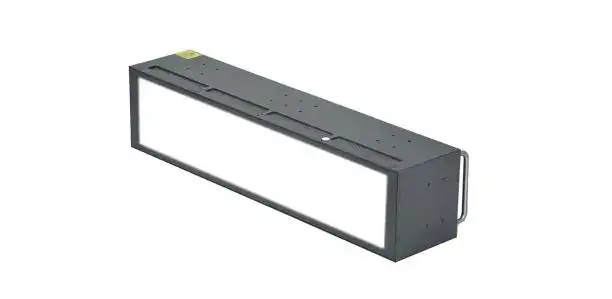
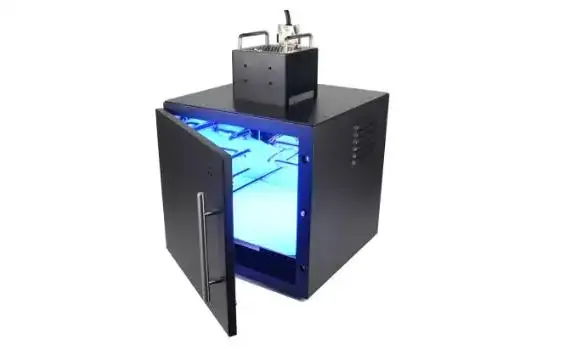
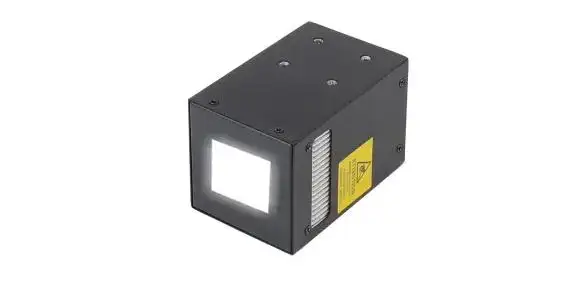
The underlying principle of printing ink curing is the solidification of liquid ink and the formation of a hard film attached to a substrate. Curing, in contrast to simple drying, in which the process relies on the evaporation of a solvent, is a chemical reaction, commonly a photo-polymerization reaction or cross-linking reaction, which creates a strong polymer network.
It is important to know the distinction between ink drying and curing:
- Ink drying: It is mainly solvent drying or oxidative drying.
- A printing process that involves permanent molecular bonds through chemical polymerization.
Monomers and oligomers are reacted during the curing process under controlled energy exposure to form the polymer network. This leads to:
- Development of surface hardness.
- Strengthening of ink adhesion.
- Increased scratch resistance.
- Chemical resistance abilities.
- Increase in print durability.
In the absence of curing, surface tack problems will manifest, as well as poor performance of bond strength and low abrasion resistance.
What Is the Process of Ink Curing in the Printing Industry?
The question many professionals ask is how ink curing works in industrial printing. The solution is in the activation of energy. Curing kinetics in industrial curing is usually induced by energy, usually UV light, infrared heat, or thermal exposure. This initiates:
- Photo-initiated curing
- Cross-linking reaction
- Reaction rate optimization
- Surface tack reduction
- Full vs surface cure control.
Photo-initiators in UV curing ink absorb UV wavelength radiation (365 nm, 385 nm, 395 nm, 405 nm) when subjected to ultraviolet radiation. This forms reactive species that begin to polymerize rapidly- usually in milliseconds.
The industrial curing equipment is meant to ensure that:
- Dwell time control
- Line speed compatibility
- Oxygen inhibition control
These parameters have a direct effect on the depth penetration of curing and the ultimate performance of ink adhesion.
Significant Ink Curing Technology Large-Scale
The UV curing is the best standard of high speed curing system. It offers:
- Instant curing
- No solvent evaporation
- Reduced VOC emissions
- curing technology, which is energy saving.
The conventional UV lamp curing technology involves the use of mercury vapor lamps that produce a broad-spectrum of UV light. Nonetheless, older systems are being quickly substituted with LED UV curing systems because of:
- Reduce the energy used in curing.
- Reduced heat generation
- Longer operational life
- Stable irradiance control
LED Ink Curing
The use of LED ink curing offers narrow band UV (e.g., 365nm or 395nm) to enhance the control of the curing intensity and decrease the thermal load management problems. It increases the compatibility of substrates, particularly with:
- Curing of plastic substrate ink
- Film-based packaging
- Heat-sensitive materials
Thermal Ink Curing
Controlled heating in a curing tunnel oven or curing oven is used in thermal polymerization. The process is typical of offset curing and industrial finishing but uses more power.
Infrared Ink Curing
Oxidative drying and solvent evaporation. Infrared heat curing is quicker than curing, and is appropriate in some flexographic curing and screen printing curing applications.
Electron Beam Curing
Electron beam curing is free of solvents and is very efficient; however, it has an expensive equipment cost and safety regulations.
Autonomous Ink Curing Uses in the Industry
- Packaging Ink Curing
Extensively used in the food packaging curing, must have low migration and high chemical resistance qualities.
- Label Printing Ink Curing
Needs color density and gloss level optimization enhanced to brand as high quality.
- Textile Ink Curing
Guarantees flexibility, resistance to washing, and hardening.
- Curing of Plastic Substrate Ink
Requires a low heat production and high substrate adhesion.
- Metal Surface Ink Curing
Very high bond strength performance and corrosion resistance.
Quick Drying Inks in Rapid Printing
The high-volume production setting demands swift curing of ink with haste and with negligible downtime. LED UV curing systems have a short warm-up, and they can be used as instant ones as well, which means that there is no production delay.
Effective printing treatments foster the fact that manufacturers can expand their throughput without reducing the life of print.
Focus on Innovation: The UV LED Curing Pen
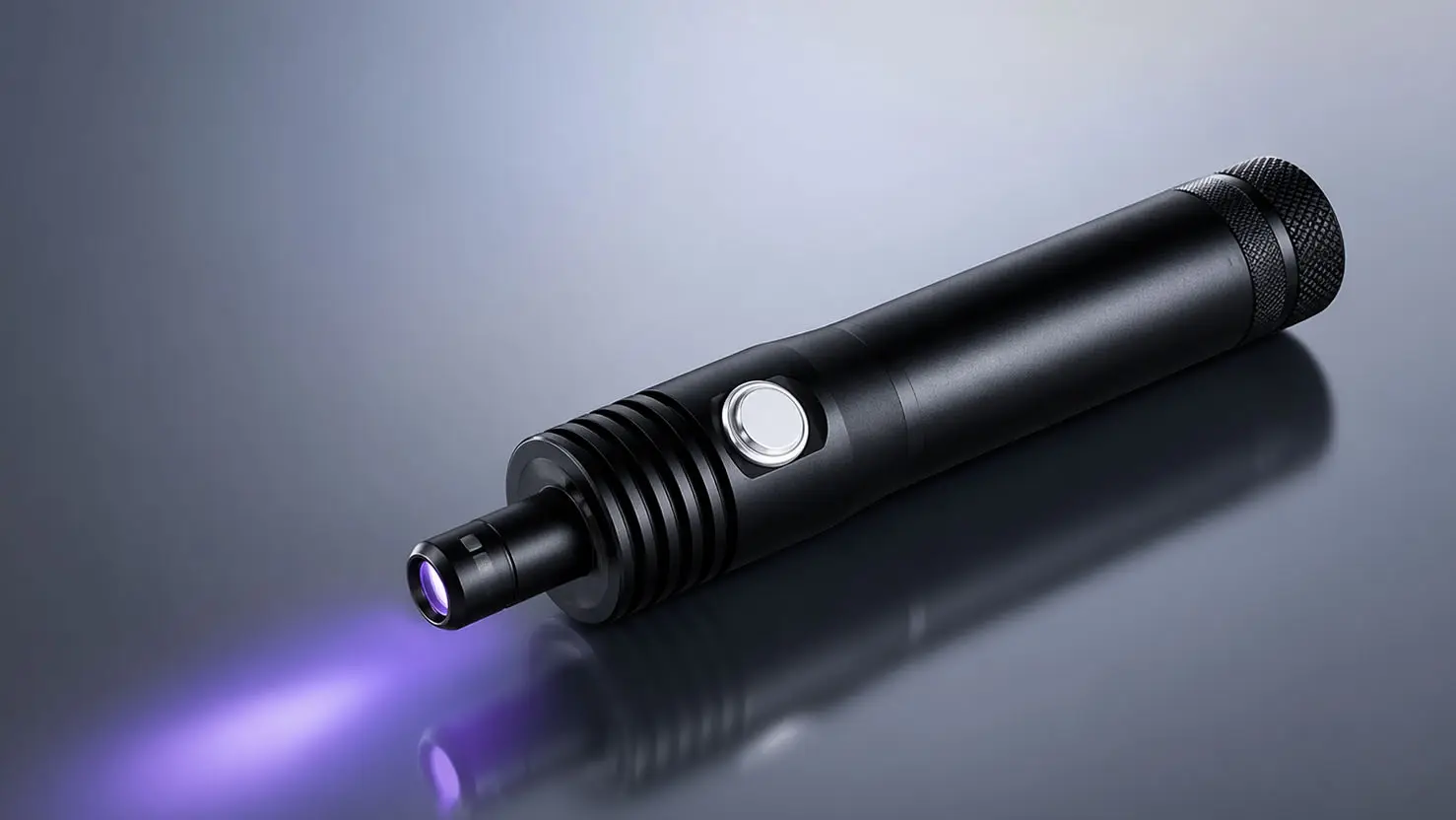
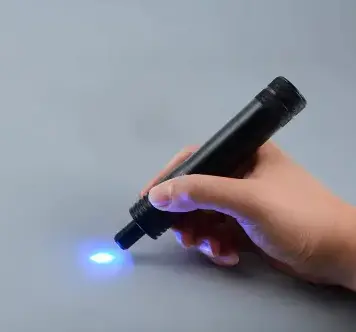
Whereas large-scale curing systems dominate the production of industry, numerous applications exist that require mobility and precision. This is where the UV ET LED Curing Pen of UVET comes in.
This UV LED Curing Pen is a compact but powerful tool available in UVET, which is used to cure light-sensitive materials. It produces UV light at 365nm, 385nm, 395nm, or 405nm, so it is compatible with a large variety of UV-reactive adhesives and finishes.
Key Features
- Minimal configuration, easy setup.
- Powered by Li-ion battery (as long as 2 hours of continuous operation).
- The top-side power switch is to be intuitive and able to be used with one hand.
- The models of 6 interchangeable optical lenses.
- Instant-on LED activation
- Stable, constant light production.
Why is the UV LED Curing Pen the Best Choice?
This device has some advantages over the traditional UV curing lamp system, which include:
- No warm-up or instant curing performance.
- Reproducible kinetic curing.
- Low heat production that preserves fragile substrates.
- A thin ergonomic design to be used manually for long periods.
Selection of the optimum Ink Curing System to use in screen printing
In comparing the best curing system to use during screen printing, consider:
- Average curing temperature range required.
- Substrate compatibility
- Line speed compatibility
- Thermal load management
- Oxygen inhibition control
To package and print labels, the use of UV LED ink curing in the packaging industry will provide better performance and consume less energy.
Conclusion:
The process of ink curing is not a simple finishing process, but rather a science of engineering, chemistry, and precision. Since there are UV curing, LED curing, and thermal and infrared curing, each of them is essential in industrial production. You need high-speed curing systems to package a large part of your product or a handheld UV LED tool to bond with precision. UVET supplies the innovative equipment to achieve high and future-reliable curing functionality.
Share on Social:


- PREV: What Is Precision Curing?
- NEXT: What Is Handheld UV Curing?
