
What is a Lab UV Curing System and How Does It Work?
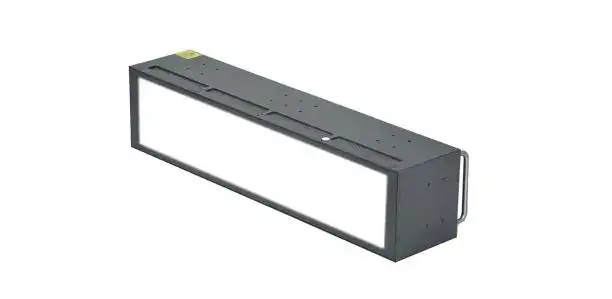
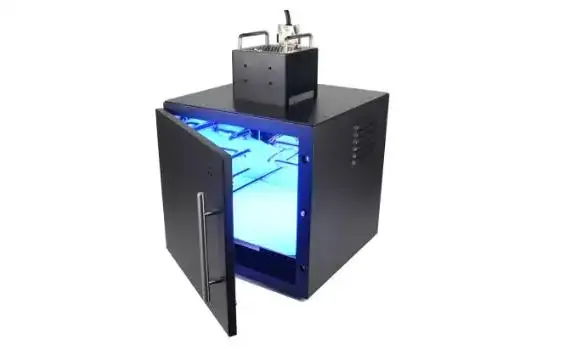
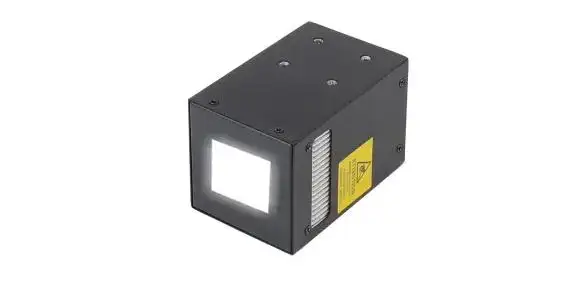
A lab UV curing system or UV curing system operates by producing ultraviolet radiation at certain wavelengths, usually in the UVA range (320400 nm). This energy activates photoinitiators inside materials, starting a rapid photopolymerization process.
Major working phases are:
• Start of UV irradiation process.
• Photoinitiator activation occurs
• Resin or coating forms free radicals.
• Polymer crosslinking mechanism starts
• Material becomes solid.
This is called UV-induced crosslinking, and is common in laboratory photopolymer curing and testing of materials, and UV curing systems. UV dose control systems and irradiance calibration units are also part of the modern systems, which guarantee accurate exposure in each experiment.
Lab UV Curing System - High-tech Laboratory System to UV Cure with Accuracy
A laboratory UV curing system is a high-powered and accurate instrument that is applied in scientific studies, material testing, and photopolymer experiments. It employs regulated ultraviolet light to initiate photo polymerization processes, enabling liquids such as resins, coatings, and adhesives to cure rapidly and reliably.
- Accuracy is important in contemporary laboratories. This is why scientists are inclined to a laboratory UV curing system, which provides constant intensity, regulated wavelength production, and reproducible results. UV curing has become an essential component of sophisticated material research, whether it is polymer science, the development of coatings, or the testing of resin samples.
- Fundamentally, a UV curing system that is used in the laboratory is not merely equipment. It is a regulated scientific condition in which light is a catalyst for chemical change.
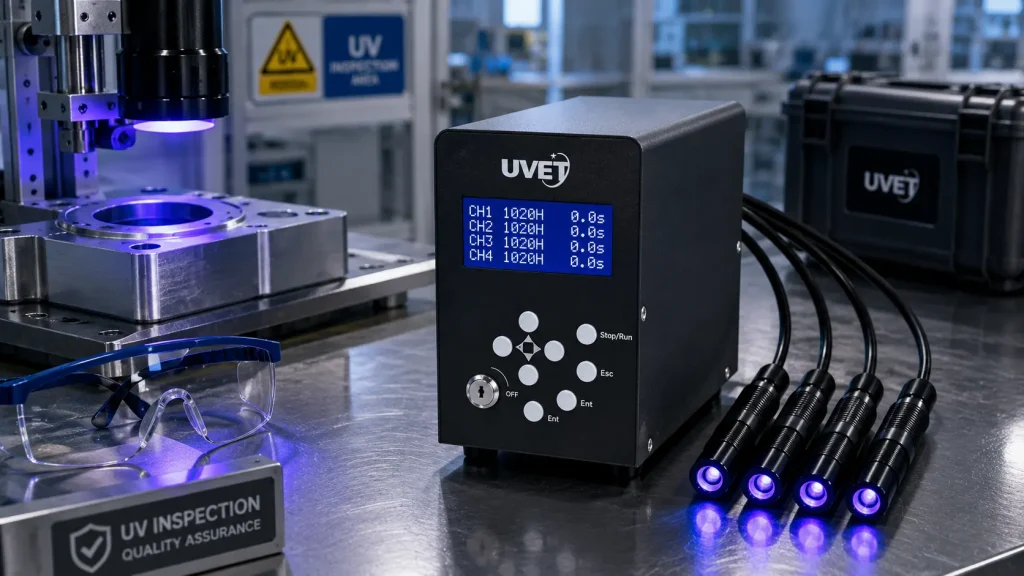
Important Lab UV Curing System Types
Various research requirements demand varying settings. The most popular systems are listed below:
- UV Curing System
A small benchtop UV curing unit that fits into small laboratories. Perfect for the testing of resin and sample preparation.
- LED UV Curing Lab System
Replaces mercury lamps with energy-saving LEDs. Provides constant wavelength-controlled UV exposure and a high life span.
- Mercury Lamp UV Curing System
A conventional high-intensity UV source applicable in industry and research.
- UV Curing Chamber with Programmability
A regulated UV curing system with a time, intensity, and wavelength controller.
- Portable Lab UV Curing Device
Portable testing and versatile field research.
- Multi-Wavelength UV Curing System
Advanced system for complex photopolymer curing technology experiments.
UV Curing Technology Technical Foundation
An accurate UV curing system is constructed based on high-tech optical and chemical engineering. Basic scientific processes comprise:
•Ultraviolet polymerization process
•Photopolymer curing technology
•Control of the UV irradiation process.
•Wavelength-controlled UV exposure
•Optimization of UV dose control system.
Chemistry behind curing:
The photopolymerization reaction begins with the activation of photoinitiators by UV light.
•Resin experiences kinetics of surface curing.
•Chains are formed through crosslinking (UV).
•Final product is solid, stable, and durable.
Materials commonly studied:
•Epoxy UV curing characteristics.
•UV curing process of acrylic.
•Hardening by coating, UV.
•Polymer crosslinking mechanism
Such responses are critical in the testing of advanced materials for UV testing and polymer research equipment.
Applications of Lab UV Curing System in Research and Industry
A UV curing device of lab scale is commonly used in science and industry. Major applications include:
Material Research Labs
•resin samples UV curing.
•Testing of UV exposure in an experiment.
•Laboratory photopolymer research
Coatings and Surface Science.
•UV analysis of coatings.
•Coating durability testing
•Surface hardness evaluation
Polymer Development
•Photopolymerization reaction studies
•Polymer crosslinking research
•UV curing in research laboratories.
Industrial Simulation
•Lab-scale testing of an industrial UV curing system.
•Validation of high-intensity UV curing unit.
•Calibration of the automated UV curing machine.
These systems assist researchers in knowing the behavior of materials under controlled conditions of ultraviolet radiation curing.
Benefits of a Lab UV Curing System
A modern UV curing machine has several advantages for laboratories. Key advantages:
•Quick curing saves on testing time.
•Repeatability is achieved by a high-precision UV curing setup.
•Controlled UV curing environment improves accuracy
•Minimal thermal effects eliminate distortion of materials.
•LED UV curing systems are energy efficient and save money.
•Supports a variety of wavelengths for advanced testing.
These benefits render it one of the most suitable lab UV curing system to use in research.
UV LED Spot Curing Technology for Precise Work
The current trend in laboratories is moving towards UV LED curing systems to enhance control and efficiency.
Features of LED spot curing systems:
- High-intensity focused UV beam
- Precise micro-scale sample curing.
- Stable wavelength output
- Extended life span as compared to mercury lamps.
- Programmable intensity settings
This technology is suitable for:
•Microelectronics research
•Adhesive spot curing
•Precision photopolymerization tasks
It is the new generation of high-precision UV curing equipment.
Lab UV Systems Technical Performance Parameters
A lab UV exposure system is characterized by quantifiable parameters:
•Irradiance level (mW/cm²)
•UV wavelength range (typically 365 nm, 385 nm, 395 nm, 405 nm)
•The time of exposure (several seconds to several minutes)
•Even distribution of light.
•Temperature stability
•Energy efficiency ratio
The advanced systems have programmable UV curing chambers, which enable researchers to adjust all parameters for repeatable experiments.
Future of UV Curing Technology in Laboratories
The future of UV light curing technology is shifting towards automation, AI control, and optimization of multi-wavelength.
Expected advancements include:
•Intelligent irradiance calibration units.
•UV dose control systems powered by AI.
•Completely automated curing cycles.
•LED + mercury systems.
•Environmentally friendly UV radiation curing systems.
Such inventions will not only improve the laboratory photopolymer curing but also increase the accuracy of research to a considerable extent. Modern solutions, including lab UV curing machines, sophisticated LED spot curing systems, etc., are aimed at supporting precision research, industrial testing, and material development.
Conclusion
A lab UV curing system is more than equipment; it is a gateway to modern material science. Since resin curing to polymer research, it allows scientists to manipulate light, chemistry, and structure with unprecedented precision. With the development of laboratories, UV curing technology will keep influencing the innovations in the sphere of coating, adhesives, and new materials.
When you are prepared to take your research to a new level, check out UV curing solutions with UVET and see the accuracy that will revolutionize your lab routine.
Share on Social:


