
Does LED UV Curing Reduce Setoff in Offset Printing?
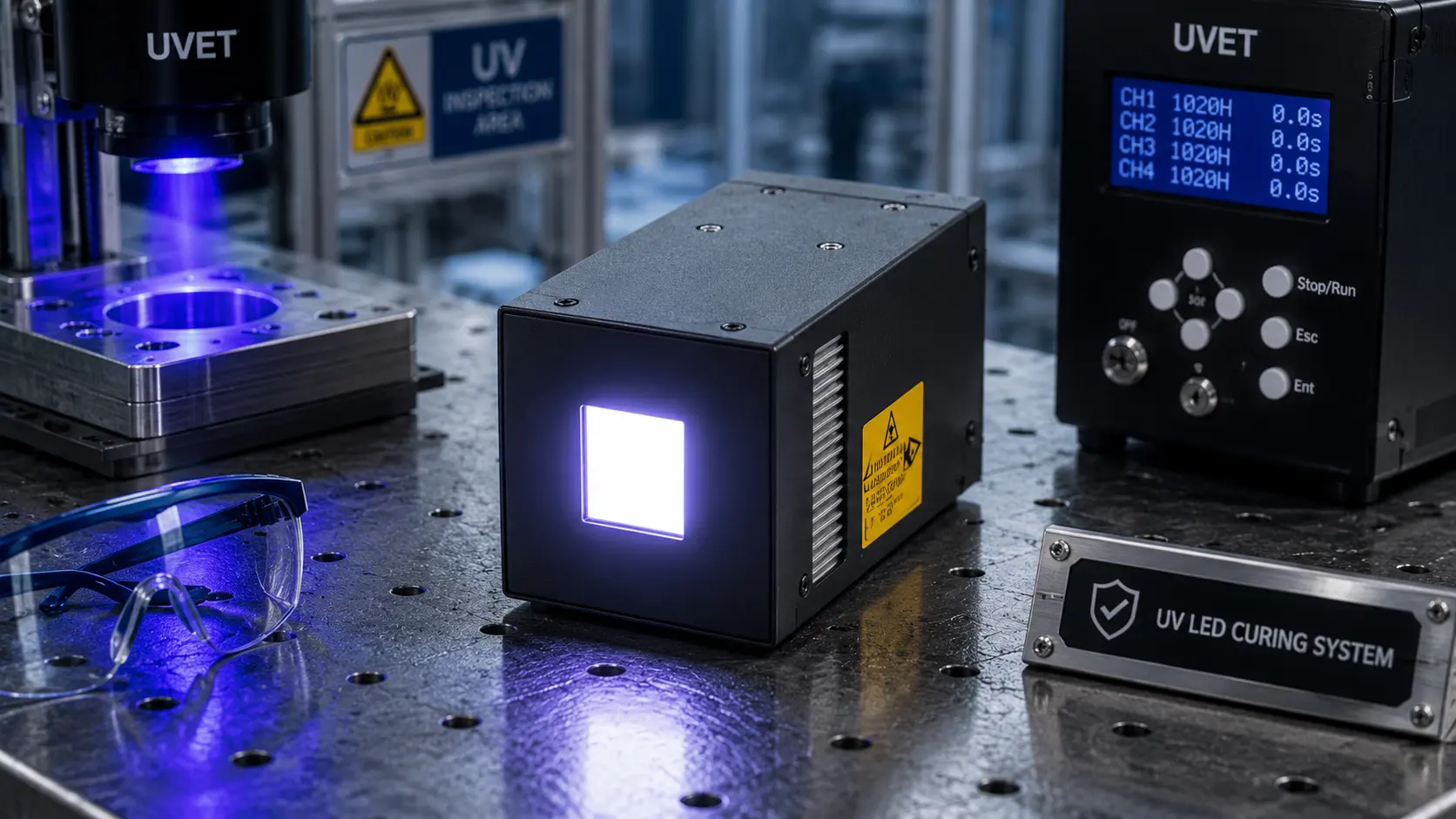
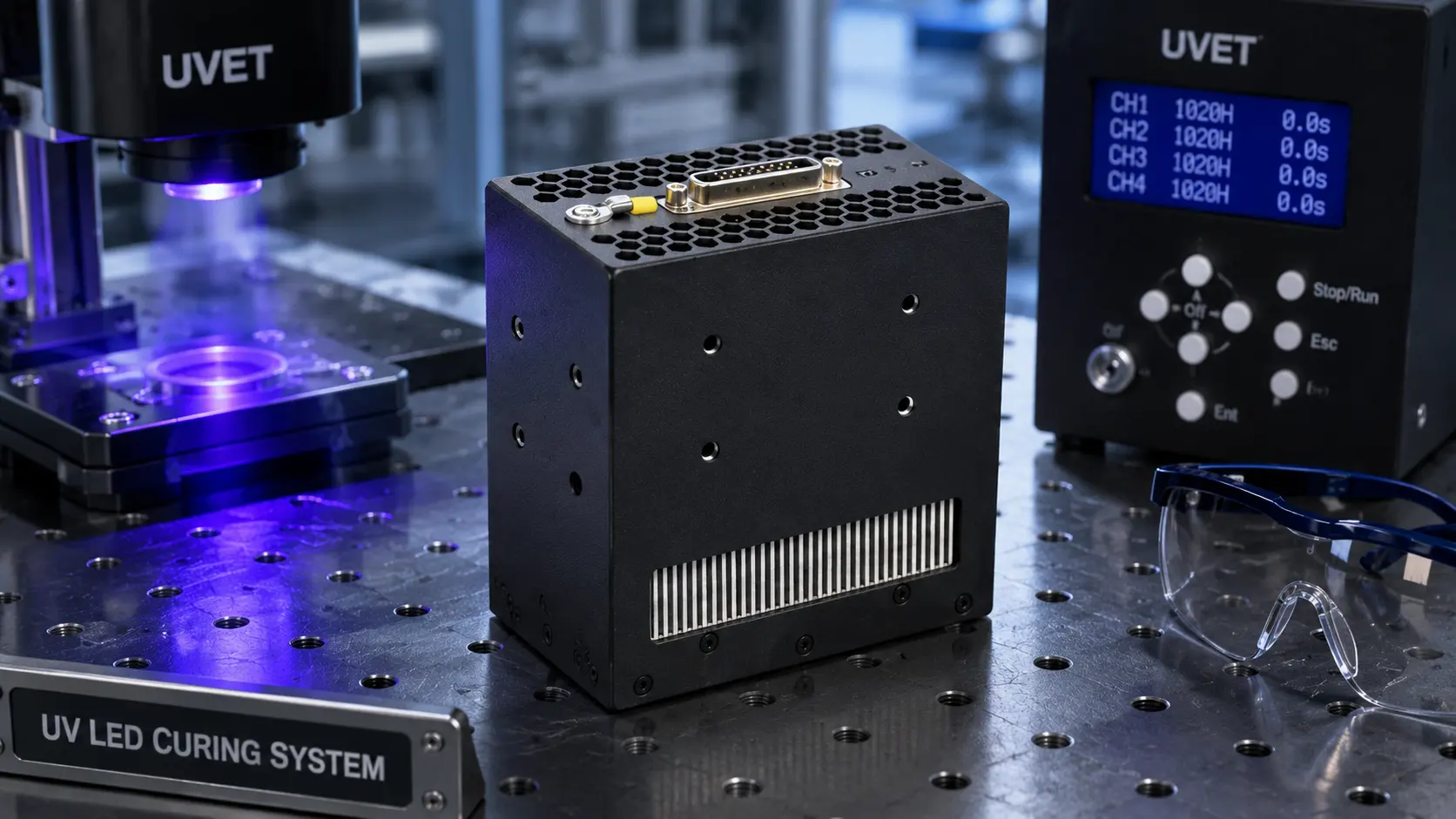
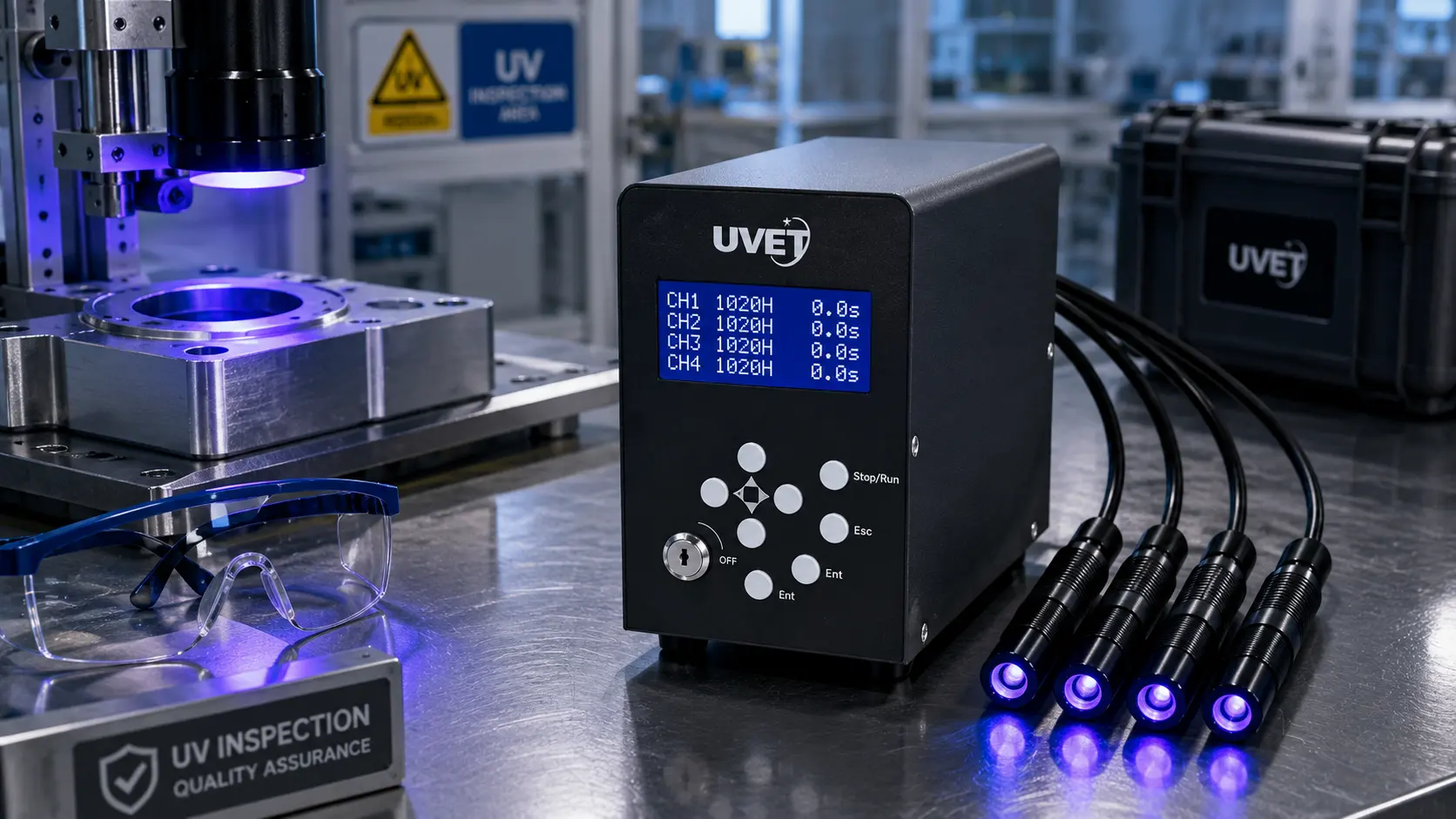
Yes, LED UV curing significantly reduces—and often completely eliminates—setoff in offset printing.
Unlike conventional offset inks that rely on absorption and oxidation to dry (a process that can take hours or days), LED UV inks cure instantly when exposed to ultraviolet light. The moment the light hits the ink, a chemical reaction called polymerization occurs, turning the liquid ink into a solid polymer immediately. Because the ink is fully dry before the paper reaches the delivery stack, there is no wet ink to transfer to the back of the sheet above it. This allows printers to run presses at higher speeds, eliminate the use of anti-setoff spray powder, and move jobs immediately to finishing without waiting for drying time.
What Is Setoff and Why Is It a Problem?
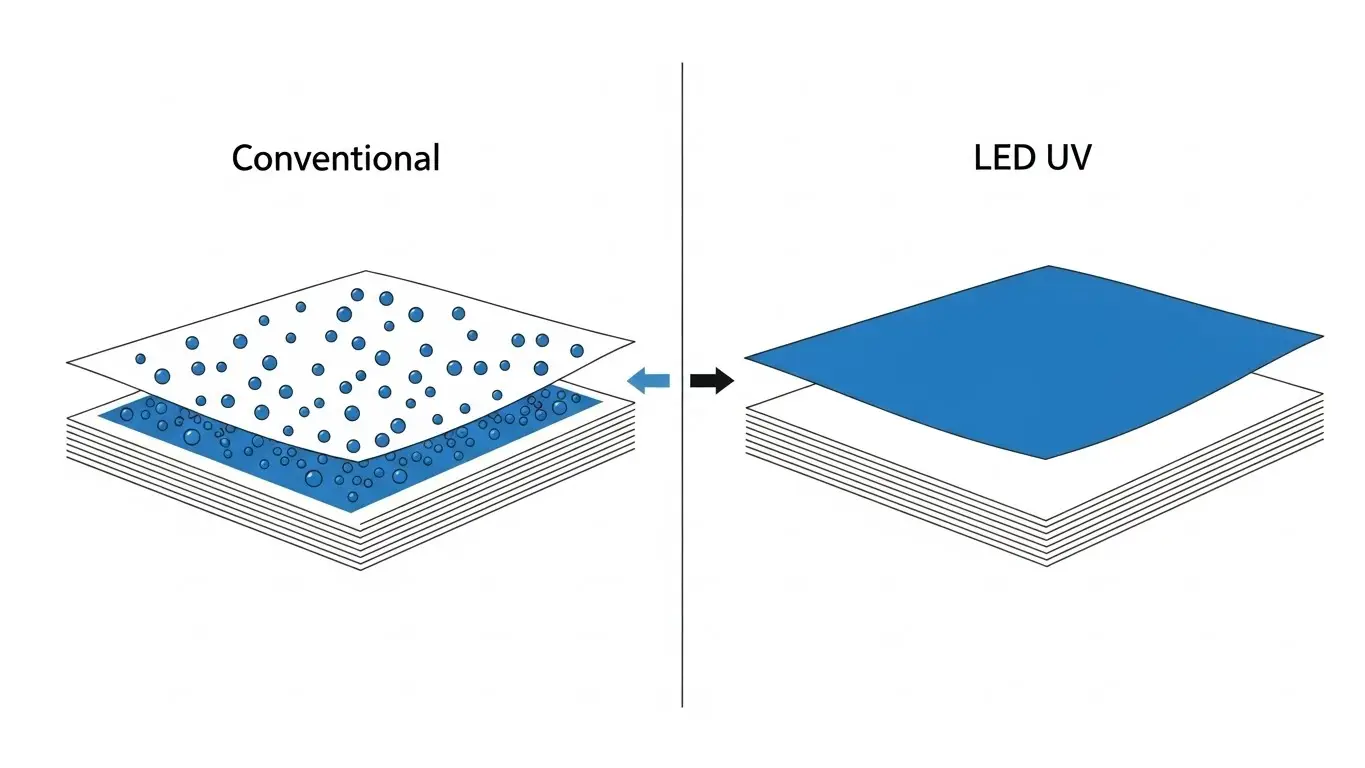
Setoff is one of the most persistent headaches in traditional offset printing. It happens when wet ink from the front of a printed sheet transfers to the back of the sheet placed on top of it in the delivery pile.
In conventional printing, printers fight this by:
- Slowing down the press.
- Running smaller stacks (to reduce weight/pressure).
- Using large amounts of anti-setoff spray powder (which creates a gap between sheets).
While these methods work, they are messy, time-consuming, and can affect the final print quality. The introduction of UV LED Curing for Offset Printing has revolutionized this process by addressing the root cause: the drying speed.
What Causes Setoff in Offset Printing?
Setoff is caused by a combination of wet ink, heavy ink coverage, and the pressure/weight of the paper stack.
When fresh sheets are stacked in the delivery unit, the weight of the pile creates pressure. If the ink contains oils that haven't yet been absorbed or oxidized, that pressure forces the pigment onto the sheet above.
Several factors worsen setoff in standard printing:
- High Ink Coverage: Dense images with rich blacks or heavy colors take longer to dry.
- Coated Paper: Glossy or matte coated papers have less absorption capability than uncoated stocks, keeping ink on the surface longer.
- Static Electricity: This can pull sheets together tighter, increasing ink transfer.
Because LED UV systems cure the ink instantly, these factors become largely irrelevant regarding setoff. The "drying" happens in a fraction of a second under the lamp, not in the stack.
Do You Need Spray Powder with LED UV Offset?
In most cases, no. LED UV curing eliminates the need for anti-setoff spray powder.
Anti-setoff powder is essentially starch used to create a physical air gap between sheets to prevent sticking. Since LED UV cured sheets are dry to the touch immediately upon exiting the press, they do not stick together.
Eliminating spray powder offers three major operational advantages:
- Cleaner Pressroom: Powder dust gets everywhere—into bearings, sensors, and the air operators breathe. Removing it reduces maintenance.
- Smoother Finishes: Powder can leave a rough texture on the print (the "sandpaper" effect). UV prints are smooth immediately.
- Instant Lamination: You don't need to wait for the ink to dry or clean powder off before laminating or foil stamping.
How Does LED UV Curing Prevent Ink Smearing?
LED UV curing prevents smearing by using specific wavelengths of light to trigger photoinitiators in the ink, solidifying it instantly.
When the UV LED lamp emits light (usually at 385nm or 395nm wavelengths), the photoinitiators in the UV ink absorb this energy and start a chain reaction. The liquid oligomers and monomers cross-link into a solid plastic-like film.
However, proper setup is required. If the lamp intensity is too low or the ink formulation doesn't match the light spectrum, the ink may only cure on the surface (skinning) while remaining wet underneath. This can lead to adhesion failure. It is critical to monitor your system to prevent UV ink smearing with proper LED curing protocols.
Comparison: Conventional vs. LED UV Offset
| Feature | Conventional Offset | LED UV Offset |
| Drying Method | Absorption & Oxidation | UV Polymerization (Instant) |
| Setoff Risk | High (Requires management) | Near Zero |
| Spray Powder | Essential | Eliminated |
| Drying Time | Hours to Days | Instant |
| Energy Use | Low (Press) / High (IR/Hot Air) | Low (LEDs are energy efficient) |
Is LED UV Curing Better Than Conventional UV?
Yes, for most modern print shops, LED UV offers significant advantages over older mercury-vapor (H-UV or traditional UV) lamps.
While traditional UV also cures instantly and reduces setoff, it produces immense heat and ozone. LED UV provides the same "instant dry" benefit without the heat downsides.
- Heat Reduction: LED lamps run cool. This prevents plastic substrates or thin films from warping, which is a common issue with traditional hot UV lamps.
- Energy Efficiency: LEDs use significantly less power and only turn on when the sheet is actually passing underneath.
- Lamp Lifespan: LED diodes can last 20,000+ hours, whereas mercury bulbs degrade quickly.
While the technology differs slightly between print methods, the principles of energy efficiency remain the same. If you are also managing digital lines, understanding what UV LED curing lamp is best for inkjet printing can help you standardize your knowledge of UV wavelengths and energy outputs across your facility.
Operational Impact on Turnaround Time
Because setoff is no longer a threat, the workflow of a print shop changes dramatically. In a conventional shop, pallets of printed paper must sit on the floor to "gas out" or dry before they can be cut, folded, or shipped. This creates a bottleneck.
With LED UV:
- Print to Cut: You can take a stack directly from the press delivery to the guillotine cutter.
- Print to Ship: Rush orders can be printed and shipped the same day.
- Duplexing: You can print the second side immediately without waiting for the first side to dry ("work-and-turn").
While the machinery differs, the fundamental science of how light cures ink is similar across the industry. For a deeper technical dive into the cross-linking process, it is helpful to review how UV LED curing works in inkjet printing, as the chemical reaction (polymerization) shares many similarities with offset UV chemistry.
Frequently Asked Questions
Can I retrofit my existing offset press with LED UV?
Yes, many older offset presses can be retrofitted with LED UV lamp systems. This is often a cost-effective way to eliminate setoff and increase capacity without buying a brand-new press.
Is LED UV ink more expensive than conventional ink?
Yes, the per-pound cost of LED UV ink is generally higher than standard oil-based inks. However, the savings in spray powder, energy, waste reduction, and faster turnaround times often offset the higher consumable cost.
Does LED UV curing work on uncoated paper?
Absolutely. In fact, LED UV looks better on uncoated paper than conventional ink. Because the ink cures instantly, it doesn't soak into the paper fibers. This results in sharper images and more vibrant colors on uncoated stocks.
Will LED UV curing completely prevent ghosting?
It prevents mechanical ghosting related to wet ink transfer (setoff). However, "chemical ghosting" (which happens during drying in conventional stacks) is completely eliminated because the ink is inert once cured.
Key Takeaways
- Instant Curing: LED UV turns ink into a solid immediately, removing the wet state that causes setoff.
- No Powder Needed: You can eliminate the mess and maintenance associated with anti-setoff spray powder.
- Faster Workflow: Sheets are ready for finishing immediately, allowing for same-day production.
- Higher Quality: Prevents ink absorption on uncoated stocks, resulting in sharper, brighter prints.
Conclusion
Switching to LED UV curing is one of the most effective ways to eliminate setoff in offset printing. By replacing the slow process of oxidation with instant polymerization, you not only remove the risk of ink transfer but also unlock a faster, cleaner, and more efficient production workflow. If you are struggling with drying times or smearing, it is time to evaluate your curing technology.
Ready to upgrade your printing capabilities? Explore our guide on UV LED Curing for Offset Printing to find the right solution for your press.
Share on Social:


