
Do I Need UV LED or Mercury UV Curing for My Application?
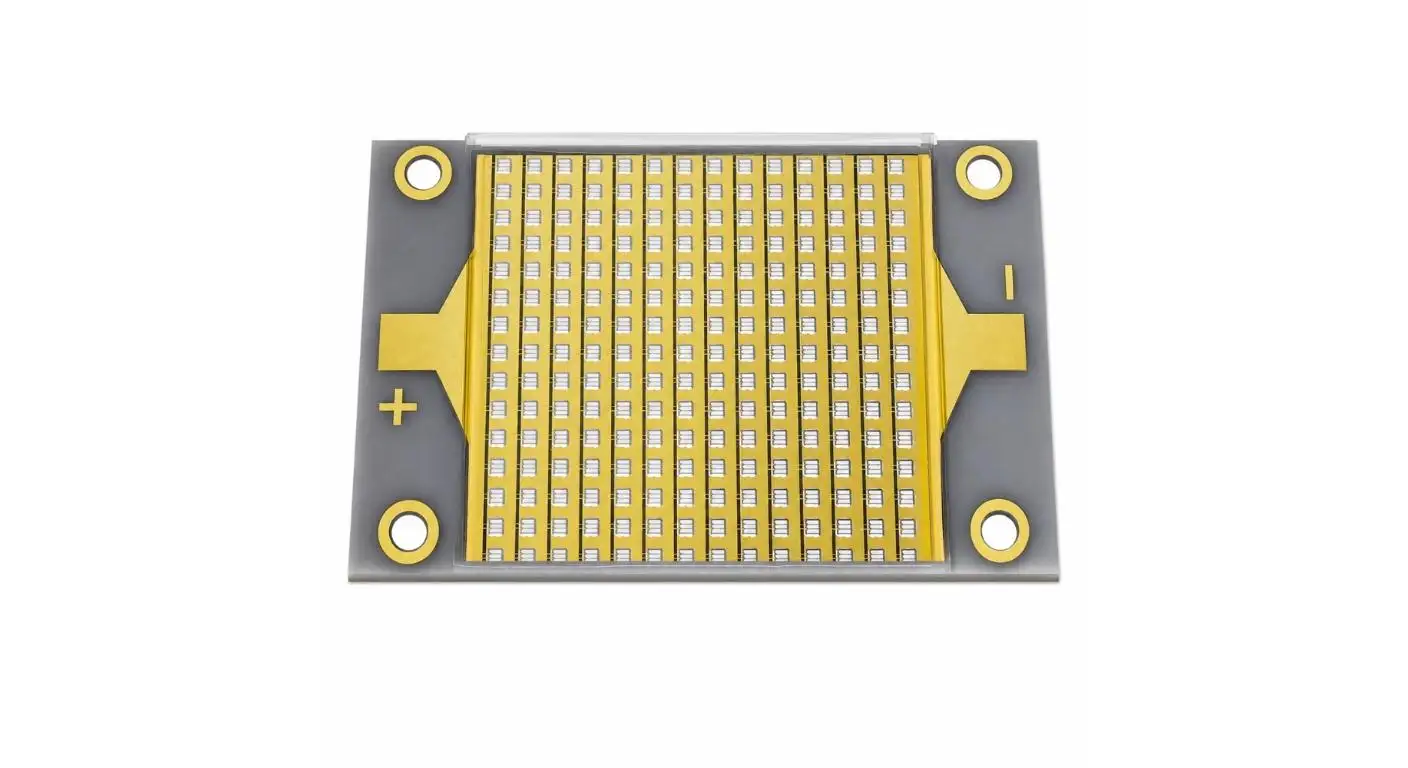
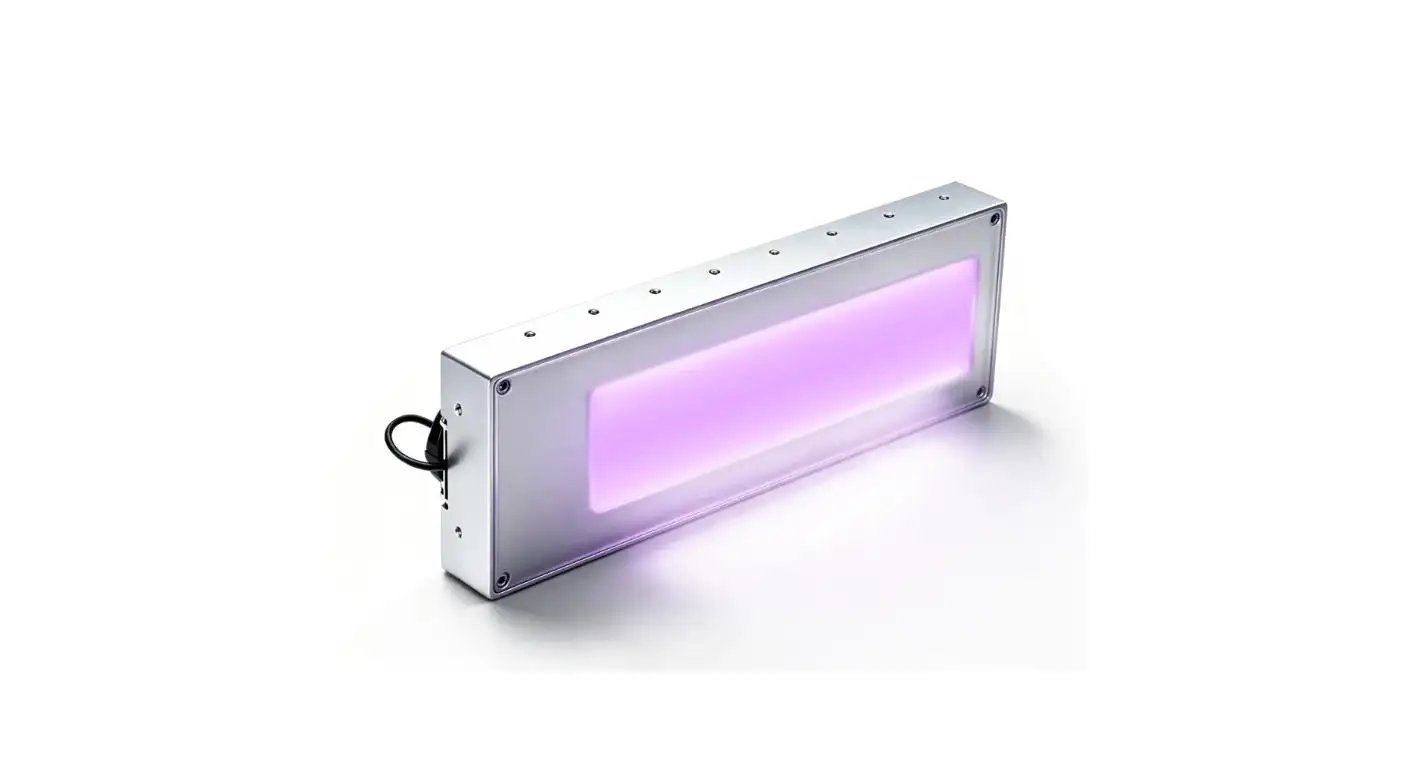
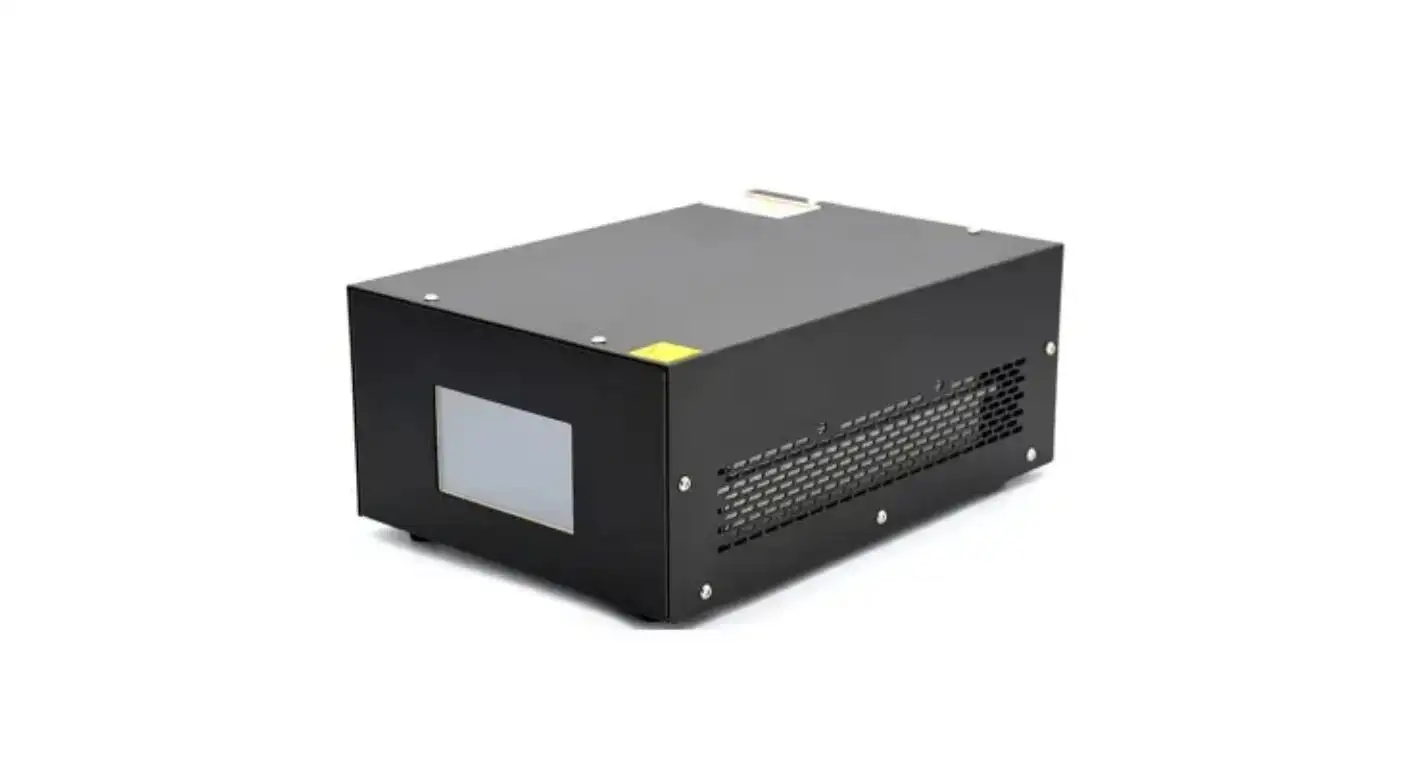
Curing requirements for your industrial applications depend on your specific materials and line speed. You will find that UV curing systems using either LED or mercury sources are common in modern factories. Your choice relies on your technical needs and how your coatings respond to light. This guide helps you evaluate these options based on your operational goals. Learn more about UV LED curing technology here.
What Is UV Curing and Why Does the Light Source Matter?
UV curing is a process that uses ultraviolet light to trigger a chemical reaction that hardens inks, coatings, and adhesives. The light source matters because the wavelength and intensity of the energy determine how well your photoinitiators react. You need the right light characteristics to ensure your material bonds correctly and stays durable throughout its life.
When you look at your production line, you see that the curing step is what turns a liquid into a finished solid. You can find out more about how UV LED curing works to understand this bond. The light source you pick acts as the engine for this change. If the engine does not produce the right type of power, your coating might stay sticky or peel off.
Mercury lamps produce a wide range of light wavelengths. This broad output covers many different types of inks at once. LEDs produce a narrow, focused band of light. This focused energy is very strong and targets specific materials. Your choice depends on whether you need to cure a wide variety of parts or if you want a high-speed, dedicated process for one specific product. You can read the basics of UV LED curing to see how these differences start at the source.
What Are the Key Differences Between UV LED and Mercury UV Curing?
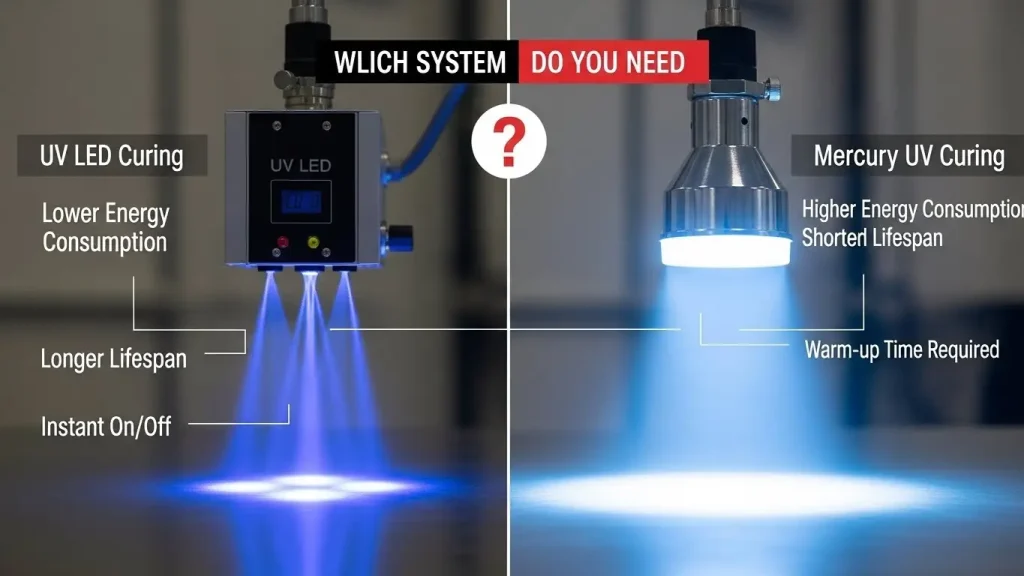
UV LED and mercury UV curing technologies differ in how light is generated and delivered to your product surface. While mercury lamps use a high-pressure arc to create a broad spectrum of light and heat, LEDs use semiconductors to emit a cool, narrow band of energy. These physical differences change your power use, your maintenance needs, and how you handle your materials.
You should consider these points when you compare UV LED vs mercury UV curing:
- Wavelength Output: Mercury lamps give you a "broadband" light that includes UVA, UVB, and UVC rays. LEDs give you one specific peak wavelength, such as 365nm or 395nm.
- Heat Generation: Mercury systems produce a lot of infrared heat. LEDs stay much cooler, which protects your parts from warping.
- Light Distribution: Mercury bulbs spread light in all directions, requiring reflectors to point it down. LEDs point the light directly at your product from the start.
- Power Control: You can turn LEDs on and off instantly. Mercury lamps need time to warm up and cool down every time you use them.
These differences affect your daily shop life. With mercury, you have to manage heat and ozone. With LED, you have to ensure your ink matches the narrow light band. You get a much more focused tool with LED, but you get a more versatile light with mercury. Your decision depends on which factor is more important for your specific job.
When Is UV LED Curing the Better Choice?
UV LED curing is suitable for specific application conditions where you need low heat, high energy savings, and a long-lasting light source. You should pick this path if you work with thin plastics or heat-sensitive electronics that would melt under a traditional lamp. It is also the right choice when you want to lower your power bills and remove toxic mercury from your shop.
You will see the benefits of UV LED curing in these scenarios:
- Heat-Sensitive Substrates: If you print on thin films, labels, or delicate plastic parts, the cold light prevents the material from changing shape.
- High-Speed Dedicated Lines: When you run the same product all day, you can match your ink to the LED wavelength for a perfect, fast cure.
- Intermittent Production: If your line stops and starts often, the instant on/off feature saves you a lot of energy and time.
- Small Workspaces: LED lamp heads are compact. You can fit them into tight spots on your UV LED curing applications where a bulky mercury lamp would never fit.
By choosing LED, you also remove the need for ozone exhaust systems. You get a cleaner workspace and a gear set that can last for 20,000 hours or more. This long life means you spend less time on repairs and more time on finishing your products. It is a modern solution that helps you scale up your work without increasing your utility costs.
When Is Mercury UV Curing Still Used?
Mercury UV curing remains in use for certain applications that require a wide spectrum of light to cure thick or complex coatings. You might still use this tech if your existing inks are not made for LEDs or if you need to cure several different materials on the same line. It is a common tool for legacy systems that have been in place for years.
You might find that mercury is still your choice for:
- Thick, Opaque Coatings: The broad spectrum can sometimes penetrate deep into thick layers of ink that a narrow LED band might miss.
- Multi-Purpose Shops: If you change your products every hour, the broad light of mercury might handle different ink recipes without you needing to change lamps.
- Surface Curing Challenges: Some coatings need specific UVC rays to harden the very top layer, which many standard LEDs do not provide yet.
- Lower Initial Cost: If you are on a tight budget for your first setup, mercury lamps are often cheaper to buy upfront, even if they cost more to run later.
While mercury systems are older, they are very well understood. You can find many inks and resins that work perfectly with them. However, you must be ready to manage the high heat and the toxic mercury bulbs. You also have to plan for the 15-minute warm-up time every morning, which can slow down your start.
How Do Safety and Maintenance Considerations Affect the Choice?
Safety and maintenance are critical selection factors because they determine your long-term operating costs and the health of your team. UV LED systems are much easier to maintain and have fewer risks because they do not contain mercury or produce ozone. Mercury systems need more care because the bulbs are fragile and contain hazardous material.
When you look at your UV LED curing light, you see these maintenance differences:
| Feature | UV LED Curing | Mercury UV Curing |
| Lamp Life | 20,000 - 30,000 Hours | 1,000 - 2,000 Hours |
| Warm-up Time | Instant | 10 to 20 Minutes |
| Hazardous Waste | None | Mercury Bulbs |
| Cleaning | Simple lens wipe | Reflector & Bulb Cleaning |
| Safety Risks | UV Exposure | UV, Heat, Mercury, & Ozone |
LEDs save you a lot of labor. You do not have to spend time cleaning mirrors or replacing bulbs every few months. You also do not need a hazardous waste plan for your old lamps. With mercury, you have to be very careful when you handle the bulbs. If one breaks, you have a dangerous spill that can shut down your shop. Choosing LED helps you avoid these headaches and keeps your team focused on production.
How Do Application Materials Influence UV Curing Selection?
Material response determines curing suitability because your inks, glues, and coatings must react with the light you provide. You need to ensure that the photoinitiators in your material match the peak wavelength of your light source. If they do not match, the material will stay liquid or become brittle, leading to a failed product.
You must consider your materials carefully:
- Photoinitiator Match: LED-curable inks are made to react to 365nm, 385nm, or 395nm light. Mercury inks are made for the whole UV range.
- Cure Depth: Some adhesives need a specific wavelength to reach the bottom of the bond. You need to test your material to see which light penetrates best.
- Color and Opacity: Darker or thicker inks often need more intense light. LEDs provide a very concentrated dose that can help with these tough jobs.
You should always talk to your ink supplier before you pick a system. They can tell you which light source works best for their recipe. Testing your materials with both types of light is the best way to be sure. You do not want to buy a whole system only to find out that your favorite glue will not harden under it.
What Role Does System Design and Setup Play?
System design directly affects your operational fit because the size and layout of your curing gear must match your production line. LEDs are compact and easy to mount in any direction, which makes them great for automated cells. Mercury lamps are large and need big cooling fans, which can make them harder to fit into your existing workspace.
When you look at UV LED curing systems, you see how the setup changes your shop:
- Cooling Needs: Mercury lamps need big ducts to pump out hot air and ozone. LEDs only need small fans or water lines.
- Integration: You can easily add LED lamp heads to a printing press or a robot arm. Mercury lamps are often too heavy or hot for these spots.
- Automation: LEDs can be turned on by a sensor the moment a part passes. This makes them perfect for lines that have gaps between parts.
High-quality UV LED curing equipment allows you to reorganize your shop floor. You can put your curing step right after your assembly step without needing a separate room for cooling. This saves you space and makes your line much more efficient. You get a setup that is built for speed and takes up very little room.
How Should You Evaluate Which UV Curing System You Need?
Evaluation should be application-driven, focusing on your specific product needs rather than just the technology names. You should start by listing your materials, your line speeds, and your shop's utility limits. Use a structured path to find the right fit for your business.
You can follow this checklist to choose a UV LED curing system or a mercury one:
- Check Material Compatibility: Talk to your ink supplier about LED vs mercury recipes.
- Measure Heat Tolerance: Determine if your parts can handle the heat of a mercury lamp.
- Analyze Power Costs: Calculate how much electricity you will save with the instant on/off of LEDs.
- Review Space Limits: See if your machine has room for a mercury lamp and its exhaust ducts.
- Test the Cure: Run a sample of your product under both light sources to see the results.
- Verify Maintenance Time: Decide how much downtime you can afford for bulb changes.
By doing this work upfront, you avoid costly mistakes. You get a system that works for your product every time. Do not just pick the newest tech or the cheapest lamp. Pick the one that makes your production run the smoothest.
Key Takeaways for Choosing Between UV LED and Mercury UV Curing
Choosing between these two technologies requires a clear look at your application fit and your operational goals. You must realize that no single solution fits every shop perfectly. Your responsibility is to match the light to your materials and your workspace for the best result.
- LED is best for heat-sensitive parts, lower power costs, and low maintenance.
- Mercury is best for broadband material needs and lower upfront equipment costs.
- Safety is better with LED because it has no ozone or toxic mercury.
- Wavelength match is vital for both systems to ensure a full and hard cure.
Your decision will affect your shop for years. Take the time to test your materials and look at your total costs. An informed decision now will save you a lot of time and money later.
Final Thought
Responsible selection of a UV curing system depends on a thoughtful look at your specific application needs. You should focus on how the technology supports your long-term operation and your production quality. By matching the light source to your coatings and your line speed, you ensure a successful setup that lasts. Pick the system that offers the best suitability for your parts and your team's health.
Share on Social:


