
UV LED Printing Curing for Heat-Sensitive Materials: Controlling Heat in Digital Printing
Printing on PET, PVC, BOPP, PP film, synthetic paper, and other thermally sensitive media creates a narrow processing window. The ink must polymerize sufficiently for adhesion and abrasion resistance, while the substrate must remain dimensionally stable enough to maintain registration, web tension, and finishing accuracy.
For this reason, UV LED Printing Curing should be treated as a controlled energy-delivery process rather than simply a high-power UV exposure step. Lamp geometry, scan overlap, working distance, ink thickness, substrate mass, cooling, and exposure sequence all influence the temperature history of the printed surface.
Why Thin Substrates Develop Thermal Distortion
A thin film has much less thermal mass than glass, metal, or rigid board. Even a moderate amount of absorbed energy can therefore produce a rapid surface-temperature rise.
The resulting defect is not always obvious immediately after curing. Thermal stress may appear as:
• Transverse or machine-direction shrinkage;
• Edge curl after repeated print passes;
• Web-tension instability;
• Color-to-color registration drift;
• Distorted labels after die cutting;
• Wrinkling during lamination or rewinding.
The problem becomes more severe with oriented films because their dimensional behavior depends not only on instantaneous temperature but also on residual stresses created during film stretching and manufacturing.
Therefore, evaluating UV LED Printing Curing on heat-sensitive media requires measuring dimensional stability together with cure quality.
Control Heat Accumulation Across Multiple Print Passes
Flatbed and scanning inkjet systems frequently expose the same area several times. The critical issue is therefore cumulative thermal loading.
Consider a curing head delivering 12W/cm². A local exposure lasting 50 ms corresponds theoretically to:
12W/cm² × 0.05s = 0.60J/cm²
At 8W/cm², the same exposure time corresponds to:
8W/cm² × 0.05s = 0.40J/cm²
These values illustrate why dwell time matters, but they should not be treated as actual process doses without measuring irradiance at the real working distance.
For heat-sensitive printing, engineers should track the complete exposure sequence:
| Process Variable | Thermal Effect | Printing Consequence |
| Multiple scan overlaps | Adds residual heat between passes | Curl or registration drift |
| Slow carriage speed | Extends local exposure | Higher surface temperature |
| Thick white ink | Requires more curing energy | Greater cumulative load |
| Small lamp-to-media gap | Raises delivered irradiance | Faster cure but narrower tolerance |
| Restricted airflow | Slows heat removal | Progressive temperature rise |
A stable UV LED Printing Curing process therefore depends on both curing each ink layer and allowing enough heat dissipation between successive exposures.
Beam Uniformity Matters More Than Peak Intensity Alone
Peak irradiance does not describe what happens across the complete curing width.
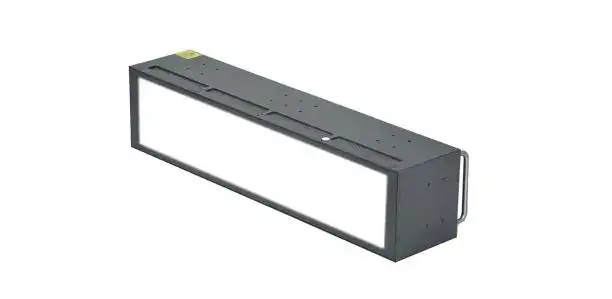
If the optical field contains strong center-to-edge variation, one section of the print may be fully cured while another receives insufficient energy. Increasing lamp output to compensate can overexpose the central region and increase thermal stress.
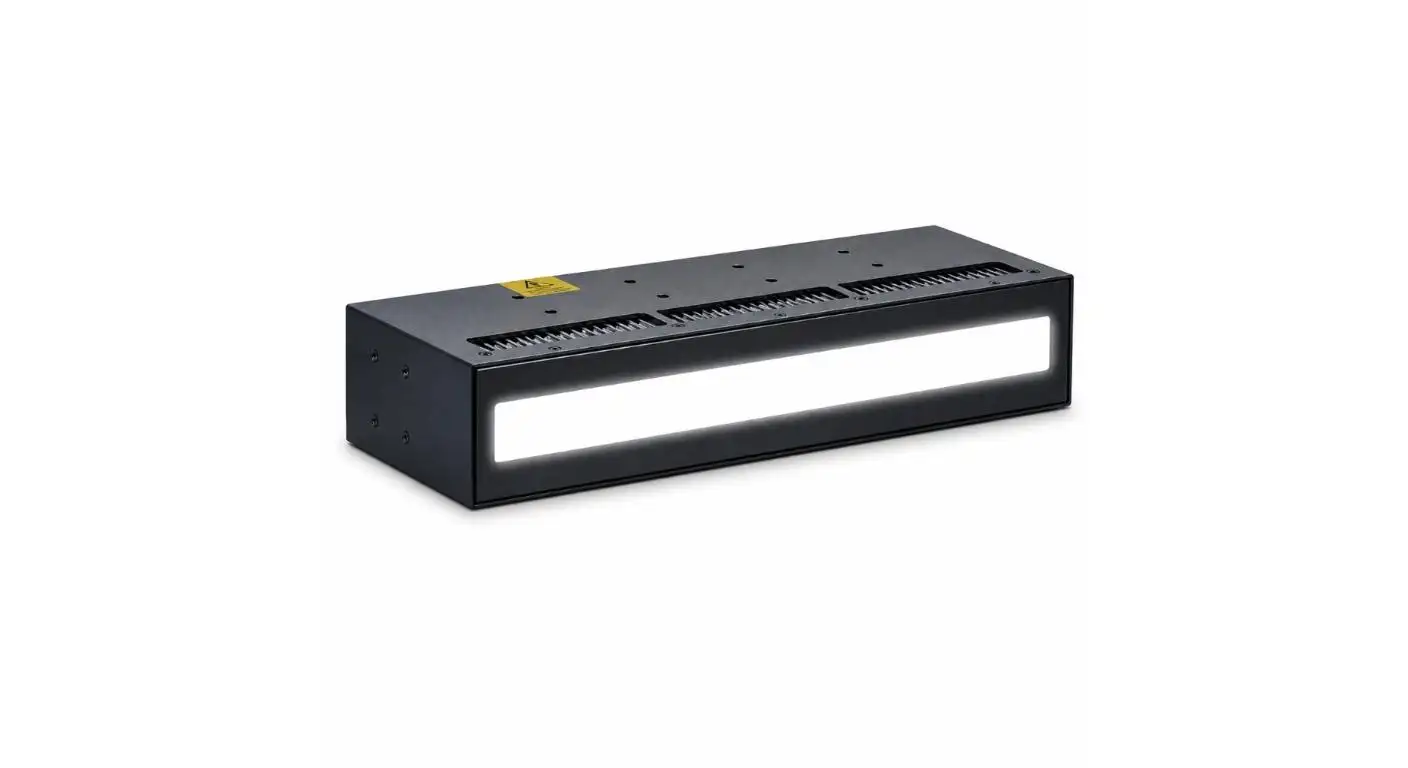
UVET's printing configuration provides a 240×60mm irradiation area, making optical coverage especially important when the lamp is integrated into flatbed or wide-format scanning equipment.
During integration, engineers should verify:
• Irradiance across the entire 240mm width;
• Edge intensity relative to center intensity;
• Overlap between adjacent curing passes;
• Lamp angle relative to the printed plane;
• Variation caused by changes in working distance.
This is more useful than judging UV LED Printing Curing performance from the maximum W/cm² specification alone.
Working Distance Changes Both Cure Stability and Thermal Distribution
The distance between the UV LED source and substrate affects more than intensity.
Increasing working distance typically broadens the optical field and reduces peak irradiance. Moving the lamp too close can produce stronger local exposure but may increase sensitivity to substrate height variation.
This is particularly relevant when printing:
• Flexible sheets that are not perfectly flat;
• Corrugated or textured materials;
• Films transported under changing web tension;
• Parts with varying surface height.
Unlike a theoretical point source, an LED array should not be evaluated using a simple inverse-square calculation. The practical approach is to measure irradiance and uniformity at the actual installation distance.
For UVET's 365nm configuration up to 8W/cm² and 385nm, 395nm, and 405nm configurations up to 12W/cm², the selected operating output should therefore be validated at the production working distance rather than assumed from maximum rated intensity.
Use Pinning and Final Cure to Control Ink Without Overheating the Film
A useful strategy for digital printing is to separate droplet stabilization from complete polymerization.
Pinning Stage
A controlled initial UV exposure can immobilize freshly deposited droplets before they spread excessively.
This helps maintain:
• Fine text definition;
• Sharper image edges;
• Controlled dot gain;
More stable layer thickness.Final Cure Stage
A later UV LED Printing Curing step provides the energy needed to develop final adhesion, surface hardness, and chemical resistance.
Separating these functions can be more effective than applying one aggressive curing exposure immediately after deposition, particularly when several ink layers are printed sequentially.
Match Wavelength to the Complete Ink Stack
Heat-sensitive printing often involves more than CMYK ink. White ink, varnish, primer, and clear coating may each respond differently to UV radiation.
UVET provides 365nm, 385nm, 395nm, and 405nm options, allowing the curing source to be selected around the photoinitiator system used by the ink manufacturer.
In practice:
• Heavily pigmented layers may require greater penetration;
• Thick white layers can shadow deeper regions;
• Clear coatings may cure differently from opaque inks;
• Primer and topcoat systems may require different exposure conditions.
The correct wavelength should therefore be selected from ink absorption data and curing trials rather than assuming one wavelength is universally suitable.
Fan Cooling Stabilizes the Lamp, Not Automatically the Substrate
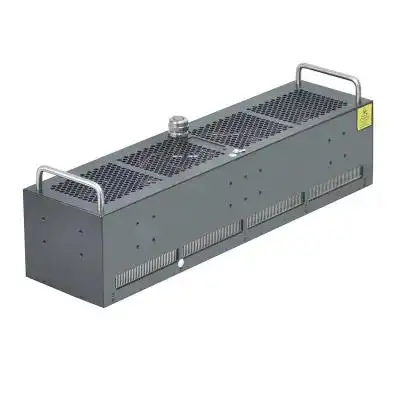
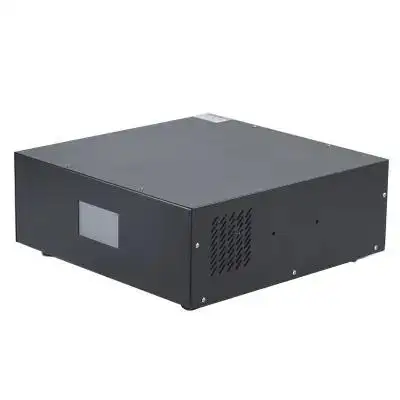
UVET's 240×60mm printing configuration uses fan cooling. Its primary engineering role is to control LED operating temperature so that optical output remains stable during continuous printing.
However, lamp cooling and substrate cooling are different functions.
For highly sensitive webs, additional measures may include:
• Controlled airflow across the substrate;
• Chilled support rollers;
• Optimized print-pass sequencing;
• Reduced idle exposure;
• Thermal isolation between lamp and media transport components.
This distinction is important when integrating high-intensity UV LED Printing Curing into continuous production equipment.
Final Words
The best operating point is the condition where cure performance remains acceptable while substrate deformation stays below the application's dimensional tolerance.
Building a Practical UV LED Printing Curing Window
For heat-sensitive media, successful UV LED Printing Curing comes from balancing optical output with the mechanical behavior of the substrate.
For new printing integrations, UVET can evaluate ink chemistry, substrate type, curing width, scan speed, working distance, and installation constraints to help define a more suitable UV LED Printing Curing configuration for heat-sensitive production.
FAQs
Q1. What UV-LED wavelength options does UVET offer for printing curing?
UVET offers printing-curing options of 365nm, 385nm, 395nm and 405nm UV-LEDs. The correct wavelength choice is based on the photoinitator absorption, pigment load, coating thickness and required cure depth.
Q2. What is the UV intensity of UVET's printing curing systems?
For the given irradiation configuration of 240×60mm, UVET offers options of up to 8W/cm² at 365nm and up to 12W/cm² at 385nm, 395nm and 405nm. The operating intensity can be set according to the ink and substrate requirements.
Q3. Can UVET’s UV LED Printing Curing be used for heat-sensitive substrates?
Yes. UV LED Printing Curing can be used with PET, PVC, PP, BOPP, and many other sensitive substrates as long as the UV dose, working distance, and speed, and the ink chemistry have been validated.
Q4. Does UVET's UV LED curing lamp eliminate heat during printing?
No. UV LED technology decreases the infrared thermal load compared to conventional UV lamps, however, it is still considered a heat emitting process. Therefore, UVET systems should be designed around the substrate's thermal budget and dimensional stability.
Q5. Why is adjustable UV intensity important for heat-sensitive printing?
Not all applications require the maximum intensity available. Adjustable output allows engineers to set a process where sufficient UV energy for cure is achieved without exceeding the temperature of the film and causing shrinkage and distortion.


