
What Wavelength Is Best for UV Ink Curing? (365nm vs 395nm)
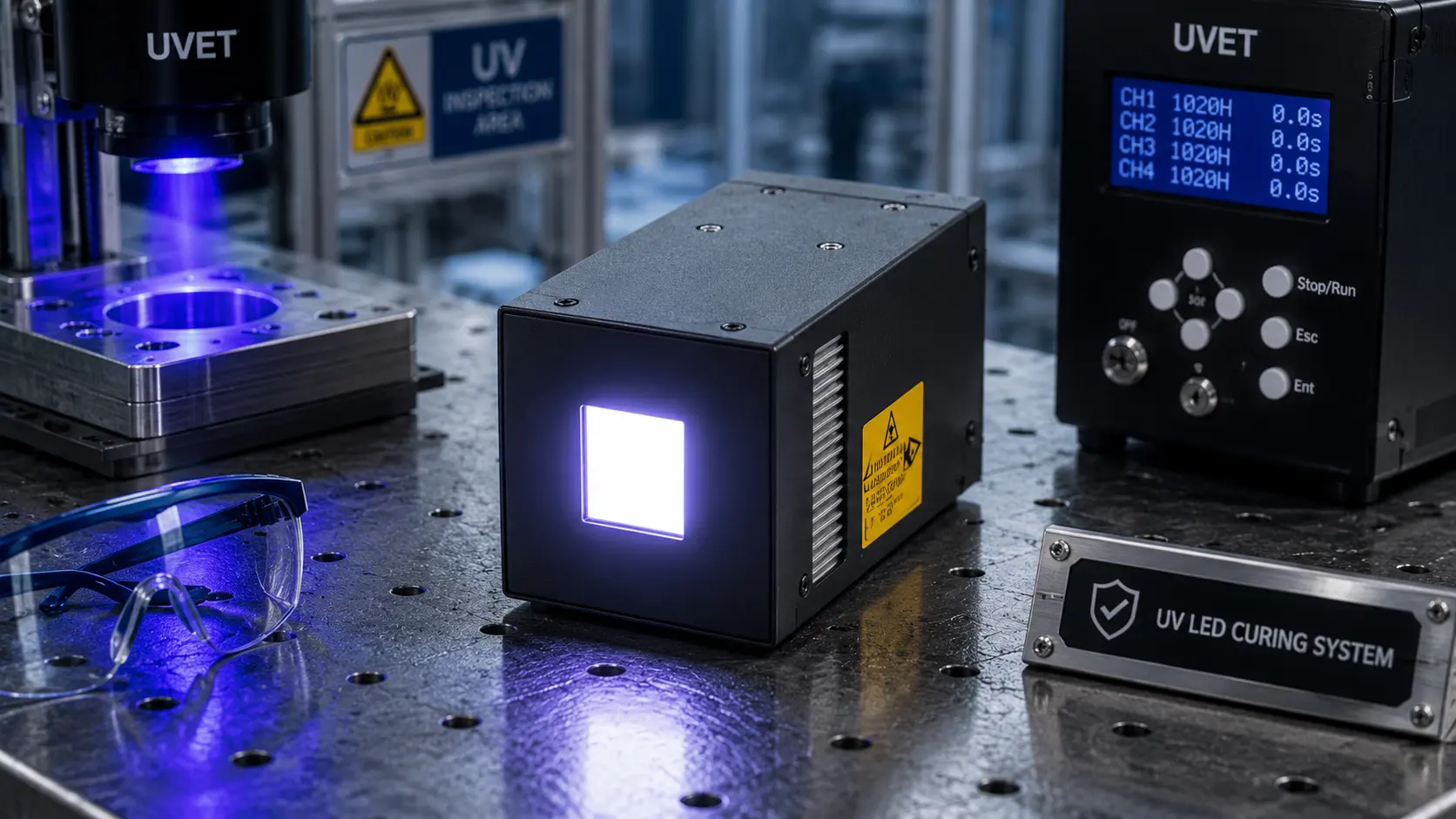
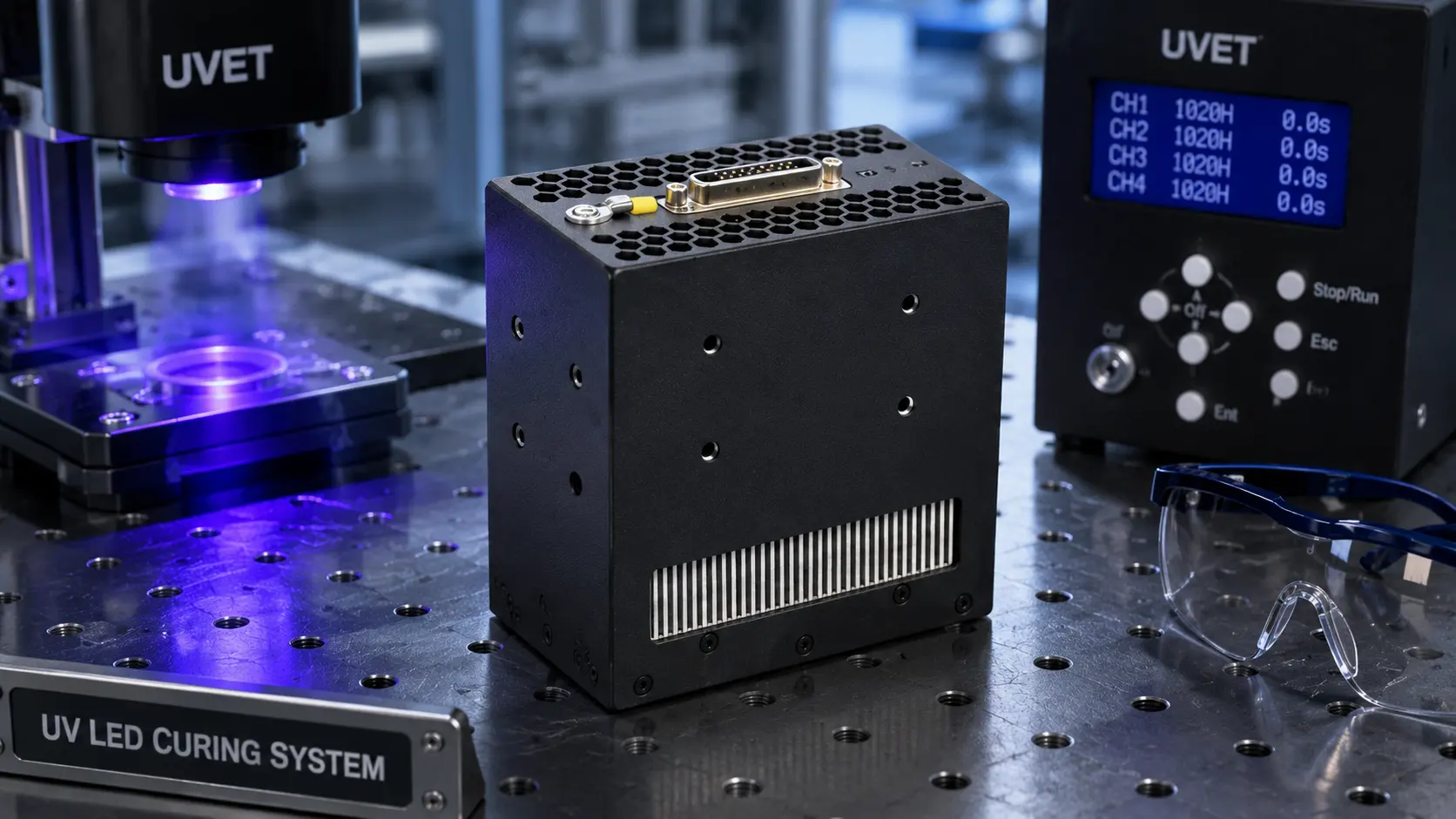
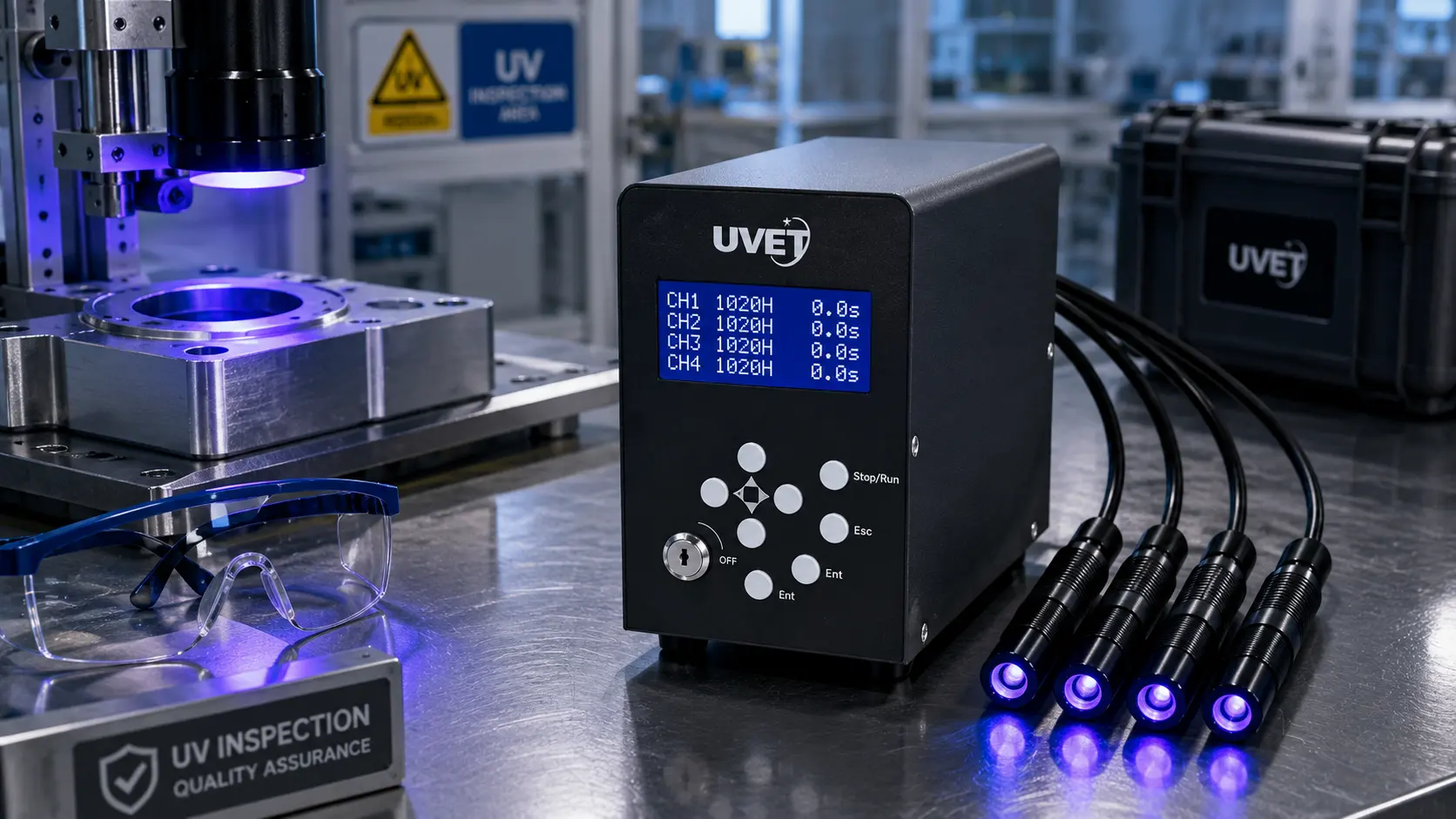
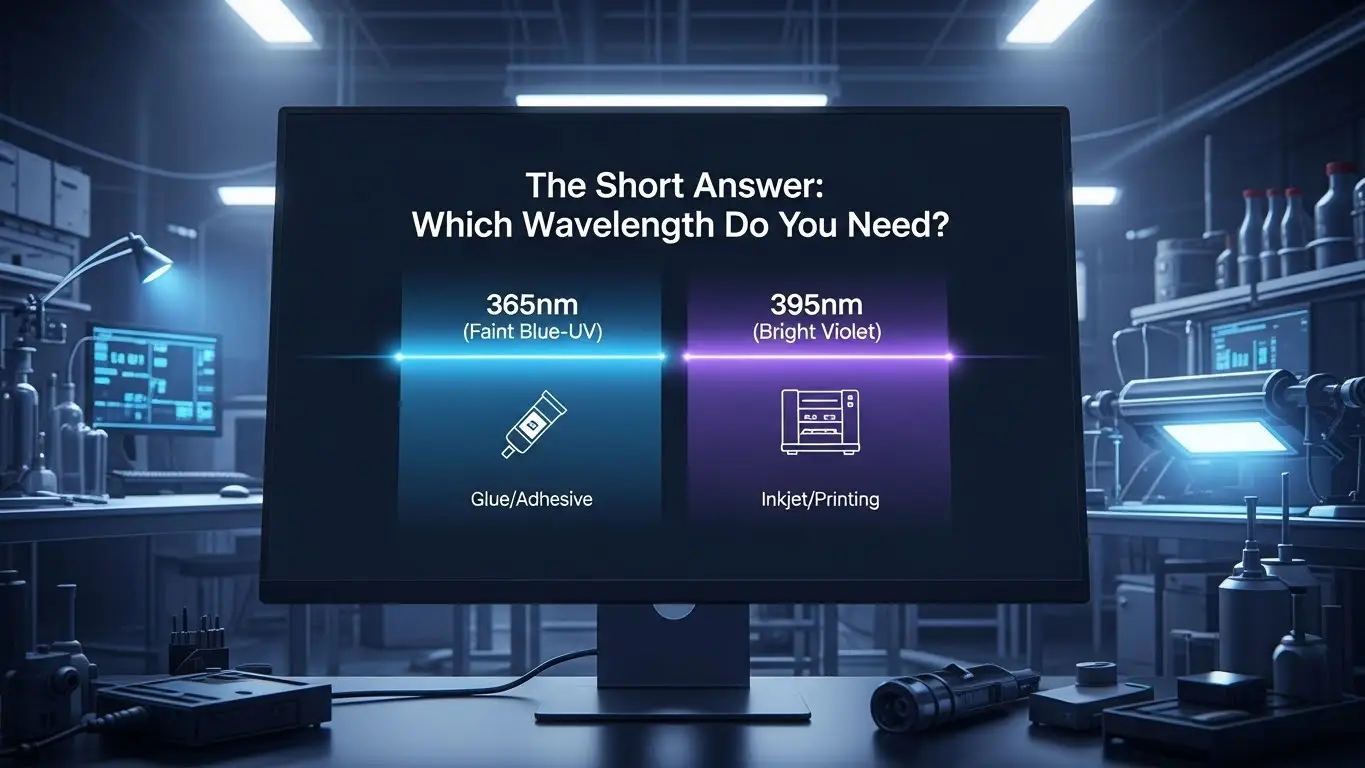
The best wavelength for UV ink curing is typically 395nm for most digital and screen printing applications. This wavelength penetrates heavily pigmented and white inks (which often contain Titanium Dioxide) better than shorter wavelengths. However, for clear adhesives, coatings, and medical device assembly, 365nm is often preferred for its higher energy and lack of visible glare.
Choosing the wrong wavelength results in uncured ink, poor adhesion, and tacky surfaces. In this guide, we will cover:
- The difference between 365nm, 385nm, and 395nm LEDs.
- Why white ink often fails to cure with standard lamps.
- How to match your lamp to your ink’s photoinitiator.
- Troubleshooting sticky or "wet" prints.
- How to choose the right UVET system for your production line.
Which Wavelength Do You Need?
If you are in a hurry, use this reference table to match your application to the correct wavelength.
| Wavelength | Best Application | Key Feature | Pros & Cons |
| 365 nm | Clear Adhesives, NDT, Electronics | High Energy Surface Cure | Pro: Fast surface cure. Con: Blocked by pigments. |
| 385 nm | General Assembly, Varnishes | Balanced Performance | Pro: Good mix of surface & depth. Con: Less common. |
| 395 nm | Digital Printing, Screen Inks | Deep Penetration | Pro: Cures through color/white. Con: Slower surface cure. |
| 405 nm | 3D Printing, Thick Coatings | Deepest Cure | Pro: Maximum depth. Con: High visible violet glare. |
The Physics: How Wavelength Affects Curing
To understand why one lamp works and another fails, you must understand spectral absorption.
UV curing isn't about heat; it is a photochemical reaction. The ink contains chemicals called photoinitiators that absorb UV energy to trigger polymerization (hardening). Each photoinitiator has a specific "peak absorption" range.
If your LED lamp emits light at 395nm, but your ink’s photoinitiator only absorbs energy between 320nm and 370nm, the ink will simply never cure, no matter how bright the light is. This is a fundamental concept in how UV LED curing works in inkjet printing. You must overlay the spectral output of the lamp with the absorption curve of the ink.
Deep Dive: 365nm vs. 395nm for Inks
While there are exceptions, the industry has largely settled on specific wavelengths for specific chemical formulations.
Why 395nm is the "King" of Digital Printing
For the vast majority of inkjet and screen printing applications, 395nm is the standard. This is primarily because 395nm LEDs are more affordable and offer higher irradiance outputs than other wavelengths.
More importantly, longer wavelengths (like 395nm) penetrate deeper into the material. When you are printing thick layers or dark colors, you need that light to travel through the top layer to cure the base of the ink against the substrate. If you are looking for equipment specs, check our guide on the best UV LED curing lamp for inkjet printing to see how 395nm integrates into print heads.
The "White Ink" Challenge (Titanium Dioxide)
White ink is notoriously difficult to cure. This is because white pigment is typically made of Titanium Dioxide (TiO2).
TiO2 is designed to be opaque; it absorbs and blocks UV light. It is particularly effective at blocking shorter wavelengths like 365nm. If you try to cure white ink with a 365nm lamp, the top microns might harden, but the light will be blocked from reaching the bottom, leading to adhesion failure.
- Solution: Use 395nm or 405nm. These longer wavelengths can pass through the TiO2 barrier more effectively to cure the ink all the way to the substrate.
When to Use 365nm (Adhesives & Clear Coats)
If 395nm is so good, why does 365nm exist?
365nm provides higher energy photons. For clear adhesives, optical bonding, and clear varnishes where no pigment blocks the light, 365nm is superior. It triggers the reaction faster and often provides a harder, drier surface finish. For a broader overview of applications beyond just printing, consult our UV LED ink curing guide.
LED vs. Mercury Lamps: The Spectrum Gap
Many manufacturers transitioning from older mercury arc lamps to UV LED face immediate curing issues.
- Mercury Lamps: Emit "broadband" UV. They output a mix of UV-A, UV-B, and UV-C. The UV-C (short wave) is excellent for sealing the surface and preventing tackiness.
- UV LED: Emit "narrowband" UV (e.g., a tight peak at exactly 395nm). They lack the natural UV-C that mercury lamps provide.
If you use an ink formulated for mercury lamps with an LED system, it will likely fail. You must ensure your ink supplier has reformulated the product specifically for "LED Curing" (narrowband absorption).
Troubleshooting: Why Is My Ink Sticky?
A common complaint in UV printing is that the ink looks dry but feels tacky to the touch. This is often caused by Oxygen Inhibition. Oxygen in the air interacts with the surface of the ink and stops the curing reaction.
If you are facing this, check these factors:
- Wavelength Mismatch: Are you using 395nm on an ink designed for 365nm?
- Intensity Drop: Is the lamp lens dirty, or has the LED degraded?
- Oxygen Exposure: The 395nm wavelength is great for deep curing but weaker at surface curing. You may need higher intensity (irradiance) to force the surface to cure before oxygen can stop it.
We have a dedicated article on how to prevent UV ink smearing with proper LED curing that details how to manage irradiance and dwell time to solve this issue.
Common Mistakes to Avoid:
- Assuming "watts" equals "cure speed" (Wavelength matters more).
- Ignoring the distance between the lamp and the substrate (intensity drops squarely with distance).
- Using generic UV inks without checking the MSDS for wavelength compatibility.
Choosing the Right UVET System
At UVET (UVNDT), we understand that one wavelength does not fit all. Manufacturing lines often require flexibility.
- Spot Curing: Ideal for small electronics or precise adhesive bonding.
- Flood Curing: Best for larger print areas or conveyor systems.
- Multi-Wavelength Options: Some advanced systems allow you to switch between 365nm and 395nm depending on the job.
Always request a spectral analysis or test cure with your specific ink before committing to a system.
Frequently Asked Questions (FAQ)
What is the standard UV curing wavelength?
For digital inkjet and screen printing, 395nm is the industry standard. For structural adhesives and NDT (Non-Destructive Testing), 365nm is the standard.
Does 395nm cure 365nm resin?
Usually, no. While there is slight crossover, a 395nm lamp will not efficiently trigger photoinitiators designed strictly for the 365nm range, leading to a weak or "mushy" cure.
Can you use 405nm resin with 395nm light?
Yes, this often works. 395nm and 405nm are close enough in the spectrum that many resins labeled for one will cure with the other, though cure times may vary slightly.
Why is my UV resin sticky after curing?
This is likely due to oxygen inhibition or insufficient surface irradiance. 395nm LEDs cure depth well but sometimes struggle with the very top surface layer compared to broad-spectrum lamps.
Is 365nm or 395nm better for white ink?
395nm is better. White ink contains Titanium Dioxide which blocks UV light below 380nm. A 365nm lamp will be blocked by the pigment, leaving the bottom of the ink layer uncured.
Do UV LEDs emit heat?
UV LEDs emit significantly less heat (Infrared) toward the substrate than mercury lamps, making them safe for heat-sensitive plastics. However, the LED chip itself generates heat and requires liquid or air cooling.
What is the difference between 385nm and 395nm?
385nm is a "hybrid" choice. It offers slightly better surface curing than 395nm but better penetration than 365nm. It is often used when 395nm leaves the surface too tacky but 365nm won't cure deep enough.
Can I look at UV curing lights?
No. You should never look directly at UV LEDs. Always wear safety glasses rated for the specific wavelength (e.g., OD4+ at 365-405nm) to prevent eye damage.
Conclusion
The "best" wavelength is entirely dependent on your chemistry. For most printing applications, stick to 395nm to ensure deep cures through pigments and white inks. For clear adhesives, choose 365nm for rapid, high-energy bonding.
Don't guess with your production quality. If you are unsure which lamp fits your process, contact UVET engineers today for a consultation on matching the right LED system to your specific ink formulation.
Share on Social:


